

Exports rose 3.3% year on year as manufacturers focused on automation, domestic sourcing and higher-value production to navigate difficult market conditions.
Vietnam’s textile and garment exports surpassed US$36 billion in the first nine months of the year, increasing 3.3% from a year earlier despite uncertain demand and continued pressure on manufacturing margins.
Industry leaders said maintaining growth will require stronger domestic supply chains, investment in advanced production technology and a shift towards business models that retain more value within Vietnam.
Yarn operations strengthen at Vinatex
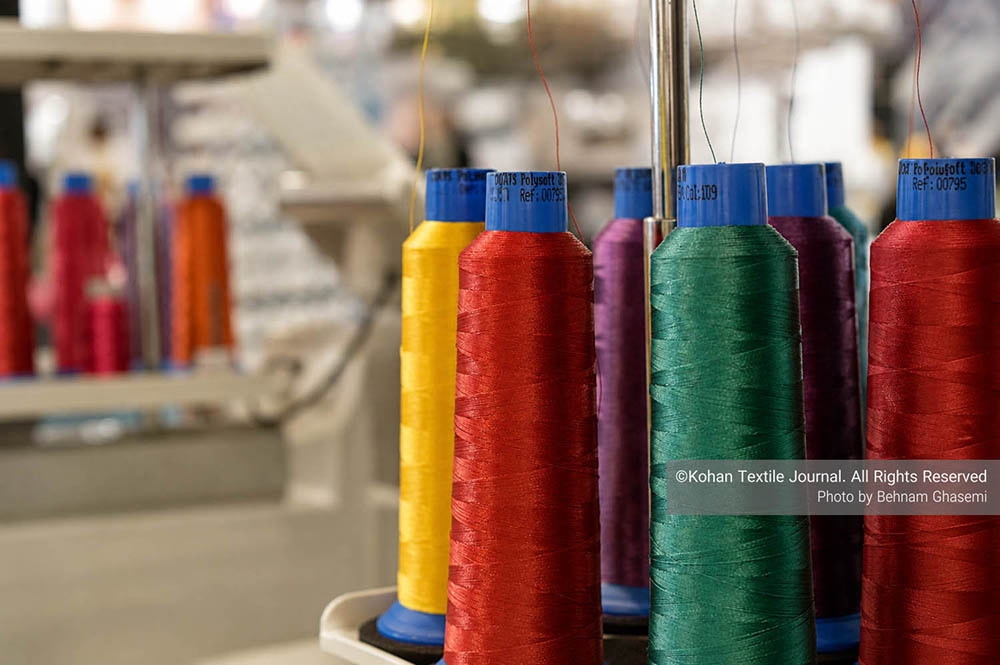
Cao Huu Hieu, general director of the Vietnam National Textile and Garment Group (Vinatex), identified yarn production as a positive performer during the nine-month period.
The group’s yarn operations generated revenue of VND6.66 trillion and profit exceeding VND381.8 billion. All 12 yarn units were profitable, alongside improvements in operating efficiency.
Garment manufacturing remained a major contributor to earnings, recording revenue of VND5.85 trillion and pre-tax profit of VND679.2 billion. Its pre-tax margin reached 11.6%, exceeding the planned 10%.
However, profitability differed considerably between individual units. Hieu highlighted a broader pattern of rising revenue accompanied by falling margins, reflecting pressure from selling prices, production costs and the complexity of managing smaller orders.
Read more: Hyosung Begins Commercial Bio-BDO Production in Vietnam for Bio-Based Elastane
Automation and materials investment take priority
Vinatex’s development strategy centres on strengthening weaving, dyeing and material production to improve domestic supply-chain integration and reduce dependence on external suppliers.
The group also plans to invest further in equipment, automation and advanced technology to increase productivity, develop new products and enter higher-value market segments. Digital management, connected production data and operational optimisation form another priority.
According to Hieu, international buyers increasingly expect manufacturers to combine rapid delivery and competitive pricing with consistent quality, social responsibility and product sustainability.
Moving beyond cut-make-trim production
Vu Duc Giang, chairman of the Vietnam Textile and Apparel Association (VITAS), said companies need to strengthen their position within global value chains alongside investments in production scale and technology.
He identified factory infrastructure, automation, raw-material supply chains and specialised textile industrial zones as important areas for development.
Giang also called for a transition from cut-make-trim production towards Free On Board (FOB) and Original Design Manufacturing (ODM) models, enabling manufacturers to take greater responsibility for sourcing, product development and customer relationships.
Read more: Vietnam’s Market Evolution Creates New Sourcing Opportunities At VIATT 2027
Building a more resilient supply chain
Pham Van Quan, deputy director of the Industry Department under the Ministry of Industry and Trade, described textiles and garments as a key export industry, employing approximately 1.86 million people across more than 14,300 enterprises.
He said the ministry would coordinate with local authorities, associations and businesses to strengthen supplier capabilities, production links, technology adoption, workforce training and access to market information.
Quan encouraged manufacturers to assess supply risks and diversify their products, export destinations and customer portfolios. He also urged greater use of domestic inputs where suppliers can meet quality, price and delivery requirements.
Closer cooperation with mechanical engineering, electronics and digital technology companies could help Vietnamese manufacturers gradually develop greater capabilities in production equipment, components and manufacturing technology.