
LMW says its Spinpact SIRO Compact spinning system delivered higher productivity and improved yarn quality in comparative polyester staple fibre trials at mills in India and Nepal.
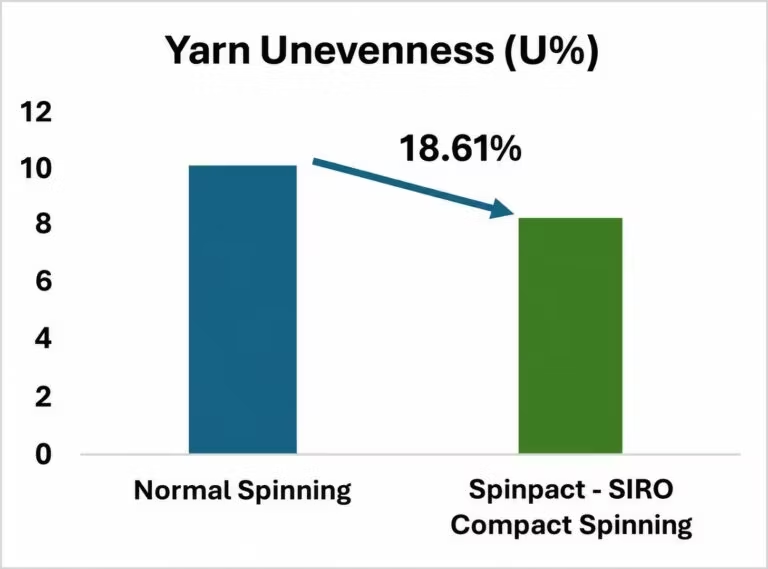
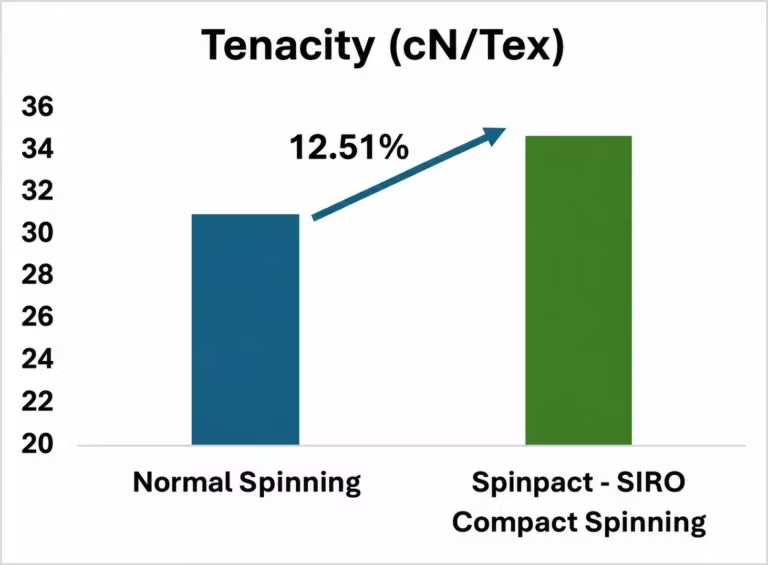
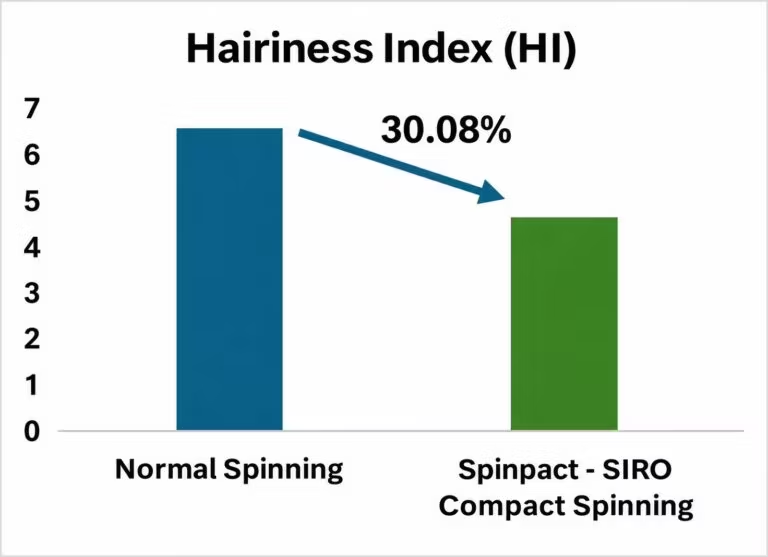
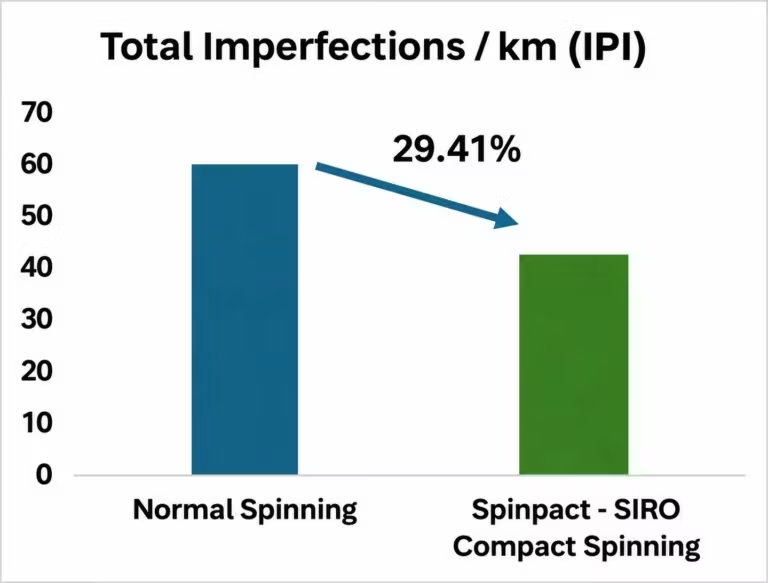
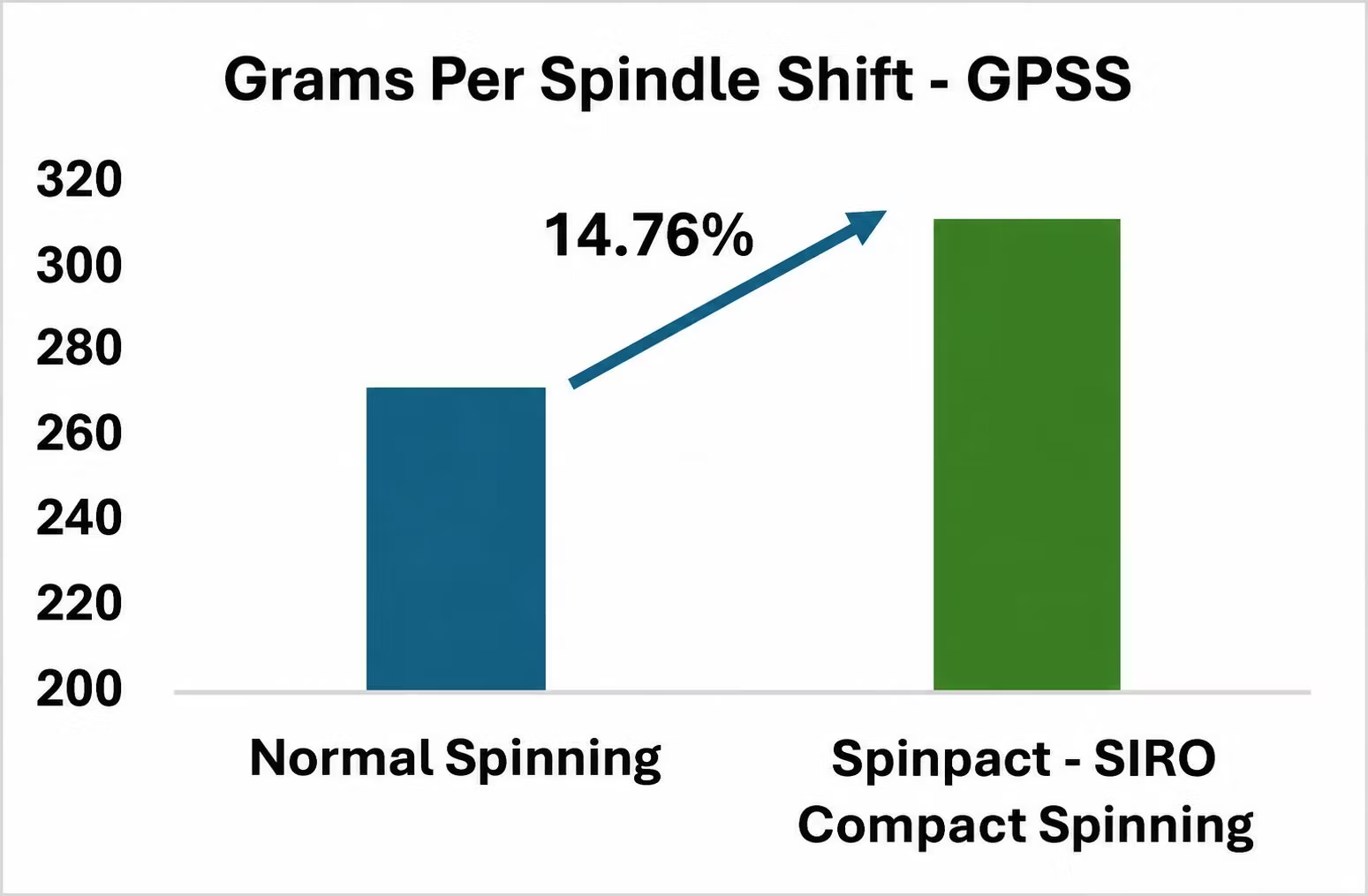
According to the company, the system achieved a 14.76% increase in production per spindle per shift and a 30.08% reduction in yarn hairiness compared with conventional ring spinning. LMW also reported improvements in strength, evenness and the number of yarn imperfections.
Read More: LMW Introduces Carriage Type Tube Loader to Improve Ring Spinning Efficiency
The trials were conducted at a spinning mill in northern India and another mill in Nepal using 100% polyester staple fibre processed on LMW machinery from blow room to ring spinning. The company presented the results as an example of how compact spinning can support manufacturers seeking more consistent synthetic yarns.
Polyester’s Growing Role in Textile Production
Polyester staple fibre is used in yarns for apparel, home textiles and technical applications, both on its own and in blends. For spinning mills, its processing requires attention to fibre control, drafting, yarn formation and consistency across production stages.
The material’s wider significance is reflected in Textile Exchange’s Materials Market Report 2026. The organisation estimates that polyester accounted for 59% of total global fibre production in 2025, at approximately 82.5 million tonnes. This figure covers polyester fibre production across all end uses and includes filament as well as staple fibre.
LMW says its machinery is designed to process cotton, synthetic fibres, regenerated fibres and blends, allowing mills to adapt their production to different material requirements.
Trial Compared Conventional Ring and SIRO Compact Spinning
For its polyester comparison, LMW used fibre with a specification of 44 mm × 1.4 denier. The conventional yarn was spun at Ne 30s on an LR 9/AX ring frame. The SIRO Compact comparison used an LRJ 9/SX fitted with Spinpact, producing yarn described by the company as Ne 60/2s, or 30s SIRO.
| Trial Parameter | Details |
|---|---|
| Raw Material | 100% polyester staple fibre |
| Fibre Specification | 44 mm × 1.4 denier |
| Conventional Spinning | Ne 30s on LMW LR 9/AX |
| Spinpact SIRO Compact | Ne 60/2s, described by LMW as 30s SIRO, on LRJ 9/SX |
| Trial Locations | One mill in northern India and one in Nepal |
The two configurations produce yarns with different structures, even though LMW presents them as a comparison at approximately the same resulting yarn count.
Productivity and Quality Results
LMW reported the following changes for Spinpact SIRO Compact compared with conventional ring spinning:
| Performance Measure | Reported Change |
|---|---|
| Productivity per spindle per shift | 14.76% increase |
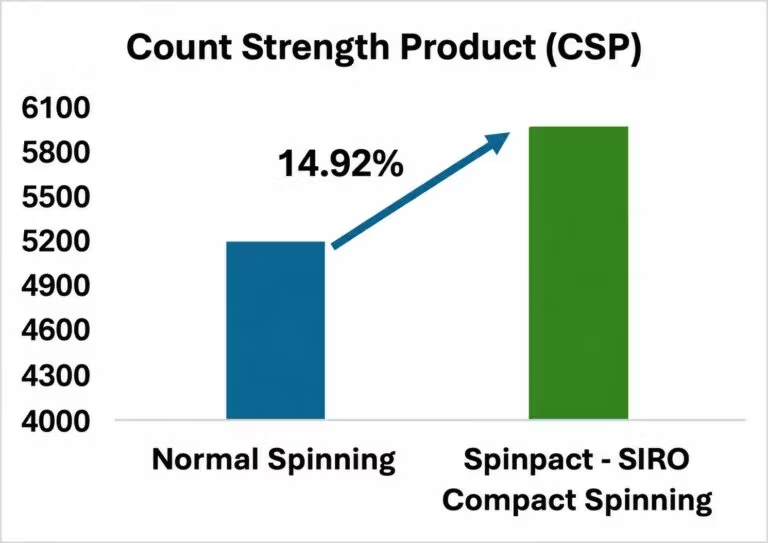
| Count Strength Product (CSP) | 14.92% increase |
| Yarn unevenness (U%) | 18.61% reduction |
| Total imperfections per kilometre | 29.41% reduction |
| Hairiness index | 30.08% reduction |
| Tenacity | 12.51% increase |
The productivity figure is expressed as grams per spindle per shift (GPSS). CSP and tenacity provide measures of yarn strength, while U%, imperfections and hairiness describe different aspects of yarn regularity and surface quality.
LMW attributes the improvements to fibre control during drafting and yarn formation, together with the suction compacting system. The company says the compacting arrangement helps bring fibres into the yarn structure and reduce protruding fibres.
How the Spinpact System Works
Compact spinning uses a suction zone to bring fibres closer together before twist is fully inserted into the yarn. This reduces the spread of fibres in the spinning triangle and can help incorporate more fibres into the yarn body.
In SIRO spinning, two drafted strands are brought together during yarn formation. Combined with compacting, the arrangement produces a yarn structure different from a conventional single ring-spun yarn.
LMW says Spinpact is configured for both single compact and SIRO compact yarns. Its design includes a positively driven perforated apron, a top-suction arrangement and an inverter-controlled suction motor that allows operators to adjust compacting pressure. The company also lists different tension-draft settings for cotton and man-made fibres.
Potential Benefits for Downstream Processing
For mills supplying weaving and knitting customers, the reported reduction in hairiness and imperfections could be relevant to yarn appearance and processing consistency. Higher yarn strength may also support handling during subsequent operations.
LMW says the results demonstrate the potential of its integrated machinery line for polyester staple fibre, from initial opening and preparation through to ring spinning.
Read More: LMW Highlights Egypt’s Growing Textile Investment Potential at Egypt Stitch & Tex 2026
The published comparison, however, does not provide the individual test values, sample sizes, machine speeds, energy consumption or detailed operating conditions. The reported percentages should therefore be considered LMW’s trial results, rather than performance guarantees for every mill. Buyers evaluating the system would need to assess it against their own fibre specifications, yarn requirements and production costs.
For LMW, the trials provide a reference for mills interested in expanding polyester and other man-made fibre spinning while improving yarn quality and production efficiency.