Turkish exporters are gaining remarkable traction in the United States, not only in the food sector but also in home textiles. During their recent participation in New York, Turkish companies demonstrated their growing presence in the American market.
Beyond the exhibition itself, a significant achievement emerged: Turkish-made towels and bathrobes have officially entered the collections of prestigious U.S. hotel chains, including some of the most recognized names in global hospitality.
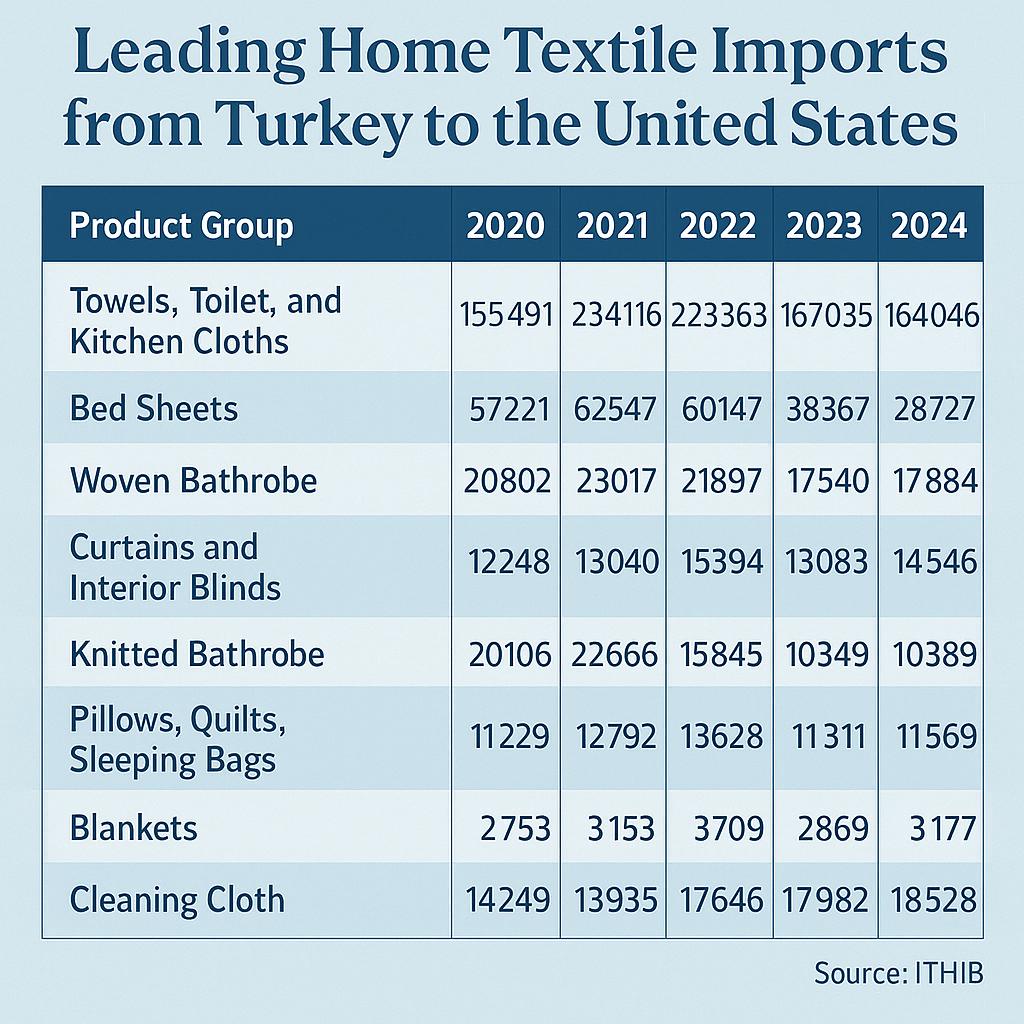
Rising Demand for Turkish Home Textiles in the U.S.
While the U.S. market is often dominated by Asian countries in apparel, Turkey is steadily climbing the ranks in the home textiles segment. The visibility of Turkish bathrobes and towels in renowned hotels such as the Hyatt Regency has not gone unnoticed by industry observers. Participants visiting the event shared images and feedback on social media showcasing Turkish products in their hotel rooms, highlighting the country’s growing influence in premium hospitality supplies.
Turkey currently ranks 6th in the U.S. home textiles import market, with an export volume of $267 million in 2024, corresponding to 1.8% of the total U.S. imports in this sector. Towels, bathroom textiles, and kitchen cloths remain the most exported items, followed by bed sheets and woven bathrobes. Despite the modest market share, the relationships Turkish companies are building with American clients are based on quality, innovation, and sustainability—factors that often outweigh pricing considerations in this competitive landscape.
Strategic Steps Towards Market Expansion
For Turkish exporters, penetrating and sustaining a presence in the U.S. requires more than just superior products. Building robust partnerships, leveraging local networks, and establishing a physical footprint within the U.S. are increasingly seen as critical strategies.
One avenue under discussion is the formation of joint warehouses and collaborative companies in the United States, possibly supported by incentives like the Overseas Logistics Centers program from the Turkish Ministry of Trade. By gathering 40 to 50 companies active in bathrobes, bed sheets, curtains, and related products, a collective sales model could be established, strengthening market presence while reducing logistical costs.
Additionally, fostering relationships with Turkish professionals and contacts already based in the U.S. is considered vital for more effective lobbying and market intelligence. Initiatives aimed at youth engagement and forming young leadership committees are also being explored, with the goal of conquering distant markets and establishing ‘Made in Türkiye’ as a preferred brand in luxury hotel chains globally.
A Vision for ‘Made in Türkiye’ in Every Luxury Hotel
The ultimate ambition of Turkish home textile exporters is to see ‘Made in Türkiye’ products—especially towels, bathrobes, and similar essentials—featured across all premium hotel brands worldwide. With continuous efforts in quality improvement, innovation, certification, and experience sharing, Turkish companies are positioning themselves for long-term success in the U.S. and other strategic markets.
Persistence, coordination, and a commitment to excellence remain at the heart of this journey. As Turkey deepens its integration into global value chains, its home textile industry is well on the path to becoming a trusted partner for the world’s most prestigious hospitality brands.