




Leading Companies Shaping the Global Regenerated Cellulose Fiber Industry
Introduction
The global textile industry increasingly relies on regenerated cellulose fibers as manufacturers seek materials that combine natural comfort with industrial scalability. Among these fibers, viscose remains one of the most widely produced and widely used materials in apparel, home textiles, hygiene products, and technical applications.
Produced from wood pulp or other plant-based cellulose sources, viscose offers a unique balance between natural fiber performance and industrial manufacturing efficiency. However, the production of viscose fiber is concentrated among a relatively small group of large companies that operate integrated pulp and fiber facilities.
These companies supply millions of tons of viscose staple fiber and filament yarn to textile manufacturers around the world. Many of them are also investing heavily in sustainable sourcing, closed-loop chemical systems, and new cellulose fiber technologies designed to reduce environmental impact.
This article explores ten of the most influential viscose fiber producers shaping the global regenerated cellulose industry.

Lenzing Group
Headquartered in Austria, Lenzing Group is widely recognized as one of the most innovative producers of regenerated cellulose fibers. The company manufactures several well-known branded fibers including TENCEL™, LENZING™ Viscose, and LENZING™ Modal.
Read more: What is Viscose Fiber? Production, Properties, Applications and Its Future in the Textile Industry
Lenzing has built a reputation for focusing strongly on sustainability and responsible sourcing. The company operates integrated pulp and fiber production facilities and has invested heavily in environmentally responsible production technologies.

Lenzing fibers are widely used by premium fashion brands and textile manufacturers seeking high-performance regenerated cellulose materials.

Birla Cellulose (Aditya Birla Group)
Birla Cellulose, part of the Aditya Birla Group, is one of the largest producers of viscose staple fiber in the world. The company operates multiple production facilities across Asia and has become a dominant supplier of viscose fibers to global textile markets.
Birla Cellulose produces several specialized viscose fiber types used in fashion, home textiles, and nonwoven applications. The company is also investing in innovative circular textile technologies and recycling solutions designed to reduce waste in the textile value chain.
With an extensive global supply network, Birla Cellulose remains one of the most influential companies in the regenerated cellulose fiber industry.

Sateri
Sateri is one of the world’s largest producers of viscose fiber and a major supplier to the global textile industry. Headquartered in Asia, the company operates large-scale viscose fiber manufacturing facilities with significant production capacity.
Sateri has focused strongly on improving sustainability standards within viscose production. The company works with forestry certification programs and environmental organizations to improve responsible wood pulp sourcing and reduce the environmental footprint of viscose fiber manufacturing.
Sateri fibers are widely used by textile mills across Asia and international apparel supply chains.

Tangshan Sanyou Chemical Fiber
Tangshan Sanyou is one of the leading Chinese producers of viscose staple fiber and regenerated cellulose products. The company has expanded rapidly over the past two decades and now operates large integrated manufacturing complexes.
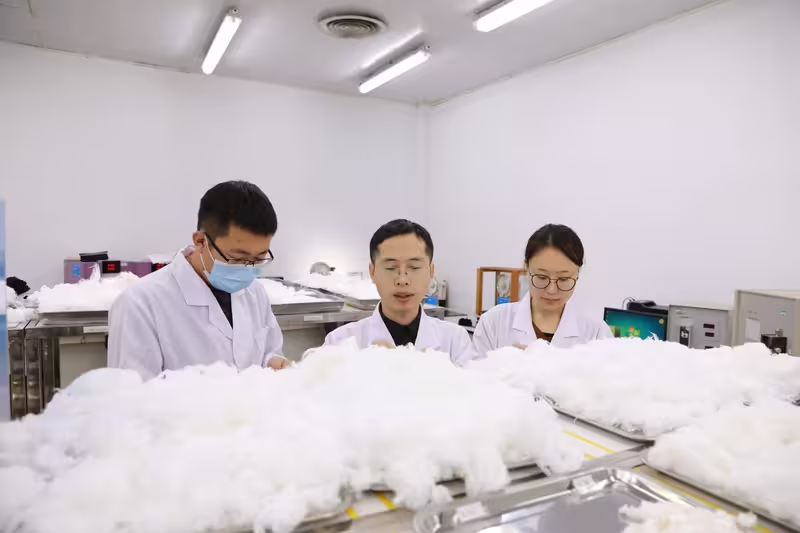
Its viscose fibers are widely used in apparel fabrics, blended yarns, and nonwoven textile applications. Tangshan Sanyou continues to invest in expanding its production capacity and improving fiber quality to meet growing global demand.

Xinxiang Chemical Fiber
Xinxiang Chemical Fiber is another major Chinese producer specializing in viscose filament yarn and viscose staple fiber. The company is particularly well known for its viscose filament yarn products, which are widely used in embroidery threads, decorative textiles, and high-end fabrics.
With decades of experience in regenerated cellulose production, Xinxiang Chemical Fiber has established strong supply relationships with textile manufacturers across Asia and Europe.

Grasim Industries
Grasim Industries, part of the Aditya Birla Group, is closely linked with the global expansion of viscose fiber manufacturing. The company operates large production facilities that convert wood pulp into viscose staple fibers used in textile applications worldwide.
Grasim plays a key role in supplying raw viscose fibers to textile spinning mills and fabric manufacturers. Through ongoing investment in technology and sustainability initiatives, the company continues to strengthen its position in the global viscose fiber market.

Kelheim Fibres
Based in Germany, Kelheim Fibres specializes in high-performance viscose fibers designed for specialty applications. Unlike many large producers focused on commodity viscose, Kelheim focuses on technical fibers used in nonwoven hygiene products, filtration materials, and medical textiles.
The company develops advanced viscose fiber structures tailored for specific industrial applications. These fibers play an important role in products such as wipes, hygiene products, and specialty filtration materials.
Fulida Group
Fulida Group is a Chinese industrial company involved in viscose fiber production and textile manufacturing. The company operates large viscose fiber facilities that supply fibers to textile mills and garment manufacturers.
Fulida has expanded its operations across multiple segments of the textile value chain, allowing it to integrate fiber production with downstream textile manufacturing processes.

Aoyang Technology
Aoyang Technology has become a significant producer of viscose staple fiber in China. The company focuses on supplying fibers used in apparel fabrics, home textiles, and blended yarns.
Through investment in advanced fiber production technology, Aoyang has increased its capacity and improved product quality, enabling it to compete in the global viscose fiber market.

Shandong Yamei Technology
Shandong Yamei Technology is another important Chinese viscose producer supplying regenerated cellulose fibers to the textile industry. The company produces viscose staple fibers used in yarn spinning, nonwoven manufacturing, and apparel fabrics.
As demand for cellulose-based fibers continues to grow, companies like Shandong Yamei are expanding their production capabilities to serve both domestic and international markets.
The Future of the Global Viscose Fiber Industry
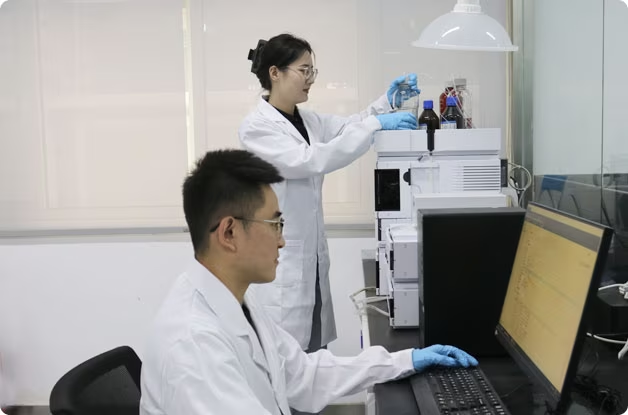
As the textile industry shifts toward more sustainable materials, regenerated cellulose fibers are attracting renewed attention from manufacturers and fashion brands.
Viscose remains one of the most scalable cellulose fibers available for large-scale textile production. However, the industry also faces increasing pressure to improve sustainability practices, including responsible forestry sourcing, chemical recovery systems, and circular recycling technologies.
Many leading viscose producers are investing heavily in cleaner manufacturing processes and alternative cellulose feedstocks. Innovations in recycled cellulose fibers and closed-loop production systems are expected to reshape the future of the regenerated fiber industry.
For textile manufacturers seeking alternatives to petroleum-based fibers, viscose and other regenerated cellulose materials are likely to remain essential components of the global textile supply chain.
Conclusion
The global viscose fiber industry is dominated by a group of large integrated producers capable of converting wood pulp into high-volume regenerated cellulose fibers.
Companies such as Lenzing Group, Birla Cellulose, and Sateri continue to lead the industry through innovation, large-scale production capacity, and increasing investment in sustainable fiber technologies.
As global demand for comfortable, biodegradable, and versatile textile materials continues to grow, viscose fiber producers will remain central players in shaping the future of the textile industry.
To understand how viscose fibers are produced and used across the textile industry, read our complete guide to viscose fiber.











