






Updated: September 5, 2026
More than seven years after the opening of two textile manufacturing units in Tangier, Vita Couture continues to operate as an apparel manufacturer and full-package garment supplier in Morocco. The company currently identifies the Tangier Free Zone as the location of its Moroccan headquarters and also maintains a design office in Barcelona.
The original investment, announced in 2019, represented an important step toward greater vertical integration in Morocco’s textile and apparel value chain, combining digital textile printing with ready-to-wear garment manufacturing.
Current publicly available information confirms Vita Couture’s continued operations but does not provide directly comparable figures for the present production capacity or employment levels of the two facilities. The investment, employment and capacity figures below therefore refer to the situation at the time of the factories’ inauguration in 2019.

Vita Couture-Diprints at a Glance
| Fact | Detail (at 2019 inauguration) |
| Location | Tangier Free Zone, Morocco |
| Total investment | MAD 220 million |
| Site size | Approximately 23,000 m² |
| Diprints (digital printing) employees | Approximately 110 |
| Vita Conf (garment) jobs projected | Around 2,170 direct and indirect |
| Production lines | 20 |
| Joint venture partner | Spanish textile group Santandarina (for Diprints) |
| Current certifications | GOTS, OCS, RCS, GRS (as of 2026) |
Vita Couture-Diprints opened a MAD 220 million manufacturing complex in Tangier’s Free Zone in 2019, combining digital textile printing with ready-to-wear garment production across 23,000 square metres.
Two Textile Manufacturing Units Opened in Tangier
Vita Couture-Diprints opened two industrial units in the Tangier Free Zone in May 2019, specialising in digital textile printing and ready-to-wear garment manufacturing. The total investment associated with the project was reported at MAD 220 million.
The Diprints facility, specialising in digital printing on fabric, was established through a joint venture with Spanish textile group Santandarina. At the time of the inauguration, the factory employed approximately 110 people.
The garment manufacturing operation, Vita Conf, was developed to strengthen the group’s ready-to-wear production capabilities. Under the investment agreement announced at the time, the project was expected to contribute to the creation of around 2,170 direct and indirect jobs.
Together, the operations formed part of a larger industrial site covering approximately 23,000 square metres in Tangier.
Integrated Production for International Fashion Markets
One of the main objectives behind the investment was to create a more integrated textile and garment production structure capable of serving international fashion customers with shorter lead times.
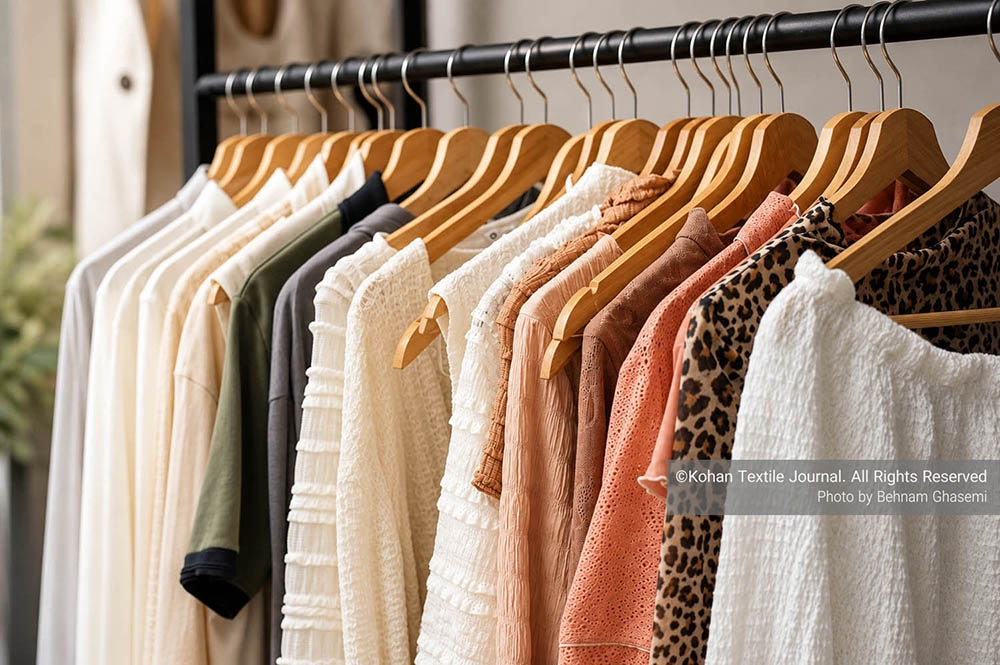
Vita Couture worked with ready-to-wear brands on the development and manufacturing of women’s and girls’ clothing collections, providing services covering different stages of the supply chain, including product development, fabric and accessory sourcing, manufacturing and finished garments.
The garment manufacturing facility was equipped with 20 production lines, while the Diprints operation added digital fabric printing capacity to the group’s manufacturing structure.
At the time of the opening, production from the two units was intended primarily for export markets, reflecting Tangier’s growing role as an industrial and sourcing base serving European and international fashion companies.
Vertical Integration and Shorter Lead Times
Speaking at the opening of the facilities in 2019, Mohammed Boubouh, founder and president of Vita Couture, highlighted the importance of integrated manufacturing and supply-chain control.
“Our site comes to complete the vision of offering our customers quality service in a very short delivery time,” Boubouh said at the time.
He also noted that greater integration of the production cycle could strengthen the group’s ability to compete for international contracts that had traditionally gone to manufacturers in established sourcing markets such as Spain and Türkiye.
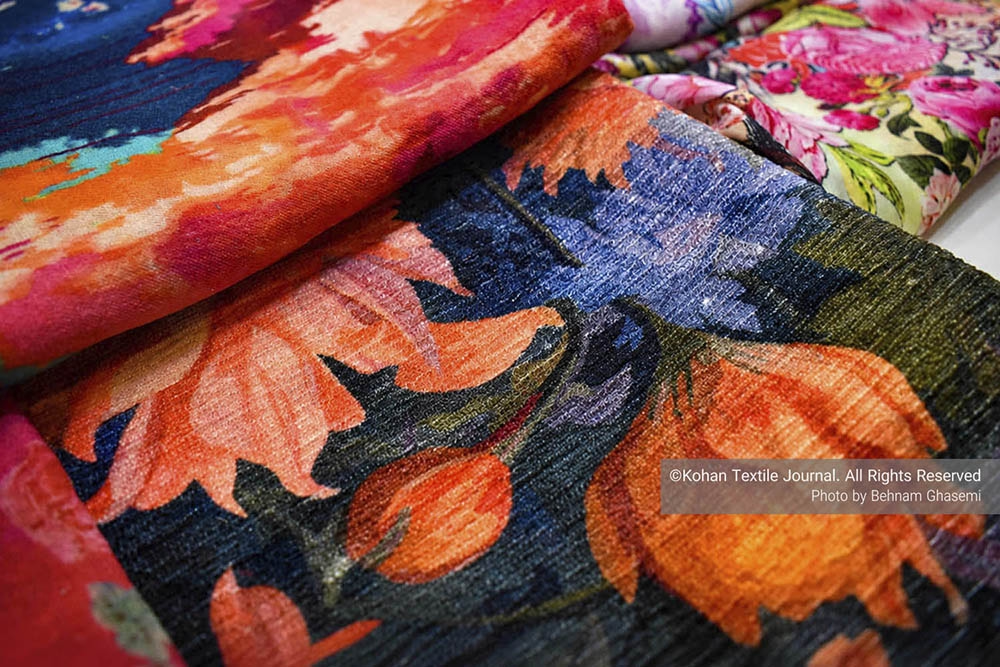
The combination of digital textile printing and garment manufacturing was particularly relevant to the fast-fashion business model, where production flexibility, design responsiveness and shorter delivery times can play an important role in sourcing decisions.
Part of Morocco’s Textile Industrial Strategy
The investment also reflected Morocco’s broader industrial strategy at the time.
During the 2019 inauguration, Moulay Hafid Elalamy, who was Morocco’s Minister of Industry at the time, said the activities of the group were aligned with the country’s efforts to further integrate the textile value chain, strengthen garment manufacturing capacity and develop the fast-fashion textile ecosystem.
Tangier has subsequently continued to play an important role in Morocco’s export-oriented manufacturing landscape, supported by its proximity to Europe, industrial infrastructure and logistics connections.
For textile and apparel manufacturers, these advantages have helped position northern Morocco as an attractive location for production serving European markets.
Vita Couture Continues Manufacturing in Tangier
Today, Vita Couture continues to present itself as a full-package garment supplier based in Morocco, with its headquarters located in the Tangier Free Zone.
The company describes an integrated business model covering the development process from concept and design through to finished garments. Its Moroccan manufacturing operations are complemented by a design office in Barcelona, strengthening its connection with the European fashion market.
Sustainability has also become a more visible part of the company’s current positioning. Vita Couture states that it works with fabrics certified under schemes including GOTS, OCS, RCS and GRS, while its sustainability initiatives also cover renewable energy and the recycling of textile and other production waste.
These developments illustrate how the original 2019 investment in Tangier formed part of a longer-term strategy to build an integrated, export-oriented apparel manufacturing platform.

Tangier’s Growing Role in Morocco’s Textile Investment Landscape
The Vita Couture-Diprints investment is also an example of the industrial development that has helped strengthen Tangier’s position within Morocco’s textile and apparel sector.
Combining garment manufacturing, textile processing, proximity to European customers and access to international logistics networks gives the region particular relevance for companies pursuing nearshore production strategies.
For Morocco, investments that bring different stages of textile and apparel manufacturing closer together can help increase local value creation while improving responsiveness to international brands and retailers.
More than seven years after the original factories were inaugurated, Vita Couture’s continued presence in Tangier provides an example of how investments made during Morocco’s earlier textile industrialisation programmes have contributed to the development of the country’s current export-oriented manufacturing base.
For more foreign investment and capital projects in Morocco’s textile sector, see Kohan Textile Journal’s Morocco Textile Investment Hub. For more on Tangier’s role as a strategic textile production base, see Kohan Textile Journal’s coverage of how Tangier is reshaping Morocco’s textile map. Manufacturers like Vita Couture are also regularly featured at Morocco’s textile sourcing events — see Kohan Textile Journal’s Morocco Textile Exhibitions Hub.
Original Source: Morocco Ministry of Industry and Commerce.











