




Interview with Tolga Sezgin, Sales Director / Machinery, Teksel Tekstil by Behnam Ghasemi
During ITM 2026, Kohan Textile Journal spoke with Tolga Sezgin, Sales Director of Teksel Tekstil, about the company’s extensive machinery portfolio, the current challenges facing the Turkish textile industry, and the ongoing shift of investments toward alternative production destinations such as Egypt.
With more than four decades of experience in textile machinery representation and distribution, Teksel Tekstil continues to play an important role in bringing leading international technologies to the Turkish textile sector.
Kohan Textile Journal: Could you briefly introduce Teksel Tekstil and tell us about the technologies you are showcasing at ITM 2026?
Tolga Sezgin: My name is Tolga Sezgin, and we are participating in the exhibition as Teksel Tekstil.
Our company represents and distributes approximately 20 international machinery manufacturers, most of them Italian companies. Our portfolio is primarily focused on textile finishing machinery, but we also provide yarn feeding systems for the hosiery industry and quality monitoring and sensor technologies.
In addition, we recently added a new agency to our portfolio: Jingmei, a circular knitting machine manufacturer belonging to the Santoni Group and producing in China.
At ITM 2026, we are welcoming visitors together with all of our represented brands and presenting a wide range of textile manufacturing technologies.
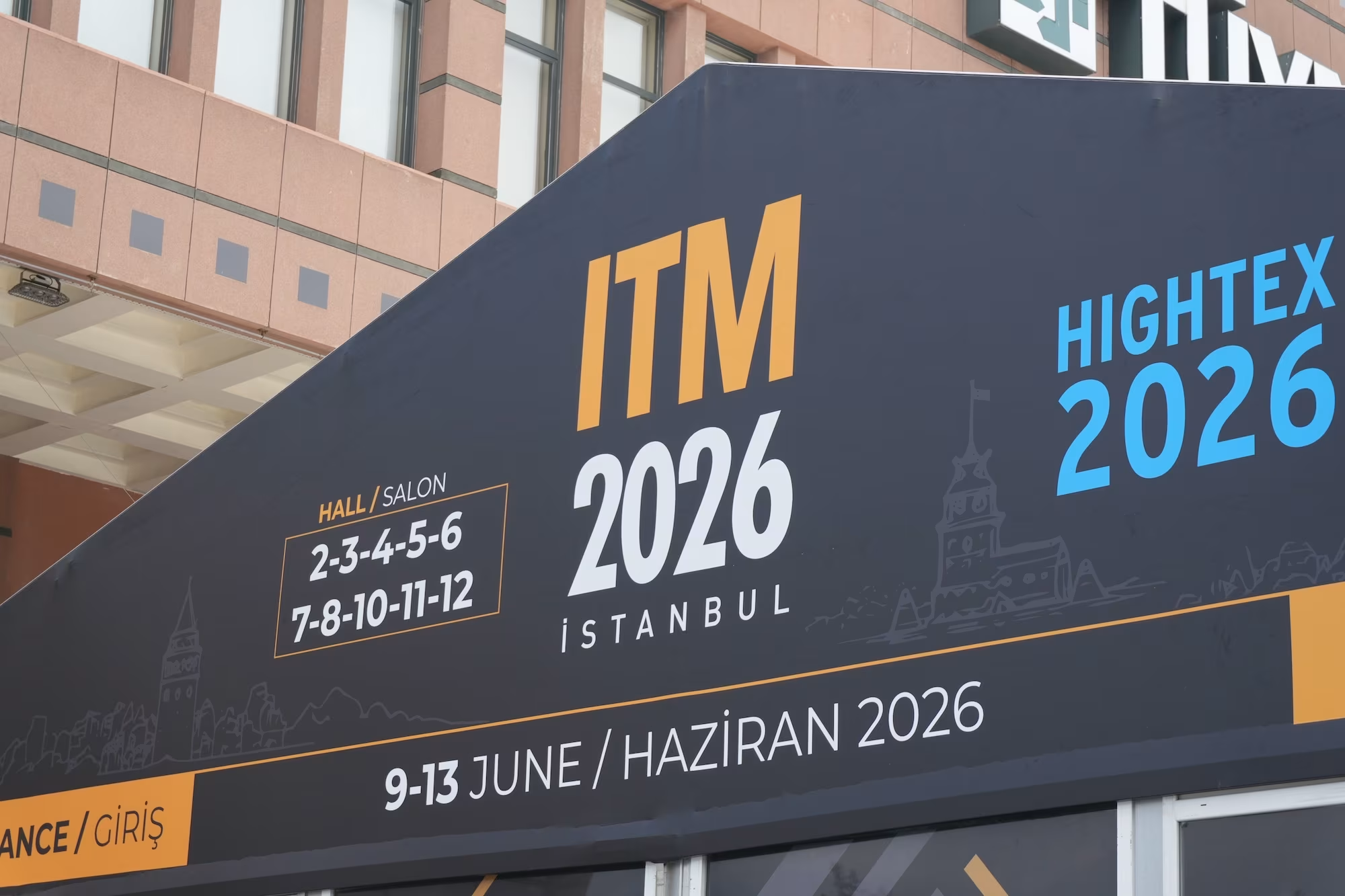
Read More: The Countdown to ITM 2026 Has Begun: Global Textile Investors Will Meet in Istanbul
Kohan Textile Journal: How long has Teksel Tekstil been active in the textile machinery sector?
Tolga Sezgin: Teksel Tekstil has been serving the textile industry for more than 40 years.
Our headquarters is located in Istanbul, and throughout these four decades we have represented leading machinery manufacturers and technology suppliers from around the world.
Kohan Textile Journal: How do you evaluate the current situation and future outlook of the Turkish textile industry?
Tolga Sezgin: When we look at the current situation in Türkiye, the industry is facing significant challenges.
Rising labor costs, increasing energy prices, and higher production expenses are putting pressure on manufacturers. At the same time, many export-oriented companies are struggling with exchange rate dynamics, making it increasingly difficult to remain competitive in global markets.
These factors have created a challenging environment for textile producers. However, I believe that with the right economic and commercial policies, these issues can gradually be overcome.
Kohan Textile Journal: Many Turkish manufacturers have recently expanded into markets such as Egypt. How do you see this trend?
Tolga Sezgin: The movement of investments toward countries such as Egypt is largely driven by the challenges I just mentioned.
Several major textile manufacturers have established production facilities there in recent years. While Egypt has attracted attention due to lower costs, I personally do not believe this will necessarily be a long-term advantage.
Costs in Egypt are also increasing, and there are still uncertainties that could create challenges for investors in the future.
My hope is that Türkiye will once again become a more attractive manufacturing destination so that companies continue investing domestically and strengthen the local textile ecosystem.
Kohan Textile Journal: What do you believe is needed to encourage textile investments to remain in Türkiye?
Tolga Sezgin: The key issues are exchange-rate stability, labor costs, and energy prices.
These factors currently influence investment decisions and encourage some manufacturers to look abroad. With appropriate economic measures and supportive commercial policies, I believe Türkiye can regain its competitive position.
Ultimately, policy decisions will play a major role. If the right steps are taken, I believe we can see investments returning and confidence in the Turkish textile industry strengthening once again.
Editor’s Insight
Despite ongoing challenges related to costs and competitiveness, Teksel Tekstil remains optimistic about the long-term future of textile manufacturing in Türkiye. Tolga Sezgin’s comments reflect a sentiment shared by many industry stakeholders: while some investments are shifting abroad, Türkiye’s strong infrastructure, expertise, and textile heritage continue to make it a strategic production hub for the global textile industry.











