
Study points to annual growth of 4.2%, driven by service quality, automation and circular textile care.
The global market for professional textile care (PTC) could grow from about USD 135 billion today to about USD 370 billion by 2050, according to the Global PTC Strategy Study presented today in Milan by CINET, the international umbrella organization of the sector. The growth lies in quality, service and automation, rather than simply in processing more kilograms of textiles.
CINET President Peter Wennekes handed the first copy of the study to Paolo Cartabbia, President of the Italian umbrella association Assofornitori, in the presence of EXPO Detergo President Livio Bassan and representatives of leading international suppliers, such as Electrolux Professional, Kannegiesser, Seitz and Kreussler.
From USD 135 Billion to USD 370 Billion
Today, the PTC industry is worth about USD 135 billion, split into about 40% consumer retail textile cleaning and 60% industrial textile services (ITS) for healthcare, hospitality, industry and business services.
Based on economic and population growth alone, the market would reach about USD 240 billion by 2050, representing annual growth of 2.4%. That line is the floor, not a forecast.
The study’s composite scenario adds a larger professional share of the cleaning market and a higher service content, while subtracting the forces that put pressure on price and volume. It indicates a potential market volume of about USD 370 billion by 2050, representing annual growth of 4.2%.
Mature segments such as the USA, the EU and China are expected to grow by 2.4% to 3.6% a year, while emerging segments such as India, Indonesia and Africa are expected to grow by 4.5% to 7.5%.
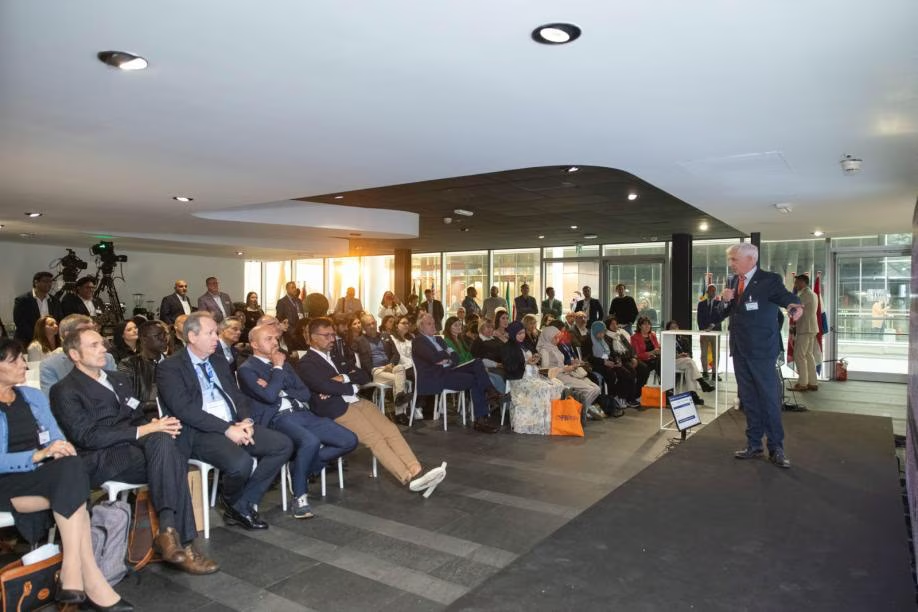
Industry “From Wash to Worth’’ by Mr. P Wennekes President of CINET.
Vision: Growth Through Quality and Service
“Textile is always cleaned. The question is: who cleans it, how well, and what the customer gets with it. Our sector grows faster than the economy that carries it, and that growth lies in quality and service, rather than in kilograms. Giving textile the longest possible life is the key, and it is what a household machine cannot do.”
Peter Wennekes, President & CEO of CINET
Where the Growth Comes From
Quality and service. Cleaning returns textiles as new for the use they were made for: clean, hygienic when agreed, in shape, and with their protective and comfort functions intact, cycle after cycle. Measurable quality control and certification gain importance, and customers ask for more convenience and personal service.
Lower cost through automation. Automation, robotization, IT and AI lower the cost of professional cleaning. Finishing is where much of the labor is concentrated: leading operators report that machine finishing can bring the cost price of retail textile cleaning down to about half of today’s level over time. The technology is already in use in top companies in mature markets and is spreading step by step to emerging markets, as it already does in Southeast Asia.
Longer lifetime, better sustainability. The lifetime of a garment is counted by the number of times it is made fit for use again, not in years: a garment used six times instead of three has twice the lifetime, and producing textiles has a far greater environmental impact than maintaining them.
Hand washing uses about 35 liters of water per kilogram, while a modern industrial tunnel washer uses 1.6 to 1.8 liters. Professional laundering uses two to three times less energy than washing at home (CINET studies, 2016 and 2020).

From the Single Wash to the Closed Loop
Data at the customer level, such as bed planning in a hospital or occupancy in a hotel, steers the collection, processing and return of the same textiles with the lowest possible stock levels.
Rental and leasing make this possible because the operator owns the textiles. Scale determines who can invest: large companies automate, mid-sized companies keep up by automating step by step, while small companies maintain specialist niches.
EU legislation on textile circularity and Extended Producer Responsibility, with separate collection mandatory since 2025 and a producer responsibility scheme in every member state by April 2028, strengthens this move; similar initiatives are being prepared or implemented in the USA and China.
Read More: What Professional Textile Care Means For The World, Now And In 2050
Advanced Textiles Create New Service Opportunities
Man-made fibers with more advanced functions, for instance those used in cleanrooms and protective clothing, create demand for new re-functionalization services with higher added value, such as body-temperature control.