Efforts to eliminate harmful PFAS chemicals from functional textiles are gaining momentum, as researchers and industry partners develop new solutions for water-repellent and durable fabrics without environmental risks.
PFAS (per- and polyfluoroalkyl substances), widely used in outdoor clothing for their water, dirt, and grease resistance, have become a major environmental concern due to their persistence and potential health impacts.
Plasma Coating Technology Offers Breakthrough
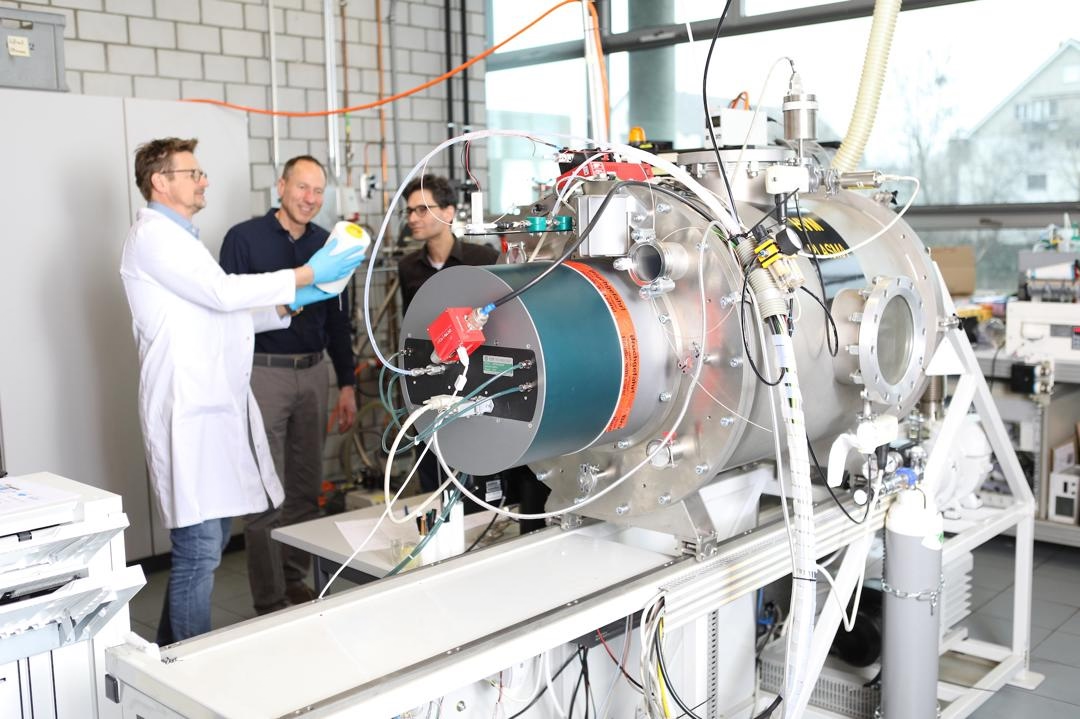
Scientists at Empa are working with textile manufacturers to develop PFAS-free alternatives using advanced plasma coating technology. The initiative is part of the EC0Tex project, supported by the Swiss innovation agency Innosuisse.
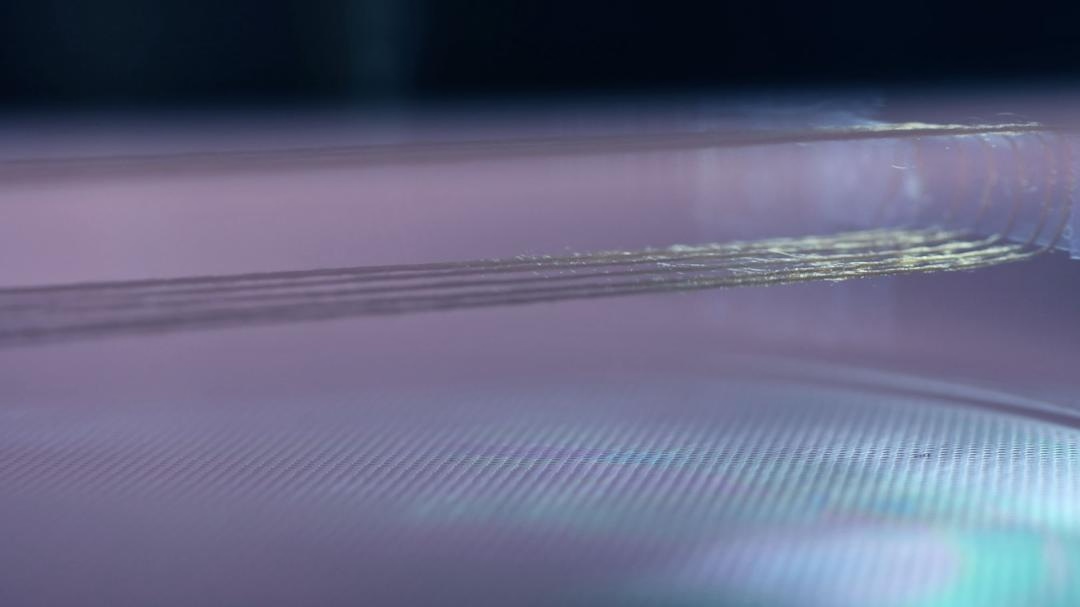
The newly developed system applies ultra-thin coatings directly to textile yarns, significantly reducing the amount of chemicals required while maintaining performance characteristics.
Unlike conventional methods, which often require large quantities of substances to achieve similar effects, the plasma process ensures deeper and more uniform coating penetration into the yarn structure.
Safe and Sustainable by Design Approach
A key principle behind the project is the “Safe and Sustainable by Design” (SSbD) framework, which aims to prevent the introduction of harmful substitute chemicals.
Researchers emphasize the importance of avoiding “regrettable substitutions”—materials that may replace PFAS but pose similar environmental or health risks. Instead, the development process includes early-stage risk assessments to balance industrial performance, environmental impact, and economic feasibility.
Read More: France Enacts National PFAS Ban in Textiles, Exempts Second-Hand Clothing
Exploring New Material Alternatives
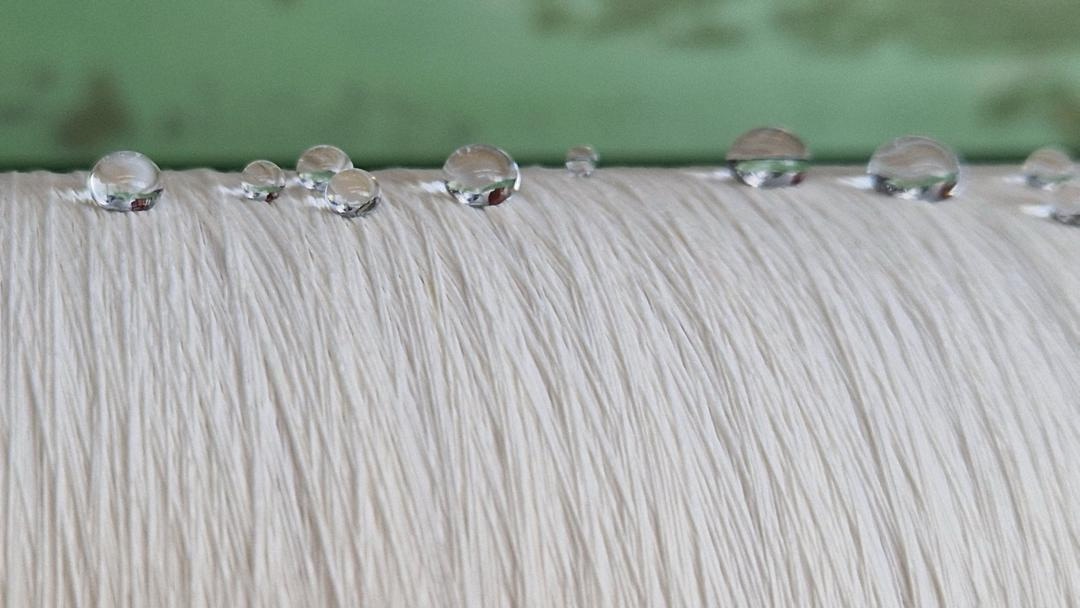
Among the promising alternatives being studied are organosilicon compounds, which can create highly durable, water-repellent coatings with improved longevity compared to traditional PFAS treatments.
Initial findings suggest that these materials offer strong water resistance and quick-drying properties, although challenges remain in achieving the same level of grease and dirt repellency provided by PFAS.
Toward Scalable and Sustainable Production
The EC0Tex project, developed in collaboration with Swiss textile companies, aims to bring this technology to industrial scale. The process could be applied not only in outdoor apparel but also in sportswear, technical textiles, and industrial applications such as ropes.
The project has already gained international recognition, receiving an innovation award at Techtextil in Frankfurt.
A Critical Step for the Textile Industry
As global regulations tighten and sustainability expectations rise, the shift toward PFAS-free textiles is becoming increasingly urgent.
While challenges remain—particularly in matching all performance attributes of PFAS-based finishes—the development of scalable, safe alternatives marks a significant step forward.
The success of such technologies will be critical in enabling the textile industry to transition toward safer, more sustainable materials without compromising functionality or economic viability.