The nonwoven industry in the Middle East and Africa is no longer a side story within technical textiles. It is becoming a strategically important manufacturing segment shaped by population growth, urban expansion, hygiene demand, industrial diversification, and a slow but visible shift toward more localized production. Publicly available regional data is still fragmented, but the direction is clear: the region is moving from being mainly an end market for nonwoven-based products to becoming a more serious production base for selected nonwoven categories.
EDANA has already noted that nonwovens production in Middle Eastern and North African countries recorded significant growth over the last decade thanks to major investments. At the same time, the broader demand fundamentals are hard to ignore: the World Bank puts the population of the Middle East, North Africa, Afghanistan and Pakistan at 813.1 million in 2024, while Sub-Saharan Africa reached 1.29 billion.
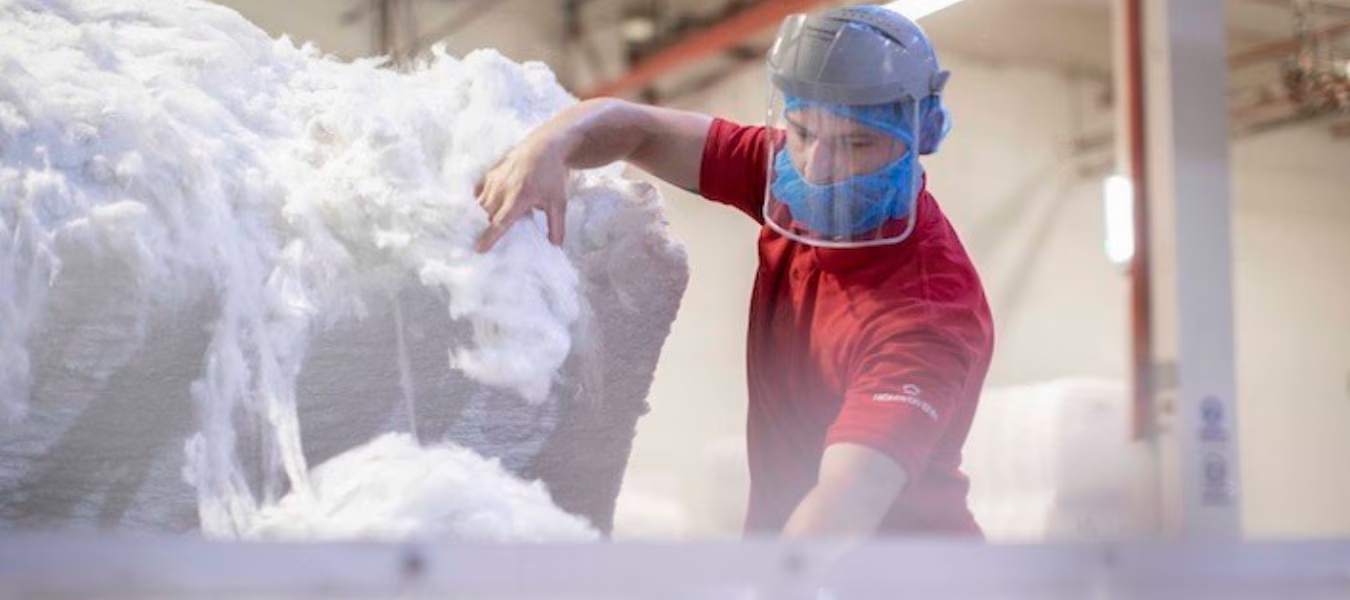
What matters for the nonwoven sector is not population alone, but the type of population growth taking place. In the Middle East, North Africa, Afghanistan and Pakistan, urban residents accounted for 56% of the population in 2024, and the World Bank reports an urban population of about 452.9 million for the broader grouping. In Sub-Saharan Africa, urban population growth stood at 3.6% in 2024. These are not abstract demographic signals. They translate into rising consumption of hygiene products, medical disposables, wipes, protective materials, geotextiles, filtration media, and construction-related technical textiles. In other words, the region’s nonwoven story is being driven by everyday industrial realities, not by speculative hype.
Why Nonwovens Matter More in This Region Now
The Middle East and Africa are not a single nonwoven market. They are a patchwork of very different industrial environments. Turkey has a relatively deep technical textile and nonwoven manufacturing base. Saudi Arabia is strengthening domestic capacity in hygiene-related nonwovens. Egypt is building around localized production and export-oriented manufacturing. South Africa remains important in needlepunch and geotextiles. Other markets across Africa are still driven more by demand growth than by large-scale domestic supply. That unevenness is not a weakness in itself. It is the true structure of the region, and any serious analysis has to start there.
Read more: The Future of Sustainable Nonwovens: Can Airlaid Technology Replace Synthetic Fibres by 2030?
A second reality is that nonwovens are becoming more relevant because they sit at the intersection of several priority sectors. HIGHTEX, one of the main technical textiles and nonwoven exhibition platforms in Turkey, highlights application areas that are directly relevant to the region: geotextiles, building textiles, industrial textiles, cosmetics and hygiene textiles, medical and hygiene textiles, food packaging textiles, ecological textiles, and transport textiles. HIGHTEX also notes that geotextiles have been among the fastest-growing production groups in recent years, while the market for health and hygiene products continues to grow alongside population growth. That observation matters because it mirrors the actual demand profile of much of the Middle East and Africa, where infrastructure, healthcare, sanitation, agriculture, and urban development are all expanding at the same time.
The Real Demand Engines Behind the Industry
In practical terms, the strongest nonwoven demand driver across the region remains hygiene and personal care. This includes baby diapers, feminine hygiene products, adult incontinence products, wipes, and related absorbent and barrier materials. Gülsan Holding states that its spunbond nonwovens are used in baby diapers, adult diapers, sanitary pads, and the medical sector. Avgol identifies hygiene, medical, and functional materials as core markets. Saudi German Nonwovens says its product portfolio serves medical, hygiene, agriculture, and industrial sectors. When several of the region’s most visible producers and suppliers point to hygiene first, that is a strong indicator of where the market’s commercial backbone actually sits.
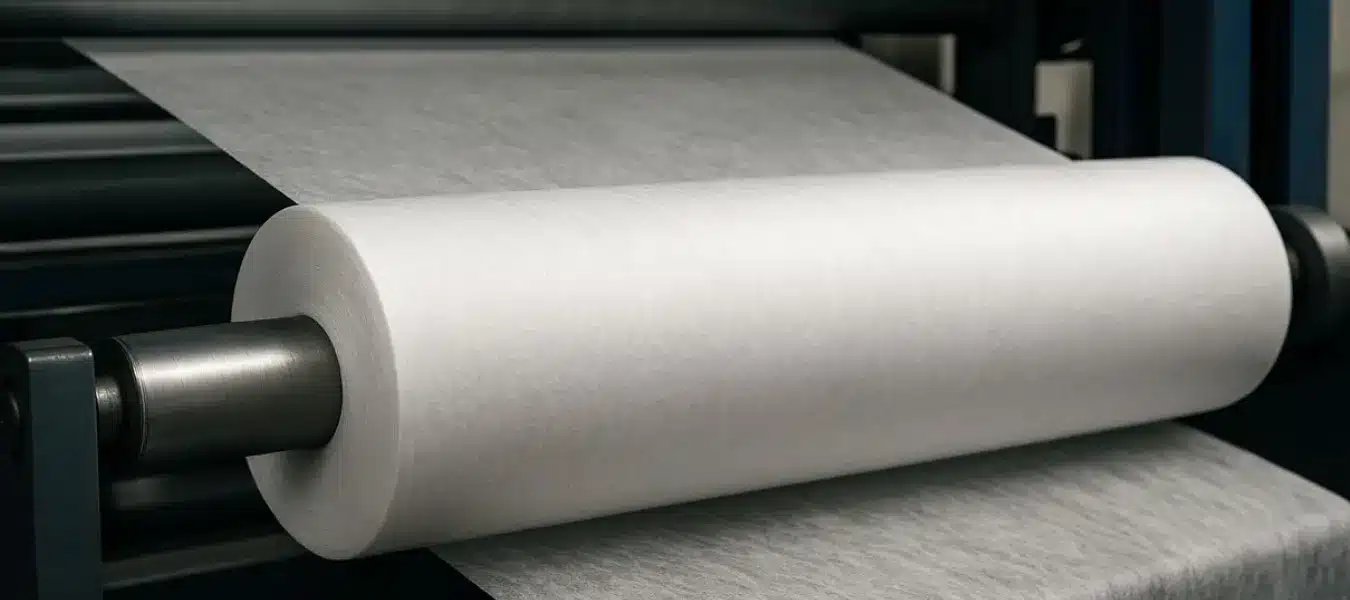
Medical and healthcare applications form the second major pillar. The pandemic accelerated awareness of spunmelt, meltblown, and other medical-grade nonwoven materials, but the longer-term story goes beyond emergency supply. Hospitals, clinics, disposable drapes, gowns, masks, wound-care products, sterilization packaging, and infection-control materials all depend heavily on nonwovens. In a region where healthcare systems continue to expand but domestic raw-material ecosystems are still incomplete, medical nonwovens remain both a necessity and a manufacturing opportunity. Avgol’s portfolio explicitly covers hygiene, medical, and functional markets, while SGN also places medical among its key sectors.
Construction and civil engineering are also central, especially in Africa. This is where the nonwoven conversation moves beyond diapers and wipes into geotextiles, filtration, drainage, erosion control, roadbuilding, and reinforcement. Fibertex South Africa says its Hammarsdale plant is the largest plant in Africa manufacturing geotextiles from virgin polypropylene, and identifies automotive, bedding, filtration, furniture, and geotextiles as core business areas. That is significant because it shows that African nonwoven production is not only about hygiene roll goods; it also includes durable technical materials linked to infrastructure and industrial use.
Agriculture, packaging, filtration, and transport are quieter but strategically important categories. HIGHTEX describes agricultural textiles as increasingly necessary for protection, collection, and resource efficiency; industrial textiles as the widest application field in technical textiles; and nonwovens as increasingly common in food packaging. These are exactly the categories that tend to grow when regions industrialize unevenly: not every country builds a hygiene-material supply chain first, but many create demand for packaging, filtration, crop protection, insulation, and performance materials. For Middle East and African converters, traders, and machinery suppliers, this broader application map matters as much as hygiene.
Turkey’s Role: The Region’s Most Mature Nonwoven Base
If one country stands out as the industrial anchor of the wider region, it is Turkey. This is not because Turkey dominates every nonwoven category, but because it combines manufacturing depth, machinery exposure, technical textile culture, export experience, and strong event infrastructure. HIGHTEX openly positions Istanbul as an international technical textiles and nonwoven exhibition hub, and in a HIGHTEX interview page Dilo Group described Turkey as “a very important part of the world market” in the nonwovens segment. That wording is not casual; it reflects how global machinery suppliers view Turkey’s position.
Turkey’s industrial base is also visible at company level. Mogul describes itself as a producer with over 30 years of experience in spunbond, spunlace, and meltblown nonwovens. Gülsan states that it has an annual spunbond nonwoven capacity of 160,000 tons and counts itself among the world’s top five hygienic spunbond facilities. Search results tied to Gülsan’s profile also show that the group already makes 160,000 tons of spunmelt nonwovens annually, including 120,000 tons in Turkey and 40,000 tons in Egypt. Taken together, these figures show that Turkey is not only a machinery marketplace or a distribution hub; it is a serious production center with regional spillover into neighboring countries.

Saudi Arabia and the Gulf: Capacity With Strategic Intent
Saudi Arabia’s nonwoven story is different from Turkey’s. It is less diversified, but highly strategic. Saudi German Nonwovens says it is a 100% Saudi-owned company founded in 1996 and serving medical, hygiene, agriculture, and industrial sectors. In 2025, the company celebrated the opening of its Rabigh facility expansion and launch of Line 5, according to industry coverage and company communications. That matters because it signals continued confidence in local production, not just import substitution. In the Gulf context, the nonwoven business is closely tied to hygiene, healthcare, petrochemical integration, and the wider industrial localization agenda.
The Gulf’s structural advantage is obvious: access to feedstock, logistics infrastructure, and capital. Its structural limitation is equally obvious: the nonwoven ecosystem is still narrower than Turkey’s, and downstream diversity remains more limited in many segments. That is why Saudi Arabia’s significance lies not in claiming regional dominance across all nonwoven technologies, but in building reliable, scalable production where it has a clear economic logic—especially hygiene-related spunmelt materials and other industrially integrated categories.
Egypt: A Manufacturing Bridge Between Africa and the Middle East
Egypt is one of the region’s most interesting nonwoven markets because it sits between domestic demand, industrial policy, and export geography. Gülsan Egypt Nonwoven Industries was established in 2011 and started producing nonwoven fabric in October 2014. ANF Egypt presents itself as the first spunlace manufacturer in Egypt, while its about page describes the company as an Egyptian localization project built around spunlace nonwoven fabrics for wipes. These are not small details.
They show that Egypt’s nonwoven development is being framed not only as production growth, but also as localization and import reduction.
This makes Egypt especially relevant for the future of wipes, hygiene materials, and selected export-oriented nonwoven categories. The country is not yet the region’s dominant nonwoven powerhouse, but it is clearly one of the most strategically positioned. It offers manufacturers a location connected to North Africa, the Arab world, Europe, and East Africa. For a nonwoven industry that depends on both conversion and logistics, that positioning matters almost as much as capacity itself.
Africa Beyond Egypt: Growth Is Real, But Uneven
Across Africa, the nonwoven industry is real, but it remains unevenly distributed. South Africa has a more visible industrial base in needlepunch and geotextiles. Fibertex South Africa says its plant was established in 2010, specializes in needlepunch products, and is the largest plant in Africa manufacturing geotextiles from virgin polypropylene. It also lists automotive, bedding, filtration, furniture, and geotextiles among its key business areas. This is important because it demonstrates that African nonwovens cannot be reduced to a hygiene-only narrative. In some markets, durable technical applications are just as relevant as disposable ones.
Still, Africa’s industrial opportunity should be described honestly. Demand is growing faster than manufacturing depth in many countries. Infrastructure gaps remain a constraint, and the World Bank reports that access to electricity in Sub-Saharan Africa stood at 53.3% in 2023. That matters directly for nonwovens because modern lines depend on stable energy, process control, logistics, and quality consistency. So while the continent’s scale is undeniable, the nonwoven opportunity is not uniform. It is strongest where industrial parks, logistics, energy access, converting capacity, and downstream consumer-goods industries are already taking shape.
Investment Outlook: Solid, But Not for Every Segment
The investment case for nonwovens in the Middle East and Africa is strongest in segments where demand is recurring, raw materials are accessible, and conversion ecosystems already exist. Hygiene roll goods, wipes-related inputs, medical disposables, and geotextiles fit that profile best. Turkey offers the deepest regional ecosystem. Saudi Arabia offers industrial integration and scale in selected categories. Egypt offers a manufacturing bridge with localization potential. South Africa remains meaningful in needlepunch and geotextiles. These are not speculative projections; they are the practical conclusions that emerge from the production footprints and company profiles already visible in the market.
But realism is essential. The region still lacks a fully transparent, consolidated open-data picture for total nonwoven output across all Middle Eastern and African markets. That is why serious analysis should resist the temptation to recycle oversized forecast numbers. What can be said with confidence is that investment is already happening, that production is spreading beyond a handful of legacy markets, and that application diversity is widening.
EDANA’s comment on significant MENA growth over the last decade, combined with visible new capacity in countries such as Saudi Arabia and Egypt and long-established manufacturing depth in Turkey, is enough to confirm that the sector has moved beyond its early stage.
Final Outlook
The Middle East and Africa nonwoven industry is not yet a single integrated powerhouse, and it should not be described that way. It is a region of different speeds, different strengths, and different industrial logics. Yet that is exactly why it deserves attention.
Nonwovens are becoming more deeply connected to the essentials of modern development across the region: hygiene, healthcare, construction, packaging, agriculture, filtration, and infrastructure. The strongest future winners are likely to be the countries and companies that build around real end-use demand, not around inflated market narratives. For Kohan Textile Journal, the clearest conclusion is this: the nonwoven sector in the Middle East and Africa is no longer merely promising. It is already structurally relevant—and in the right segments, it is becoming commercially decisive.