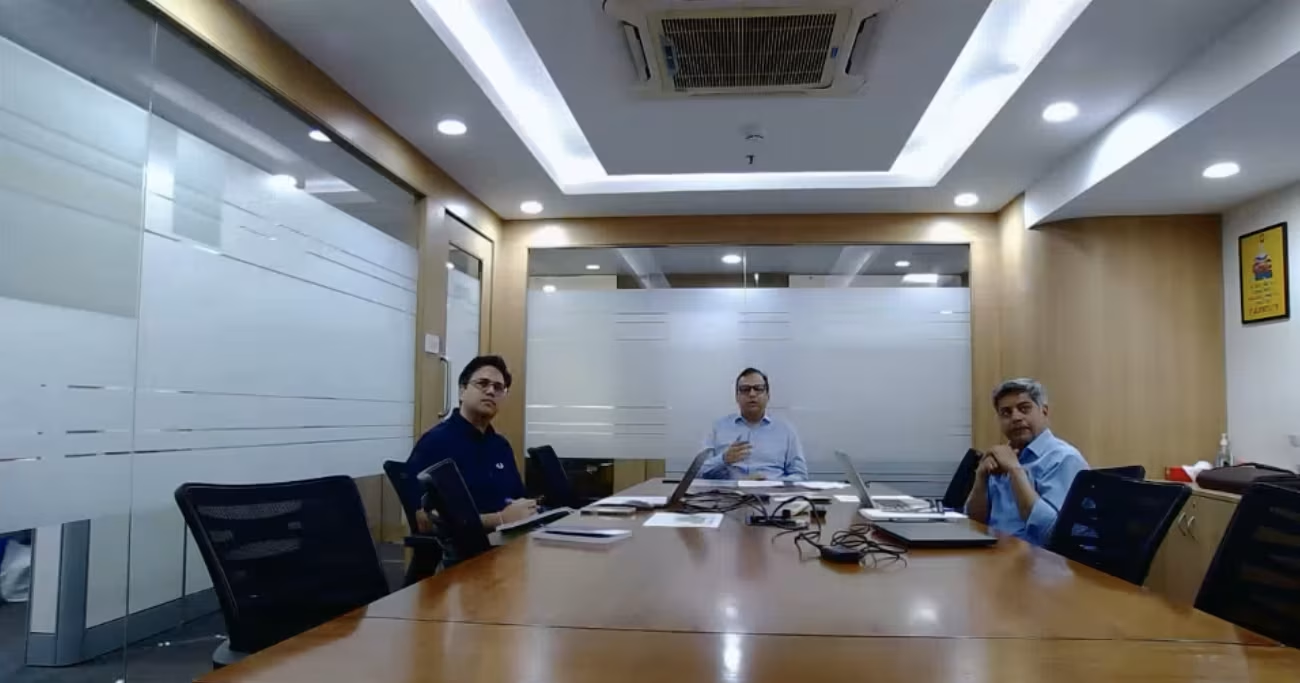
Interview: Mr Kapil Agrawal, Business Head of Technical Textiles at Aditya Birla Group, by Behnam Ghasemi
In an era where innovation, sustainability, and geopolitical shifts are redefining the textile industry, technical textiles are emerging as one of the most strategic segments worldwide.
In this exclusive interview with Kohan Textile Journal, Kapil Agrawal, Business Head of Technical Textiles at Aditya Birla Group, shares insights into India’s rapid growth, the evolving role of sustainability, and the future of global textile production—from Asia to the Middle East and Africa.
India’s Technical Textile Market: Strong Growth Ahead
According to Agrawal, India is entering a decisive growth phase in technical textiles, supported by both policy and market demand.
“The Indian technical textile market is expected to grow at around 8% CAGR over the next 5 to 10 years,” he explains. “This growth is driven by increasing awareness, regulatory developments, and the country’s broader transition toward becoming a developed economy.”
He highlights that sectors such as protective textiles, infrastructure applications, and safety regulations are accelerating demand, creating a strong foundation for long-term expansion.
Also Read: Top 10 Viscose Fiber Producers in the World (2026 Guide)
From Cost Advantage to Innovation: The Role of R&D
While India has traditionally been recognized for cost competitiveness, the industry is now shifting toward innovation-led growth.
“At Aditya Birla Group, we operate multiple R&D centers, both in India and internationally,” says Agrawal. “Our approach starts from understanding the end-user requirement and then working backward to develop solutions.”
This shift is not limited to one company. Government-backed initiatives and industry-wide investments are strengthening research capabilities across the value chain.
“The future of technical textiles will be driven by innovation,” he adds. “We will see more companies investing in new products and advanced applications.”
Why Indian Manufacturers Are Moving Up the Value Chain
The transition from commodity textiles to high-value technical applications is no longer optional—it is strategic.
Agrawal identifies several key drivers behind this shift:
- Increasing competition from low-cost manufacturing countries
- Regulatory changes in sectors such as automotive safety and industrial protection
- Growing domestic demand for technical applications
- Global sourcing shifts toward diversified supply chains
“Commodity products are highly competitive,” he explains. “To ensure long-term sustainability, manufacturers must move toward technical textiles where value creation is higher.”

Sustainability: Beyond a Buzzword
In a sector often dominated by buzzwords, Agrawal offers a clear and structured view of sustainability.
“Sustainability has two major dimensions,” he explains. “One is reducing carbon emissions and achieving net-zero targets across the value chain. The second is circularity—using post-consumer waste to create new fibers.”
Aditya Birla Group is actively investing in both areas, including facilities that convert production waste into usable fibers for global brands.
“This is real sustainability,” he emphasizes. “Not just reducing impact, but creating value from waste.”
The Real Challenge: Scaling Circularity
Despite progress, scaling sustainable solutions remains a key challenge.
“The biggest issue today is technology scalability,” Agrawal notes. “While pilot projects exist, producing recycled fibers at large scale with the same quality as virgin materials is still difficult.”
As a result, circular products often require blending and remain more expensive—limiting widespread adoption.
“Once scalable technologies emerge, we will see a major shift toward circular textiles,” he predicts.
Middle East: A High-Potential Market for Technical Textiles
With increasing investments in infrastructure and industrial sectors, the Middle East is becoming a significant market.
“The region has strong demand, particularly in oil & gas and protective applications,” says Agrawal. “As regulations evolve, especially around fire safety, the demand for technical textiles will increase further.”
He also points out the unique structure of the market, where aggregators play a key role in distribution.
“We are actively engaging with partners in the region and see strong growth potential.”
Africa: The Next Frontier—But Not for Everything
The global textile industry is shifting once again, with Africa emerging as a new destination for production.
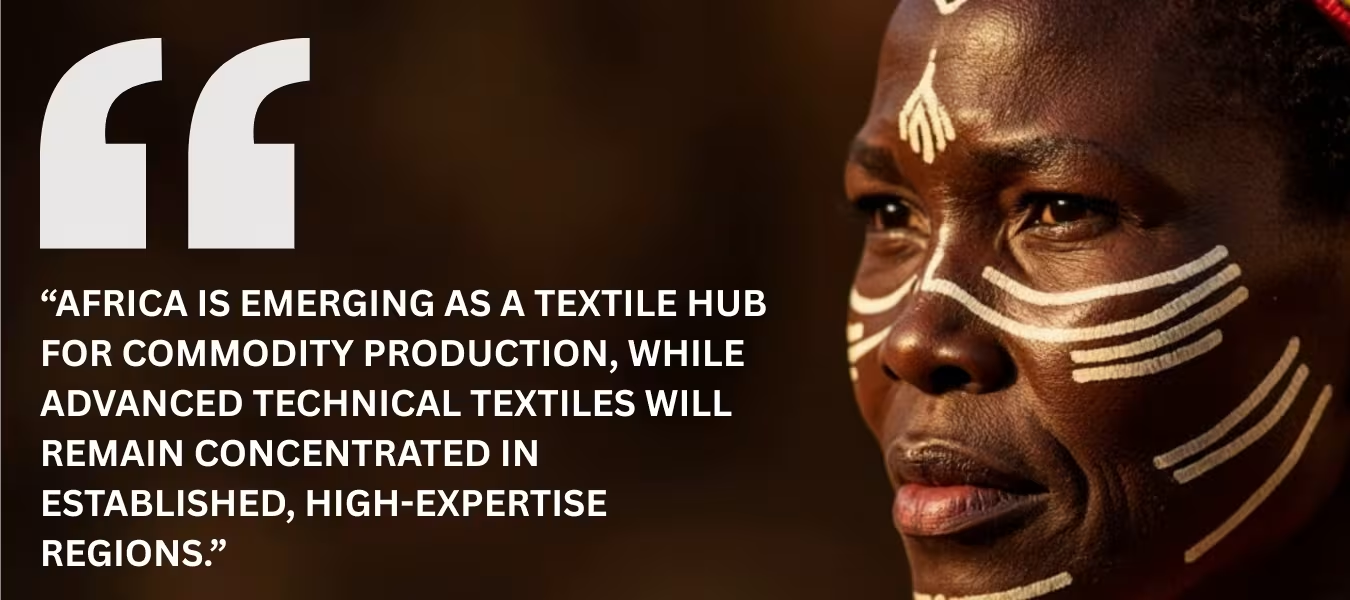
“Africa is already part of the global textile map,” Agrawal explains. “However, the shift mainly applies to commodity products.”
While labor availability is strong, skill development remains a challenge.
“As education and training improve, Africa could become a major hub,” he says. “But high-performance technical textiles will continue to require advanced expertise, which remains concentrated in established regions.”
A Solution-Oriented Approach to High-Performance Textiles
Aditya Birla Group positions itself not just as a supplier, but as a solution provider.
“We are present across multiple segments—fiber, yarn, filament, and even fabrics,” Agrawal explains. “This allows us to understand market needs deeply and develop integrated solutions.”
This end-to-end presence enables the company to respond more effectively to complex industrial demands.
Looking Ahead: Collaboration and Global Partnerships
As the industry becomes more interconnected, collaboration is becoming essential.
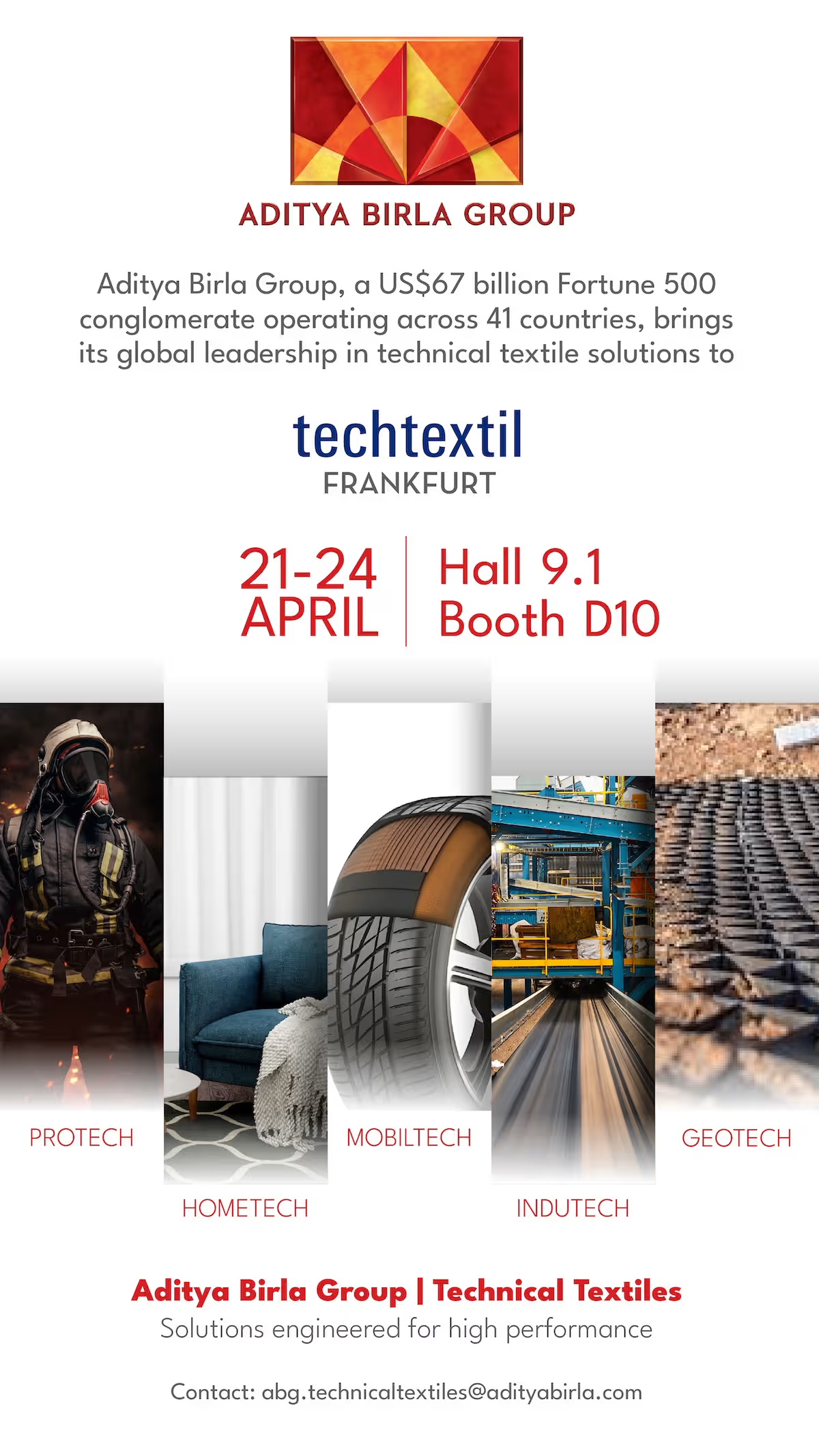
“We invite our global partners to visit us at Techtextil,” Agrawal says. “We are a one-stop solution provider and are open to collaboration across segments such as protective, automotive, and home textiles.”
With experience working with demanding markets such as Japan, the company is positioning itself as a reliable global partner for high-performance textile solutions.
Despite global uncertainties, Agrawal remains confident about the future of textiles.
“Textiles are fundamental to human life,” he says. “The form may change, and sustainability will become more important—but the industry will continue to evolve and grow.”
Final Perspective: A Resilient Industry
From an editorial standpoint, this conversation reflects a deeper transformation underway in the global textile industry. The shift from volume-driven production to innovation-led, application-focused value creation is no longer a trend — it is the new reality.
Technical textiles are emerging at the center of this transition, where performance, engineering, and end-use intelligence define competitiveness. At the same time, sustainability is moving beyond narrative into execution, with scalability becoming the industry’s next critical challenge.
What is equally clear is the changing global balance. India is strengthening its role in high-value segments, the Middle East is expanding as a demand-driven market, and Africa is gradually positioning itself within the production landscape. The future of textiles will be shaped by this multi-regional dynamic.
In this evolving environment, companies like Aditya Birla Group are positioning themselves not only as manufacturers, but as solution providers — bridging innovation, scale, and market needs.
👉 You can meet Aditya Birla Group at Techtextil 2026, Hall 9.1, Booth D-10