




Egypt is the largest producer in Africa and worldwide of long (LS) and extra long staple (ELS) cotton, accounting for around 50 percent of world production, it has built a brand reputation for its quality of cotton. Furthermore, Egypt has a vertically integrated textile and apparel industry, 90% of spinning and weaving companies are publicly owned.
Over the last ten years, there were a growing number of efficient private companies. However, the private sector dominates downstream industry with over 70 percent of garment production. The Egyptian government is targeting the encouragement of private investments in the up-stream industry, as well as, the down-stream industries.
Egypt and the world’s largest spinning and weaving factory
Egypt is preparing to announce the establishment of the largest spinning and weaving factory in the world in Mahalla al-Kubra.
It is scheduled to be completed by the end of this year, after construction work was delayed as a result of the coronavirus pandemic.
According to the Holding Company for Cotton, Spinning, Weaving, and Clothes, this factory will be the largest in the world and will contribute to a major shift for this industry in Egypt. The factory marks the first step forward towards the development and modernization of the textile industry, through the government’s plan to develop it at a cost of more than LE21 billion over two years.
The plan includes great focus on increasing exports and improving the quality of production by importing the latest machinery from Italy and Switzerland.
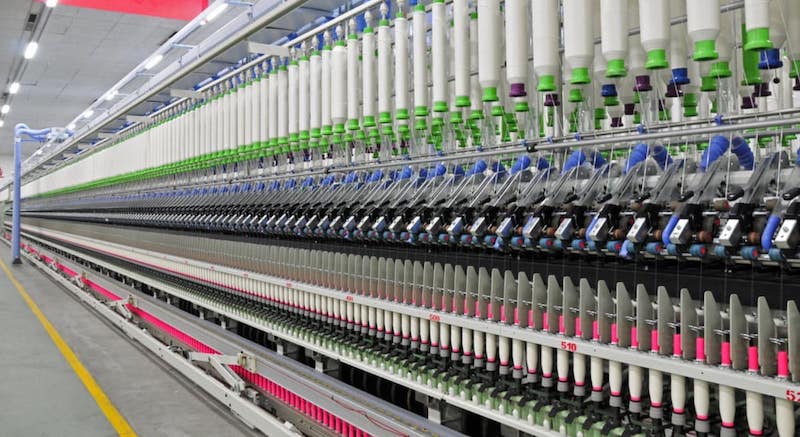
A comprehensive modernization strategy has been executed by the Egyptian Government to develop the textile industry for both, public and private sectors. Based on the strategy, the public sector plans to modernize the state-owned textile segment with an allocated investment of around 24 billion Egyptian Pounds over the course of three years starting 2019.
This budget will be financed by selling unused assets. This will be carried out by merging 24 public factories to only ten state-of-the-art factories, while also merging the current 24 cotton ginning factories to only 14 up and running facilities.
As for the private sector, there are plans to establish a training centre for workers to enhance their skills and expand their exposure, open new markets and activate the export support fund.
Lastly, the strategy aims to achieve a significant leap in the production capacity with a target production of 188 thousand tons of yarn yearly compared to 37 thousand tons; 198 million meters of fabric instead of 50 million meters and finally, 50 million pieces of garments instead of 8 million pieces.
The factory, which would be inaugurated in March 2022, Planned on an area of about 62,500 square meters, the factory accommodates over 182,000 yarn materials with an average production capacity of 30 tons of yarn a day, meaning the consumption of about 300,000 quintals of long cotton annually.
According to sources in the public business sector, workers are being trained on the latest technologies that will be installed in the factory, as well as in factories that will be developed soon in Cairo, Kafr al-Dawar and the Delta region.

The project will provide around 17,000 direct jobs, in addition to indirect job opportunities, and target exports to overseas markets.
Egypt has always played a critical role in world trade owing to its geographic status, connecting 3 continents with close access to all. But since the 80’s absence of many raw materials and supply chain depending on imported goods, Egypt’s textile sector could not reach to the world level it deserves.
Here, project of ministry will play a very important role in bringing fully integrated facilities to life. It won’t only accelerate the textile trade figures both in local market and exports of Egypt but it will also energize the competition to bring the sector to world standards.
Egypt’s exports of spinning, textiles rise to $1.5B in 2021
Egypt’s Spinning, textiles and home furnishings during 2021 increased by about 25 percent to reach $1.567 billion, compared to $1.245 billion in 2020.
The Chairman of the Council, Said Ahmed, indicated in a statement, that the spinning and textiles sector rose in 2021 by about 20 percent, recording $916 million, compared to $763 million in 2020, and the “home furnishings” sector achieved an increase of 35 percent to $651 million, compared to $482 million in 2020.
Saeed added that textiles exports accounted for 42 percent of the sector’s total exports, indicating that they had increased by 25 percent, recording $387 million compared to 2020, followed by yarn exports, which accounted for 31 percent of the total exports, registering $284 million compared to 2020, followed by technical textiles exports, which accounted for 14 percent of the total exports, and fiber exports by 12 percent of the total textile exports in 2021.
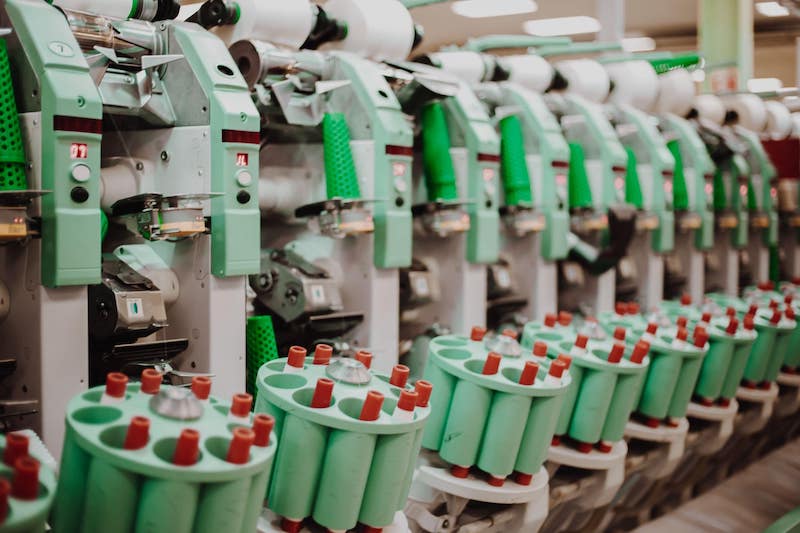
Saeed noted that at the level of the largest export markets for spinning and textiles in 2021, the volume of exports rose to Italy by 22 percent, and exports to Algeria increased by 18 percent, and rose to Saudi Arabia by 42 percent and then Germany by 2 percent.
He added that Egypt’s exports of spinning and textiles to Tunisia increased by 27 percent, to Nigeria’s market by 27 percent, and also to Jordan, with a growth rate of 24 percent.
The global demand for the textile products especially Cotton yarns and also the domestic sales have come down to a grinding halt due to the panic situation created by the outbreak of COVID-19. The spread of the virus in China and which later got spread to EU and USA has majorly impacted us as they are huge markets for Egyptian textile products.
– Egypt’s exports of yarn and textiles to European countries recorded the highest value compared to other international groups, reaching 97 million dollars in the first half of 2020, a decrease of about 32% compared to 116 million dollars in 2019.
– Followed by the Arab countries, where exports of yarn and textiles recorded 88 million dollars in the first half of 2020, a decrease of 24%, compared to 115 million dollars in 2019.
– As for both Africa and the United States of America, they witnessed an increase in the value of yarn and textile exports for this period, and Africa’s exports reached 19 million dollars compared to 17 million dollars in 2019, while the United States of America lost, It reached $ 7 million against $ 1 million in 2019.
– As for the rest of the world, exports of yarn and textiles recorded 154 million dollars in the first half of 2020, a decrease of 15% compared to 181 million dollars in 2019.

Egypt textile industries council to develop the spinning, weaving sector
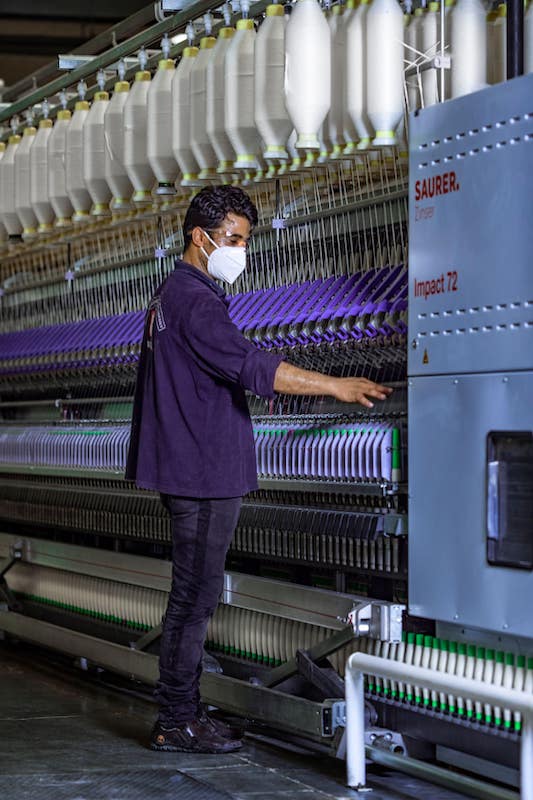
The establishment of this council came with the aim of developing textile industries at the level of the republic and coordinating efforts to strengthen all the textile industry’s circles and working to implement its strategic vision.
Minister of Trade and Industry Nevine Gamea has issued a decision to establish a textile industries council headed by the minister and includes a number of other state officials and experts in the field.
The establishment of this council came with the aim of developing textile industries at the level of the republic and coordinating efforts to strengthen all the textile industry’s circles and working to implement its strategic vision.
Egyptian government pays great attention to upgrading the spinning, weaving, and ready-made garments industry’s system in Egypt as per international standards that will meet the needs of the local market and enhance the quality of Egyptian products for export to global markets through expansion in all production phases.

Textile industries are among the most vital industries in which Egypt possesses great competitive advantages that qualify it to double its exports and access more foreign markets, she elaborated.
The decision specified competencies that the council is undertaking in coordination with the concerned authorities in textile industries, including listing the problems and obstacles facing this industry, setting an action plan to implement the state’s strategy and objectives for promoting and developing the spinning and weaving industry and an executive programme to implement the strategy.
It also includes studying the cost of local production and proposing the necessary measures to reduce these costs in a way that contributes to enhancing the competitiveness of local products compared to imported ones; and developing a map for textile industries that determines their gathering places, growth potential, and efficiency; increase their added value; and strengthen value chains.
The council’s tasks also include setting mechanisms to link feeding industries and major companies in the spinning and weaving industry and finding a modern mechanism to communicate with all world markets with the aim of presenting Egyptian products as a strong and competitive alternative to products from other countries.
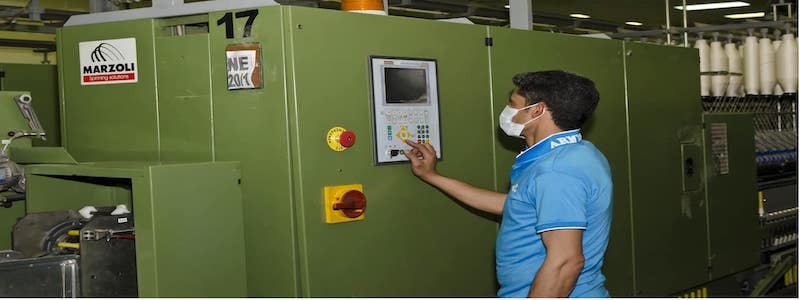 It also prepare a study to design Egyptian brands for the local market and export with the assistance of concerned authorities locally and internationally in this regard, as well as set up vocational training programmes to qualify the required employment for this industry and ways to implement it.
The decision stipulated that the council would have a technical secretariat to implement its recommendations and decisions with the concerned authorities, and to provide technical assistance in the council’s work.
9 Egyptian certified facilities for spinning

1- Egyptianspinning
www.egyptianspinning.com
Established in 2005, Egyptian Spinning & Weaving Company (ESW) is a leading private textile producer in Egypt, built on a 280,000 m² site. Leveraging the superior quality of Egyptian extra-long staple cotton, ESW specializes in fine and superfine yarn counts, ideal for premium apparel with exceptional softness and durability. The company produces compact yarns, gassed yarn, TFO yarns, and plied yarns in counts from 20’s to 160’s. With 64,000 spindles, including 16,080 compact Rieter K44, ESW achieves a daily capacity of 11 tons. Known for quality and reliability, ESW exports globally, serving discerning, quality-conscious buyers.
2- csatextile egypt
www.csatextileegypt.com
CSA Textile Egypt, part of Abalıoğlu Holding Group, was established by Abalıoğlu Tekstil Sanayi A.Ş. The investment began in 2006, and production started in 2008 with 25,000 ring spindles. The plant produces yarns from cellulosic fibers and cotton, as well as blends, in counts ranging from Ne 12/1 to Ne 50/1. Using premium Lenzing fibers such as Modal, MicroModal, Tencel STD, Tencel LF, along with viscose and bamboo fibers, CSA offers single, twisted, and slub yarns with both “Z” and “S” twist options. With a focus on innovation, quality, and customer service, CSA aims to be a leader in its sector.

3- Alkan
www.almatex.com
Alkan Textile Company S.A.E. (Almatex), part of Alkan Investment Company, is one of Egypt’s leading private textile enterprises. The company began in 1988 with its Open-End factory in Amria Free Zone, Alexandria, followed by a cotton ringspun factory in Sadat City in 1999. In 2002, it transitioned to a private free zone entity and today employs 1,200 people. With a spinning capacity of 4,800 tons annually, the mill produces 100% pure combed cotton yarns in counts from 16 NE to 120 NE, single and twisted (TFO). Strategically located in Sadat City, Almatex benefits from strong infrastructure and export facilities.

4- INTERYARN
www.interyarncotton.com
INTERYARN, a private shareholding company based in New Borg El-Arab Industrial City, Alexandria, was founded in 2003 with a worsted acrylic spinning plant producing wool/acrylic high-bulk yarns. In 2010, the company launched a major expansion project with 40,000 Rieter K46 spindles, in two phases, to produce 100% cotton compact yarns in fine and superfine counts, capitalizing on the exceptional quality of Egyptian Giza cotton. The first phase of 20,000 spindles began production in March 2014, with all output exported to leading weavers and knitters in Italy, Germany, France, Portugal, Turkey, India, and Pakistan. The second phase is currently under preparation.
5- Miratex
www.miratexeg.com
MIRATEX Textile Co. was established under the Economic Cooperation Agreement signed on May 25, 1974, between the governments of Egypt and Iran to promote industrialization and boost exports of Egyptian cotton. Recognized as one of the major projects under Egypt’s open-door policy, the company was officially founded by Ministerial Decree No. 206/1975. As a joint venture, it enjoys the same treatment as national projects. The city of Suez was chosen as its base to support the development of the Canal region socially and economically. Today, MIRATEX operates through its Suez Factory (Ataqa Mountain, Suez) and Minia El Kamh Factory (Sharkia).

6- FILMAR NILE TEXTILE S.A.E.
www.filmarnile.com
Filmar, established in 1958, is a leading producer of premium cotton yarns with a distinct Italian identity, crafted exclusively from 100% Egyptian cotton. From cultivation to finishing, the company has embraced a philosophy of excellence, directly sourcing cotton from farms in Egypt. With continuous investment, Filmar operates advanced production facilities covering 46,000 m² in Italy and Egypt, delivering an annual output of 7 million kilos of dyed yarn. In 2019, the company launched the Filmar Nile Textile plant in Borg El Arab, near Alexandria, introducing the 100% Nile brand, dedicated to yarns made from Egypt’s finest Nile Delta cotton.
7- Giza spinning and Weaving S.A.E Sadat Branch
www.nilespin.com
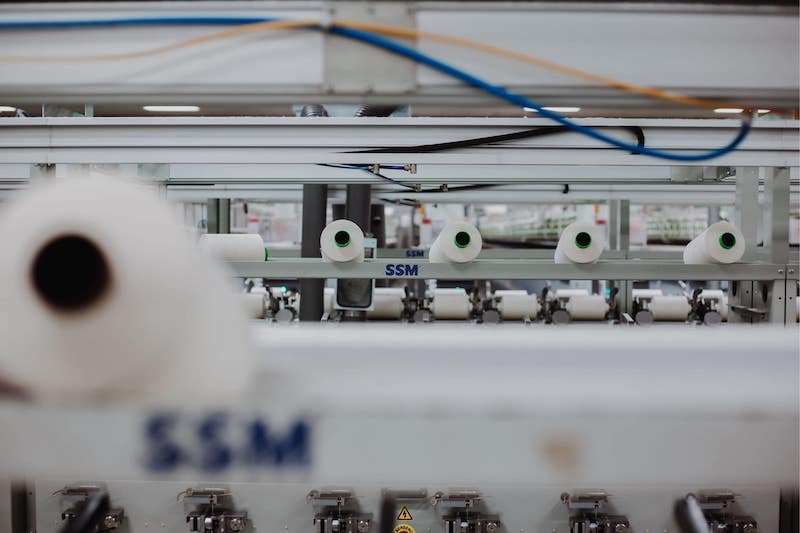
Giza Spinning & Weaving Co. S.A.E – Sadat Branch was established in 2008 and has since grown into a leading producer of fine spinning and ready-made garments. Committed to continuous improvement and global quality standards, the company values customer feedback as a key driver of development. Its spinning factory, equipped with 100,000 spindles, produces 13 tons per day of combed yarn (30–150 NE) and carded yarn (12–50/2 NE), using premium Egyptian, American, and Greek cotton. In addition, the company manufactures nearly 2 million pieces of garments annually, serving both local and international markets with reliability and quality.
 8- Eshratex
www.eshratex.com
EshraTex, founded in Alexandria in 1970, began as a textile yarn trading company and quickly became Egypt’s market leader with a 60% share within five years. In 1990, the company established its polyester manufacturing facility in Borg El Arab Industrial Zone, certified ISO 14001:2015 and ISO 9001:2015, with an initial capacity of 15 tons per day, later doubled. In 2007, EshraTex expanded with a state-of-the-art cotton spinning mill, also ISO-certified and Oeko-Tex Standard 100 approved, specializing in fine yarn production at 8 tons daily. Today, EshraTex Group records annual sales of $30 million and total investments of $53 million.
9- Mediterranean textile company
Mediterranean Textile Company (MTC), part of the renowned Saif Group, is Egypt’s largest producer and exporter of cotton yarns. Established in 2006 in Borg Al Arab, Alexandria, the company operates a 30,000 m² factory on an 88,000 m² site. MTC specializes in 100% Egyptian Giza cotton yarns with full traceability guaranteed by DNA testing, and is a Gold Seal member of the Cotton Egypt Association as well as a Supima Council member. Its diverse portfolio includes weaving yarns, knitting yarns, sewing threads, dyed and raw white yarns, and mercerized yarns, making MTC a global leader in compact cotton yarn production.











 and extra long staple (ELS) cotton, accounting for around 50 percent ...)
We are interested to buy stocks of knitted Hosiery fabric dyed ore undied any quantity kindly send details and can quote prices.thks
We are interested to buy stocks of knitted Hosiery fabric dyed ore undied any quantity kindly send details and can quote prices.thks
I am saleem Muhammad Pakistani citizen I have 25 years experience in textile open end spinning mills as general manager work in quality production technical side can apply in Egypt for job