Turnover Holds Steady Despite Declines in Volume
In 2023, the Belgian textile industry managed a stable turnover, recording €5.1 billion—a slight drop of 0.4% compared to 2022. While volume dropped by 7%, price increases of 6.8% helped offset the decline. The sector initially showed promise, with Q1 turnover up by 5.3%, but subsequent quarters slowed, culminating in a 5.3% drop in Q4. Yarn and synthetic fiber sales performed relatively well, with yarn turnover rising by 14.9% due to higher raw material costs. However, weaving and technical textiles saw minimal growth, and carpets and knitted fabrics faced steep declines.
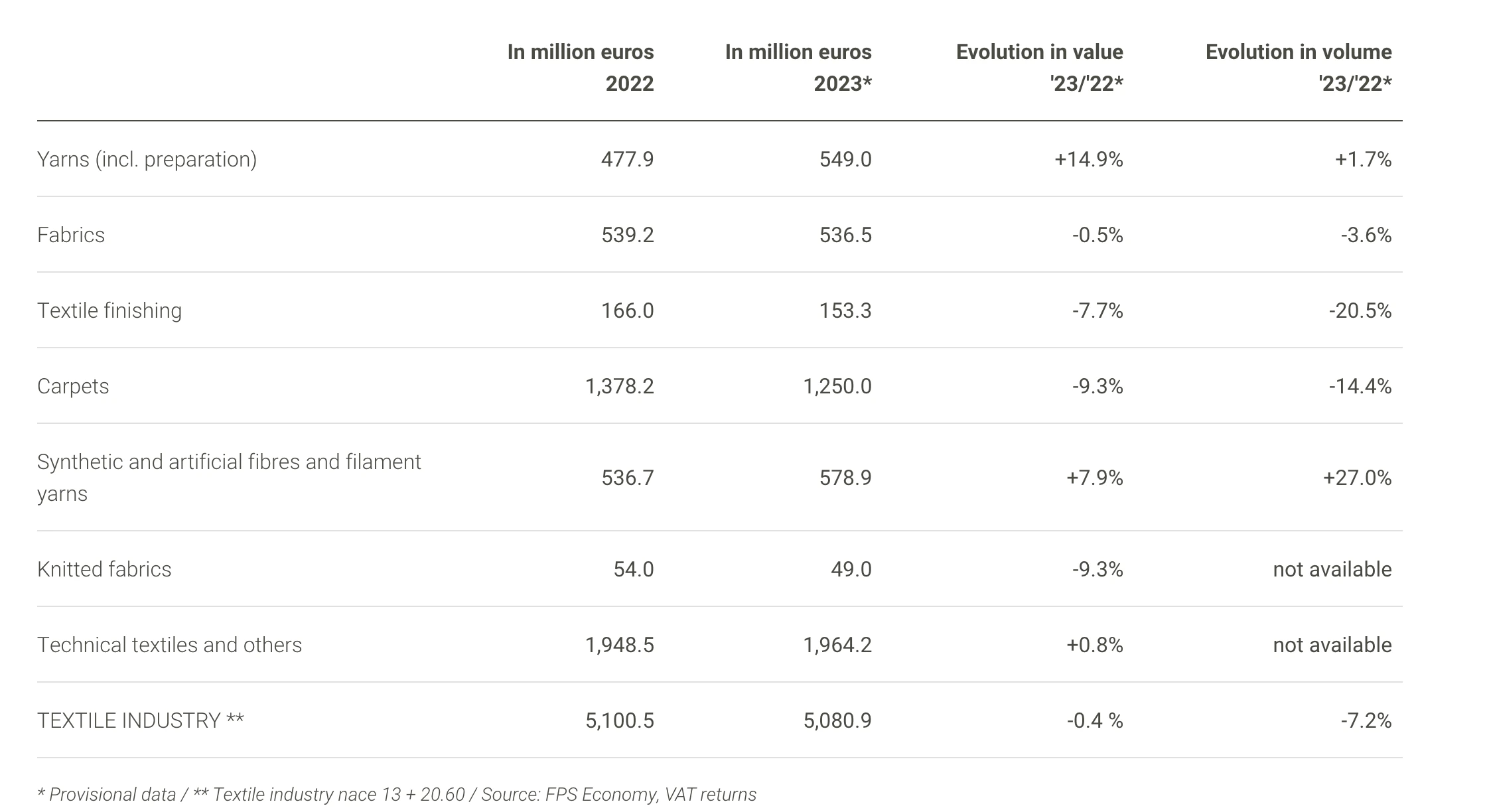
Export Challenges from Declining Competitiveness
With 75% of Belgian textile revenue stemming from exports, higher labor costs impacted international performance. Total exports fell by 6.3% in 2023. Technical textiles remained stable with only a 1.2% decline, but interior textiles dropped by 16.1%, and clothing fabrics by 23.1%. Within the EU, Belgium’s primary market, exports dropped 8.2%, with France, Germany, and the Netherlands all reporting declines. Italy showed resilience with a 3.2% growth. Exports beyond the EU remained steady, with notable increases to the Near and Middle East (+21.4%) and the Far East (+23.5%). However, shipments to North America and South America saw more pronounced declines, down by 19.8% and 20.2%, respectively.
Investment and Employment Trends Reflect Sector Strain
Despite a decade-low production capacity utilization rate at 65.3%, investment increased by 4.5%, totaling around €200 million. These funds primarily supported sustainability and digital transformation. Yet, the industry saw a 6.3% decline in employment, reducing the workforce to 17,353 due to closures and bankruptcies.
Cautious Optimism for 2024
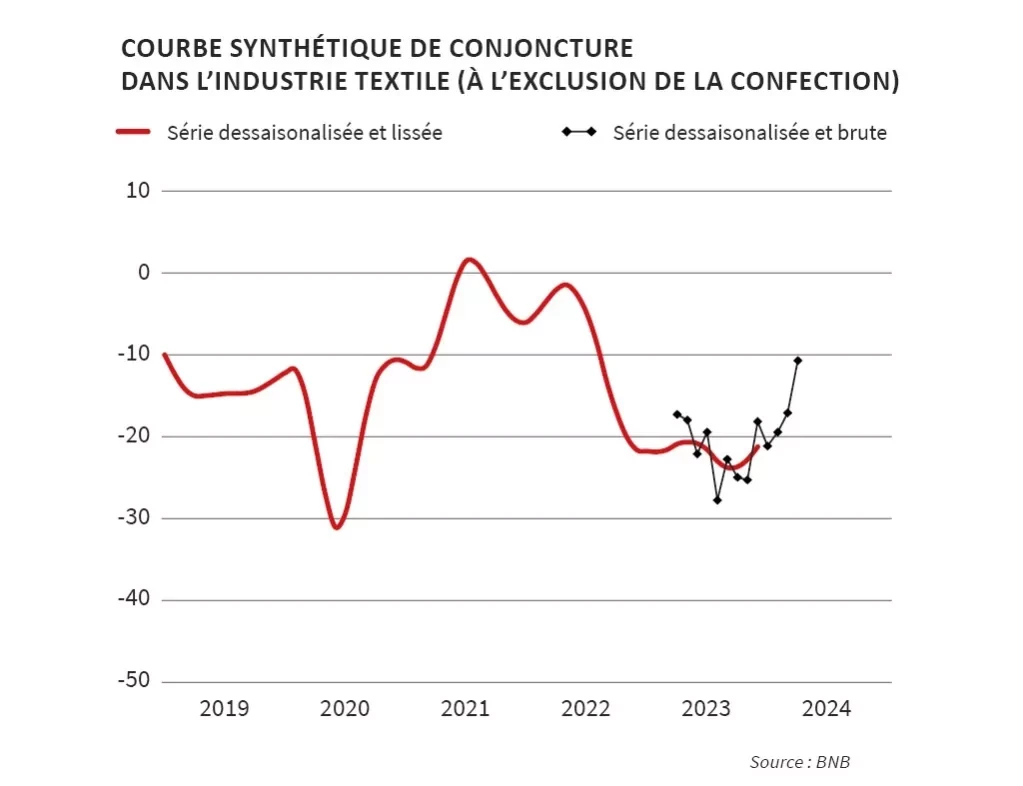
Business confidence in Belgium’s textile sector has trended upward since January 2024, suggesting that a moderate recovery may be possible from mid-year. The industry remains hopeful for a gradual rebound, encouraged by these signs of improving economic sentiment.
Source: Fedustria