Understanding the distinction between textile and apparel is essential for anyone working in the fashion, garment, and fabric industries—or even for consumers who want to better understand how their clothing is made. Although the two terms are often used interchangeably, they actually refer to different stages of the value chain, from raw material production to finished consumer products.
What Is Textile?
Textiles refer to any material made from natural or synthetic fibers that can be woven, knitted, tufted, knotted, bonded, or felted. The textile industry includes the entire supply chain of creating fabric—from fiber to yarn to finished cloth.
Key components of the textile sector
Textiles cover a wide range of products and processes, including:
- Fibers: cotton, wool, polyester, acrylic, nylon, viscose, etc.
- Yarns: produced through spinning processes.
- Fabrics: woven, knitted, nonwoven, braided, and more.
- Finishing processes: dyeing, printing, coating, washing, brushing, heat-setting, etc.
Industries using textiles
Textiles are not limited to clothing. They are used in:
- Automotive interiors
- Carpets and flooring
- Medical textiles
- Home furnishings
- Industrial applications
- Geotextiles
- Technical and performance fabrics
This diversity shows that textiles are the foundational materials used in countless industries—not only apparel.
What Is Apparel?
Apparel refers to finished wearable products designed for humans. These include:
- Shirts, trousers, jackets, dresses
- Sportswear and outdoor gear
- Uniforms and workwear
- Lingerie and hosiery
- Technical garments such as protective clothing
Apparel manufacturing involves cutting, sewing, assembling, and finishing to transform textiles into ready-to-wear items.
Key elements of the apparel sector
- Design & pattern making
- Grading & size development
- Cutting & spreading
- Sewing & stitching
- Embroidery & embellishments
- Packaging & branding
In short, while textiles are materials, apparel is the final product that uses these materials.
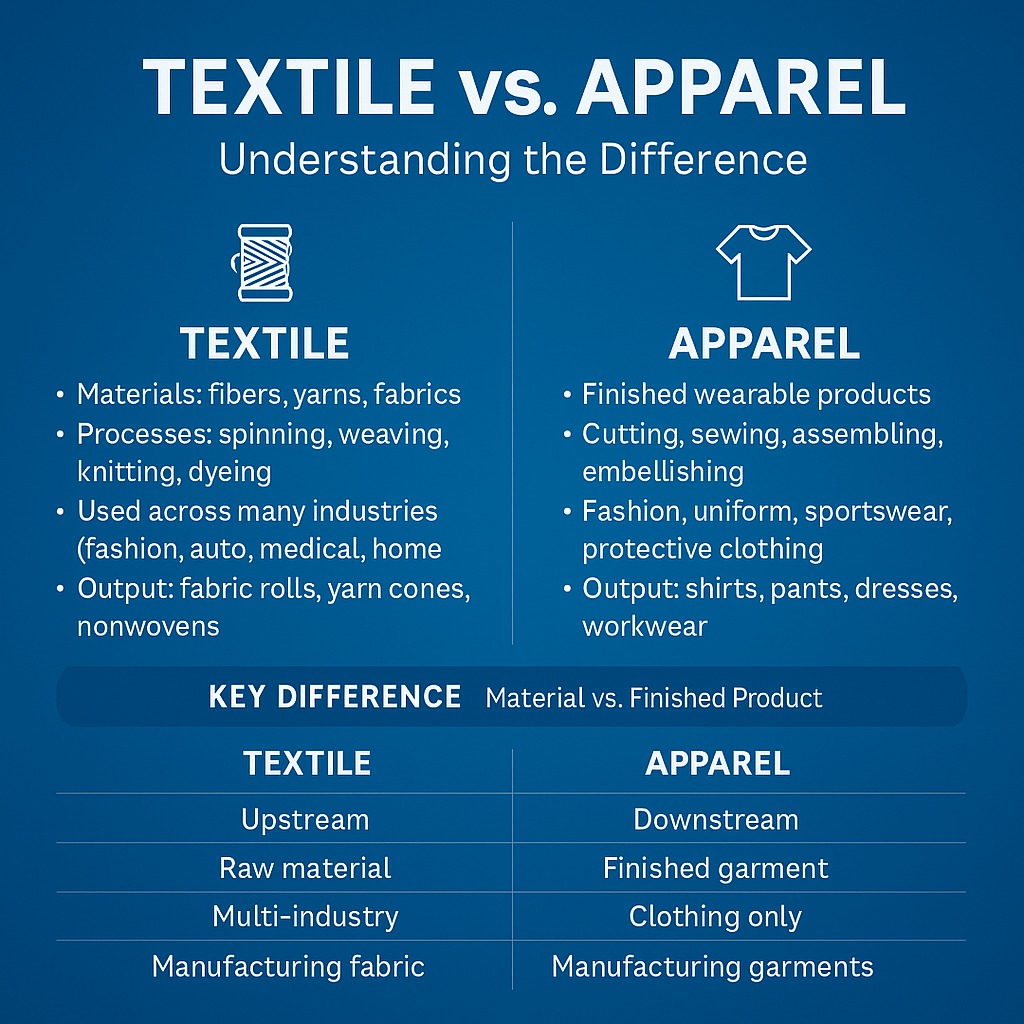
Basic Differences Between Textile and Apparel
Here are the fundamental differences presented clearly:
Definition
- Textile: raw materials, fibers, yarns, and fabrics.
- Apparel: finished clothing worn by consumers.
Scope of Industry
- Textile involves spinning, weaving, knitting, dyeing, printing, and finishing.
- Apparel involves cutting, sewing, assembling, and design.
Market Orientation
- Textile manufacturers supply fabric to various industries.
- Apparel manufacturers produce fashion and garments for retail.
Value Chain Stage
- Textiles belong to the upstream and midstream part of the value chain.
- Apparel belongs to the downstream, consumer-facing segment.
Technology Used
- Textile industry uses looms, knitting machines, dyeing machines, printing systems, and finishing lines.
- Apparel industry uses cutting machines, sewing machines, CAD systems, and embroidery equipment.
Output
- Textiles produce fabric rolls, yarn cones, and specialty materials.
- Apparel produces shirts, pants, dresses, activewear, etc.
Application
- Textiles are used in fashion, home textiles, medical sectors, industrial applications.
- Apparel is limited to clothing and fashion accessories.
Textiles are the inputs, apparel is the final output. Without textiles, there is no apparel, but textiles can exist without any relation to clothing.
Is Clothing Considered Textiles?
Yes—and no. It depends on how the term is used.
Clothing contains textiles, but is not the same as textiles.
Clothing is made from textiles, but once the fabric is cut and sewn into a garment, it becomes apparel, not a textile material anymore.
Think of it this way:
- Textile: fabric roll in a factory.
- Clothing: a shirt made from that fabric.
So while clothing originates from textiles, it is classified under the garment or apparel category.
Do Clothes Count as Textiles?
Clothes do not count as textiles in industrial terminology. They are considered finished textile products or apparel.
However, in casual everyday language, some people refer to clothes as textiles simply because they are made from fabric.
But technically:
- Textiles = materials
- Clothes = finished products
In business, manufacturing, export classification, and academic definitions, these two are separate sectors.
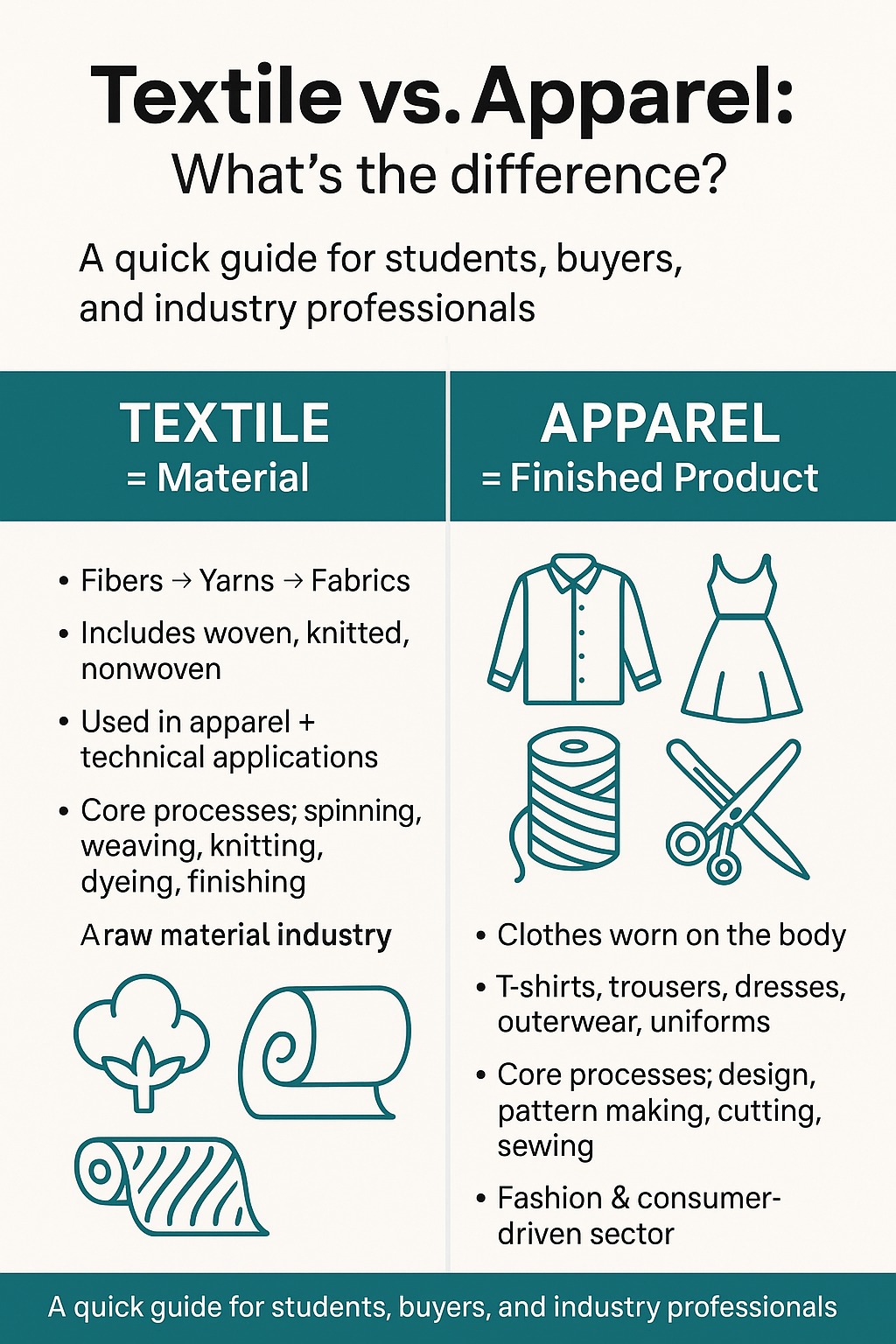
What Is Clothing and Textiles?
“Clothing and textiles” is a combined term often used in education and industry to describe the entire spectrum from raw fibers to finished garments.
When these two words appear together, they refer to:
Textile production
- Fiber science
- Yarn manufacturing
- Fabric construction
- Dyeing, printing, finishing
Clothing production
- Fashion design
- Pattern making
- Sewing and assembly
- Retail and merchandising
Consumer perspective
- How textiles influence comfort, durability, performance
- How clothing fits, protects, and expresses identity
In many university programs and industrial sectors, the phrase “clothing and textiles” refers to the whole value chain from fiber → fabric → fashion.
Final Summary: Textile vs. Apparel
| Category | Textile | Apparel |
| Definition | Material | Wearable product |
| Output | Yarn, fabric, nonwovens | Clothing, fashion items |
| Process | Spinning, weaving, knitting, dyeing | Cutting, sewing, finishing |
| Industries | Fashion, automotive, medical | Retail, fashion, sportswear |
| Value Chain | Upstream | Downstream |
| End Use | Multiple industries | Only clothing |
Why Understanding the Difference Matters?
Knowing the distinction between textiles and apparel helps:
- Manufacturers position themselves in the right market
- Investors understand industry structure
- Students grasp the value chain clearly
- Designers choose the right materials
- Businesses plan sourcing strategies
The textile and apparel industries are interconnected but function very differently—together forming one of the largest global industrial ecosystems.