






👉 Listen Now: New Challenges for Türkiye’s Textile Exports
Türkiye’s textile and apparel industry, long recognized as one of the country’s most strategic export engines, is entering a period of renewed uncertainty. While the sector has demonstrated resilience in recent years, emerging global trade dynamics—particularly the European Union’s “Made in Europe” policy—are beginning to reshape the competitive landscape.
At a recent high-level export summit organized by Dünya Newspaper, industry leaders gathered to assess the trajectory of Türkiye’s key sectors and to evaluate what lies ahead. The message was clear: the rules of global trade are changing, and Türkiye must adapt—not by relocating production, but by transforming its industrial capabilities.
A Changing Global Trade Environment
The global textile industry is undergoing a structural shift driven by geopolitical tensions, supply chain realignments, and protectionist policies. For Türkiye, which has long benefited from proximity to European markets and a strong manufacturing base, these changes present both risks and opportunities.
The European Union’s evolving “Made in Europe” strategy signals a move toward regionalization and internal production strengthening. While the final scope of this policy remains under discussion, its potential implications are already causing concern among exporters.
If implemented in a restrictive manner, the policy could limit Türkiye’s access to its most important market, placing additional pressure on an industry already navigating inflation, rising costs, and currency fluctuations.
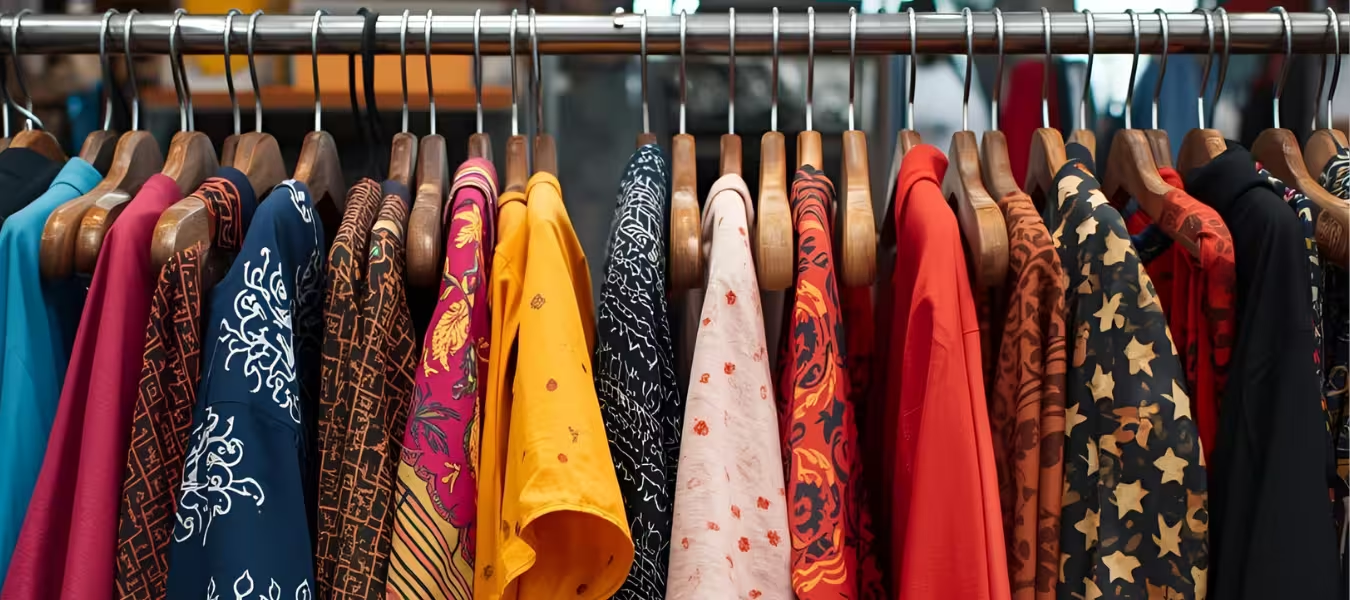
Türkiye’s Competitive Strength: Integrated Production
Why Türkiye Still Holds a Strategic Advantage
Despite these challenges, industry leaders emphasize that Türkiye’s textile sector possesses a unique strength that is difficult to replicate: fully integrated production.
Unlike many competing countries, Türkiye offers a complete value chain—from fiber and yarn to fabric, finishing, and ready-to-wear garments. This integrated structure enables faster production cycles, greater flexibility, and higher quality control.
In a market increasingly driven by speed and responsiveness, this capability remains a significant competitive advantage.
Read more: Türkiye’s Textile and Apparel Sector Faces Growing Pressure
Moreover, the textile and apparel sectors continue to play a critical role in Türkiye’s export performance. Together, they contribute tens of billions of dollars annually, reinforcing their position as pillars of the national economy.
Rising Costs and Competitive Pressure
The Impact of Inflation and Currency Policies
In recent years, Türkiye’s exporters have faced mounting challenges related to cost structures. High inflation, combined with currency policies aimed at stabilizing the economy, has led to increased production expenses.
Over a three-year period, export costs have reportedly risen by more than 20 percent in basket currency terms. This has weakened price competitiveness, particularly in markets where cost sensitivity remains high.
At the same time, global competition has intensified. Countries with lower labor costs or aggressive export incentives are gaining ground, forcing Turkish manufacturers to rethink their strategies.
The result is a more complex operating environment where efficiency alone is no longer sufficient.

Transformation Over Relocation
A recurring theme throughout the summit discussions was the widespread perception that production is shifting away from Türkiye to lower-cost regions such as North Africa or Egypt.
However, industry leaders strongly rejected this narrative.
The sector, they argue, is not in decline—but in transition.
Rather than relocating production, the focus must be on transformation. This includes investing in technology, improving productivity, and moving toward higher value-added products.
Digitalization, automation, and sustainable production methods are no longer optional. They are essential tools for maintaining competitiveness in a rapidly evolving global market.
The Role of Key Export Sectors
Five Industries Driving Türkiye’s Export Power
Türkiye’s export success is not driven by a single sector, but by a combination of industries that together form a powerful economic base.
Automotive, textiles, apparel, machinery, and white goods collectively account for a significant share of the country’s total exports. Among these, textiles and apparel remain particularly important due to their employment impact and deep integration within the industrial ecosystem.
However, each sector faces its own challenges and opportunities. While automotive exports continue to grow, textile and apparel producers must navigate a more complex landscape shaped by cost pressures, sustainability demands, and shifting trade policies.

Sustainability and Innovation as Future Drivers
As global markets evolve, sustainability is becoming a defining factor in trade competitiveness. European buyers, in particular, are placing increasing emphasis on environmental standards, traceability, and responsible production.
For Türkiye, this presents both a challenge and an opportunity.
The country’s strong industrial base provides a solid foundation for adopting sustainable practices. However, this requires continued investment in cleaner technologies, efficient resource management, and transparent supply chains.
At the same time, innovation will play a critical role. Advanced manufacturing technologies, digital textile printing, and smart production systems can help manufacturers move beyond price competition and toward value creation.
Editorial Insight: A Turning Point for Türkiye’s Textile Industry
The challenges facing Türkiye’s textile and apparel sectors are real, but they are not insurmountable.
What is emerging is not a decline, but a turning point.
The global textile industry is moving toward a model defined by flexibility, sustainability, and technological integration. In this new environment, traditional advantages such as low cost and high volume are no longer enough.
Türkiye’s strength lies in its ability to adapt.
Its integrated production structure, skilled workforce, and proximity to key markets provide a strong foundation. However, maintaining this position will require a shift in mindset—from competing on cost to competing on value.
The message from industry leaders is clear: growth will not come from moving production elsewhere, but from transforming how production is done.











