




Ghana’s textile and apparel industry stands at a critical turning point in 2026. Long recognized for its rich textile heritage—particularly Kente cloth and traditional wax prints—the country is now repositioning itself as a strategic manufacturing and sourcing hub in West Africa. While structural challenges remain, Ghana’s combination of political stability, geographic advantage, and growing regional integration under the African Continental Free Trade Area (AfCFTA) continues to attract attention from investors, brands, and policymakers alike.
Unlike many emerging textile markets that compete purely on low labor costs, Ghana’s strength lies in its balance of accessibility, governance, and long-term industrial potential. As global supply chains shift toward diversification and resilience, Ghana is increasingly being viewed not just as a niche textile producer, but as a future-ready player in Africa’s evolving apparel ecosystem.

Strategic Positioning: Why Ghana Still Matters
Ghana’s relevance in the textile and apparel sector goes beyond its historical identity. In recent years, the country has demonstrated steady economic recovery and industrial growth, reinforcing its position as one of the most stable economies in West Africa. With access to the Atlantic Ocean through the Port of Tema and a well-established logistics network, Ghana offers a gateway to both regional and international markets.
Equally important is Ghana’s political and regulatory environment. Compared to several neighboring countries, Ghana provides a relatively predictable business climate, which is a key factor for foreign direct investment in manufacturing. Its English-speaking workforce and growing pool of technically trained professionals further enhance its attractiveness as a sourcing destination.
However, the most significant shift since your previous article is Ghana’s central role in AfCFTA.

AfCFTA: From Opportunity to Reality
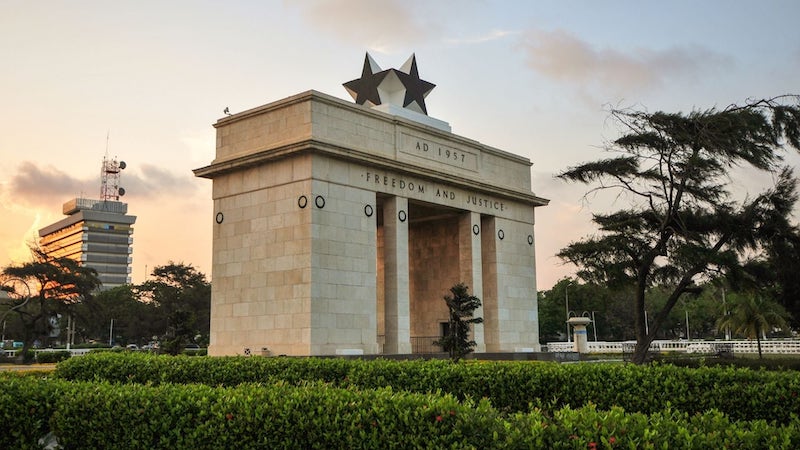
When AfCFTA was first introduced, it was largely seen as a long-term vision. In 2026, it is gradually becoming a practical framework for trade. Ghana’s hosting of the AfCFTA Secretariat in Accra positions the country at the heart of Africa’s most ambitious economic integration project.
For the textile and apparel industry, this has major implications. Instead of focusing solely on exports to Europe and the United States, Ghana can now increasingly position itself as a regional production hub. The ability to trade more freely within Africa opens new opportunities for intra-African value chains—where cotton, yarn, fabric, and garments can move across borders with fewer barriers.
Read more: Africa’s Fashion MSMEs Need Seamless Trade Systems to Unlock AfCFTA Potential
This shift is particularly important as African countries aim to reduce dependency on imported textiles from Asia. Ghana, with its relatively developed infrastructure and policy support, is well placed to capture part of this transition.
The Changing Role of AGOA
Another critical update for 2026 is the evolving status of the African Growth and Opportunity Act (AGOA). While AGOA has historically provided duty-free access for Ghanaian apparel exports to the United States, its recent short-term extension highlights growing uncertainty.
For manufacturers, this means that reliance on a single export market is no longer a sustainable strategy. Ghanaian producers must now diversify their export destinations, combining U.S. access with regional African markets and exploring opportunities in Europe and the Middle East.
Read more: Donald Trump Renews AGOA Trade Pact with Africa Through 2026
This shift also places greater emphasis on competitiveness—both in terms of cost efficiency and product quality. Simply having preferential market access is no longer enough; Ghana’s textile sector must evolve technologically and operationally to remain competitive.
Industry Structure: Strengths and Limitations
Ghana’s textile industry today is a mix of traditional craftsmanship and modern manufacturing. The country remains internationally recognized for its cultural textiles, including Kente weaving and wax print fabrics. These products continue to hold strong branding value, particularly in diaspora and premium niche markets.
At the same time, the industrial segment—covering uniforms, workwear, basic garments, and small-scale fashion production—has seen gradual development. Local factories supply both domestic and regional markets, while some export-oriented operations serve international buyers.
Despite these strengths, the sector faces several structural challenges:
- Limited scale: Ghana is not yet a mass-production hub like Bangladesh or Vietnam
- High production costs: Energy and logistics inefficiencies increase overall costs
- Outdated machinery: Many factories require modernization to meet global standards
- Import pressure: Low-cost imports, particularly from Asia, continue to dominate the local market
These constraints mean that while Ghana has strong potential, it still requires significant investment to unlock large-scale growth.
Trade Performance and Market Reality
Recent trade data highlights both the progress and limitations of Ghana’s textile sector. Textile exports remain relatively modest on a global scale, indicating that the industry is still in a development phase rather than a mature export powerhouse.
However, this also represents opportunity. With the right investments in technology, skills, and infrastructure, Ghana could significantly increase its production capacity and export performance over the next decade.
More importantly, the country’s future may not depend solely on global exports. The rise of regional trade within Africa could redefine success for Ghana’s textile industry—shifting focus from competing globally on price to competing regionally on proximity, flexibility, and speed.
Investment Outlook: Where Growth Can Happen
Looking ahead, the most promising areas for investment in Ghana’s textile sector include:
- Garment manufacturing for regional markets
- Value-added textile processing and finishing
- Sustainable and ethical production aligned with global standards
- Integration into regional supply chains under AfCFTA
There is also growing interest in sustainable textiles, where Ghana could leverage its natural resources and traditional knowledge to create differentiated products. As global brands increasingly prioritize transparency and sustainability, Ghana has an opportunity to position itself as a responsible sourcing destination.
A Realistic but Promising Future
Ghana’s textile industry in 2026 should not be viewed through overly optimistic or outdated narratives. It is not yet a dominant export giant, nor is it a fully industrialized textile economy. However, it remains one of the most strategically positioned countries in West Africa for future growth.
The combination of AfCFTA integration, improving industrial policy, and continued investor interest creates a foundation for long-term development. The key challenge will be execution—turning policy frameworks and potential into real industrial capacity.
For brands, investors, and industry stakeholders, Ghana represents a market to watch closely. Its transformation will not happen overnight, but the direction is clear: from a heritage-based textile identity toward a more integrated, modern, and regionally competitive apparel industry.
Ghanaian Clothing
Most popular garments in Ghana; Ghanaian smock
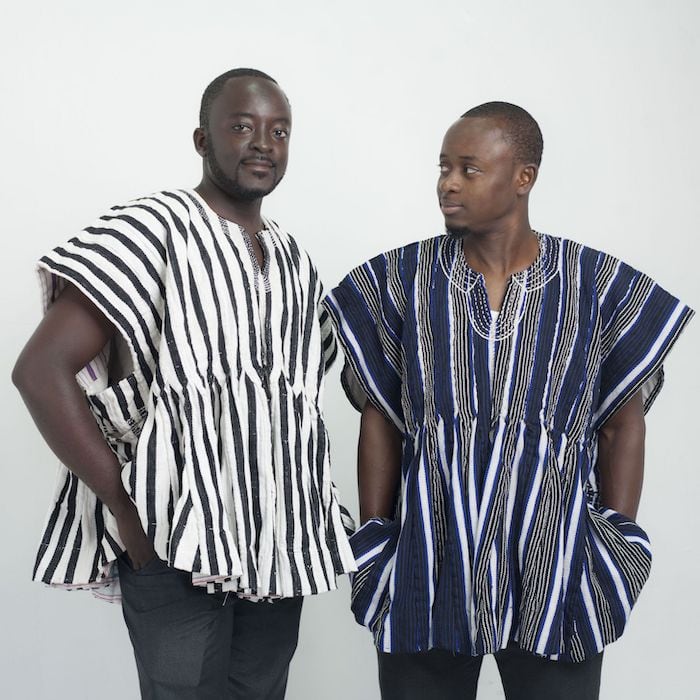
The traditional garments of Ghana are the kente cloth and the Ghanaian smock. The smock is made from the fabric called “Gonja cloth”. The kente cloth is originated from Southern Ghana, while the Gonja cloth – from Northern Ghana.
Gonja cloth – thick striped cotton fabric. The cotton is picked, dyed, and woven by hand. Usually, the pattern on this cloth is blue/black and white stripes. Long narrow pieces of fabric (about 4 inches wide) are woven and then sewn together or sold in rolls.
Ghanaian smock (there are other names, for example, “dansika”, “fugu”, “batakari”, etc.) is a garment that resembles a shirt. It is mostly worn by men but there are female versions. Usually, the neckline and sometimes the front part of the smock is embellished with embroidery. The threads used for the embroidery pattern are white or blue&white. The pattern on the fabric itself is a combination of black and white or blue and white stripes of different width. The smock is worn with a kufi cap (a small round skull-cap widely used in Africa) or a red fez hat.
Kente cloth
Kente cloth is another traditional garment of Ghana. It is a handwoven piece of fabric with very colorful and symbolic patterns. This outfit is mostly worn for special occasions, ceremonies, and celebrations. The garment is very important for the Ghanaian culture. First kente appeared about 400 years ago.
It was woven from raffia palm fibers and the tissue structure looked like a basket. At first, kente cloth was used only by royalty but later it became an item for ordinary people. Nowadays, kente cloth is made from cotton, and this clothing fits the African climate perfectly.
Kente is a unisex outfit, but men and women drape it in a different way. Men use it as an ancient Greek toga – across one shoulder and around the body. Women wear a two-piece kente: one forms a wrap-around skirt (2 yards long and 45 inches wide piece of fabric) and another one is used as a shawl. A plain-colored blouse is worn to complete the attire.
The most important feature of a kente cloth is its pattern. There are more than 300 various patterns, and each and every one of them has its name and a unique deeply symbolic meaning. Each pattern has a background – social or political events, achievements of a certain person, wise sayings, and so on. For example, there’s a pattern called “Fathia Fata Nkrumah”. It is dedicated to the marriage of the first president of the Republic of Ghana and the Egyptian woman Fathia. This marriage was important and symbolic for Ghanaians because it united different nations on the African continent.

You can see some companies in the textile industry in Ghana below:
| Name | Tel | Country | Products | Website/Logo |
| Key Textile | +233 302 904 088 | Ghana | Apparel | www.keytextiles.com.gh |
| Akosombo Textile | +233 24 433 4406 | Ghana | Apparel | www.akosombotextiles.com |
| GTP Fashion | +233 307 074 352 | Ghana | Traditional cloth | www.gtpfashion.com |
| Printex Ghana | +233 302 811 811 | Ghana | Traditional cloth | www.printexghana.com |
| Color Max Ghana | +233 544 332 783 | Ghana | Printer solution | www.colormaxghana.biz |
| Besaz Textile | +233 247395906 | Ghana | Apparel | www.besazboutique.com |
| Ghana Textile Association | +233 50 161 0624 | Ghana | Textile | www.agamghana.org |
| Sleek Garments | +233 302670566 | Ghana | Garments | www.sleekgarments.com |
| Dignity DTRT Textile | – | Ghana | Garments | www.dtrtapparel.com |
| Elnak | (+233) 55 702 8593 | Ghana | Garments | www.elnakrecycle.com |












Wish to be part of successful ideas leading to ones development and achievements.
Nice work 😍