




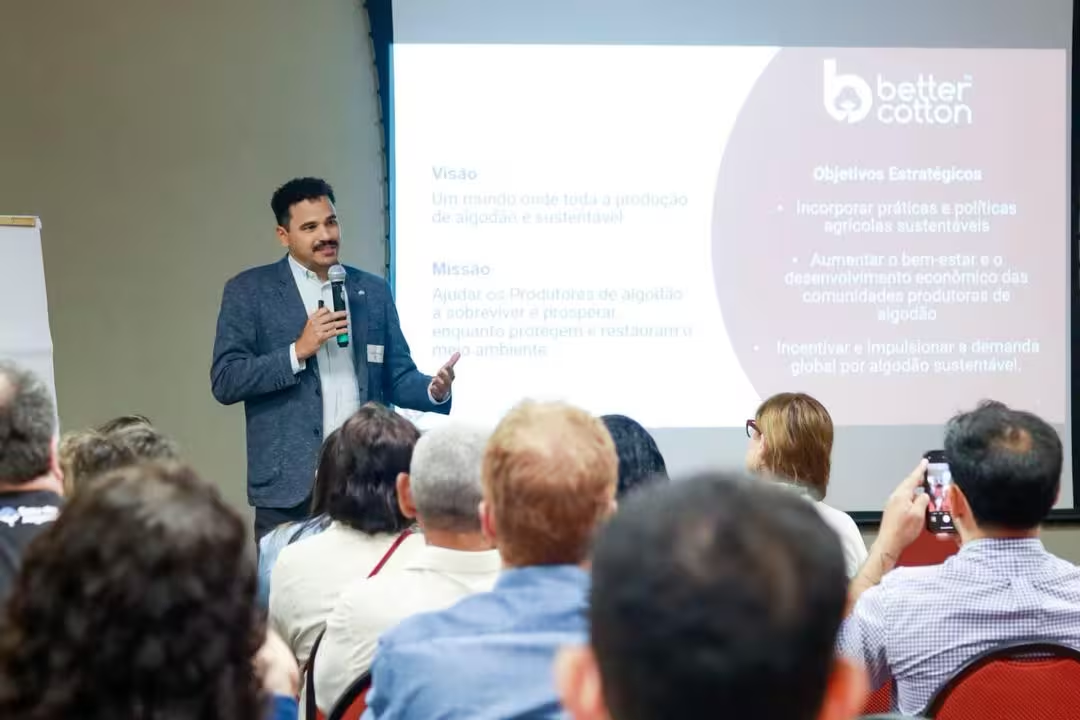
Brazil’s Cotton Multistakeholder Dialogue, a forum promoted by the Better Cotton Initiative (BCI) to streamline collaboration across the agricultural sector, has approved a permanent governance structure and announced plans to host its first public event, a webinar, in 2026.
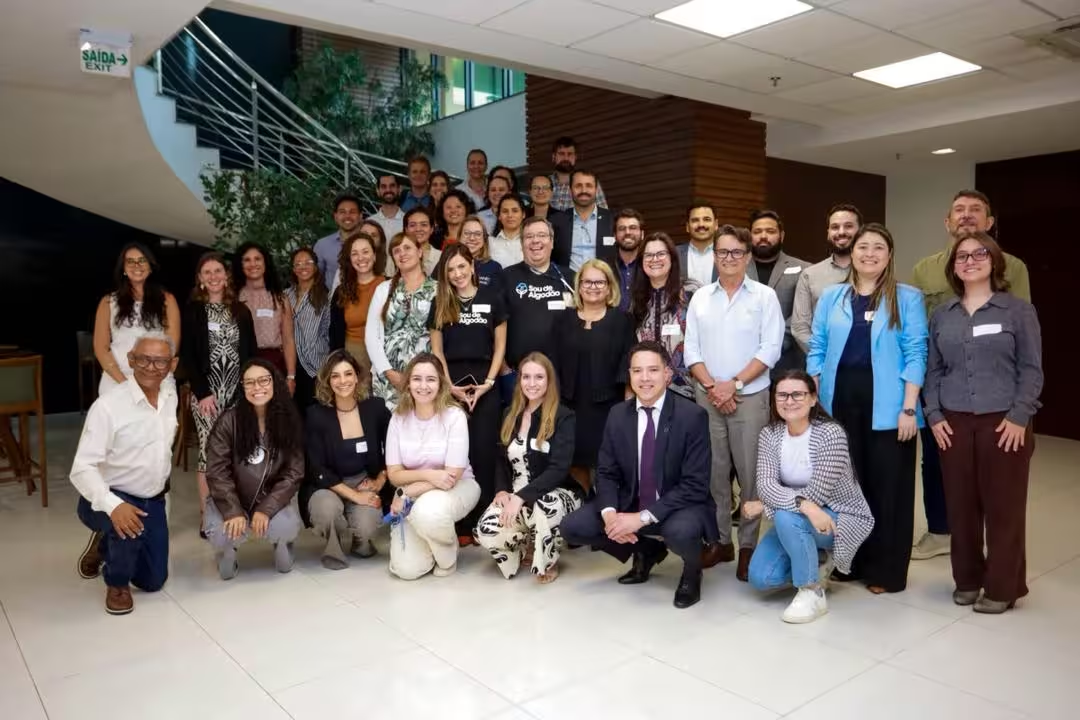
At its second meeting on 9 December in Brasília, more than 50 representatives from Brazil’s cotton sector and agricultural supply chains approved the new structure. The board of directors will be formed by up to three representatives of each of these segments: cotton growers; traders and suppliers; textile industry; retailers and brands; civil society organisations; indigenous peoples and traditional communities; education and research; logistics.
Expected to initially meet every two months, the board of directors will be supported by the executive secretariat, led by BCI’s team in Brazil and responsible for ensuring the implementation of decisions made by the Dialogue. The ultimate decision-making body remains the Plenary Session.
Álvaro Moreira, BCI’s Senior Manager: Large Farm Programmes and Partnerships, said: “This second meeting has cemented the Dialogue’s critical role as a vehicle for collaboration and action within Brazil’s cotton sector. With the new governance structure, we’ll be ready to support the sector with new initiatives in 2026, making further progress in areas such as traceability, protection from climate change, cross sectoral cooperation, and the promotion of cotton as a natural fibre. All topics of the Dialogue are defined collectively by its members.”
Also Read: Nigeria Partners with Brazil to Boost Cotton Productivity Through Biotechnology
Different actors brought together
Launched in March 2025 by BCI, with support from the Brazilian Association of Cotton Growers, Abrapa, the Dialogue was created to gather farmers, businesses, research, civil society, and government representatives to improve collaboration, share experiences, and address common challenges faced by the country’s cotton sector
Silmara Ferraresi, Abrapa’s Director of Institutional Relations, said that the evolution of the Dialogue will provide additional support for the sector to overcome future challenges. “When we gather, in the same forum, links that complement each other and rely on each other, to discuss common issues, this is important for the future. I believe in collective action. We only work as a chain when everyone comes to the table, and we put on the table everyone’s interests and challenges.”
The two newly created structures will ensure the decisions made by the Dialogue’s Plenary Session are implemented and their impact properly assessed. At the second meeting of the Dialogue, in Brasília, the first names of candidates for positions in the board of directors were presented by the participants – names can still be put forward until 20 January 2026.
The 2026 online public event, with a specific date still to be confirmed, will focus on traceability, which was also one of the main topics of the second meeting. The webinar will be the first opportunity for those outside the forum, but somehow involved with Brazil’s cotton sector, to hear directly about its plans and activities.
Notes to Editors
- The Brazilian Cotton Multistakeholder Dialogue was first proposed by the Better Cotton Initiative (BCI), in late 2024, as one of several actions to expand and diversify BCI’s contribution to the country’s overall cotton sector.
- Since 2013, BCI’s benchmarking partnership with Abrapa has recognised an equivalence between Abrapa’s ABR standard and the BCI’s field-level standard. This agreement was updated and renewed in November 2025 for another three years.
Further participants’ reactions to the 2nd meeting of the Brazil’s Cotton Multistakeholder Dialogue:
Fernando Pimentel, President ABIT (Brazilian Textile Industry Association)
“With these meetings, we gradually get to know the many economic players who are part of this productive chain. Only through dialogue we can find ways that will take us to a sustainable progress. As we improve this knowledge, we’ll accelerate the process of finding the best paths for the [cotton] sector to develop, from the farm to the [textile] industry, until reaching the consumers.”
Fabíola Silvério, Sustainability Manager, Lojas Renner
“Moments like this are very important, considering the challenges we all face. We talked a lot about traceability, which is a way of bringing to our clients all sustainability attributes a product can have. Dialogues such as this can bring several players to the table, so we can discuss and look at the challenges through their lens.”
José Tibúrcio Carvalho Filho, Commercial and Technical Manager, Coopercat farming cooperative
“As small farmers who use high technology and traceability, it’s very important to be here alongside several players of the cotton sector. I had the opportunity today to speak to Renner, C&A, Abrapa, all these partners can provide support to our family farming. For cotton, it doesn’t matter if it is a small farmer or a large farmer.”











