




Bangladesh’s textile and apparel industry is entering one of its most challenging periods in recent years. An acute energy crisis is disrupting textile production, export demand is under pressure, and the country is simultaneously approaching a major change in its preferential access to the European Union.
For an industry that generated $38.7 billion in apparel exports in the 2025–26 fiscal year and accounted for more than 80% of Bangladesh’s total exports, the combination is significant.
Energy Crisis Hits the Textile Supply Chain
The most immediate pressure is energy.
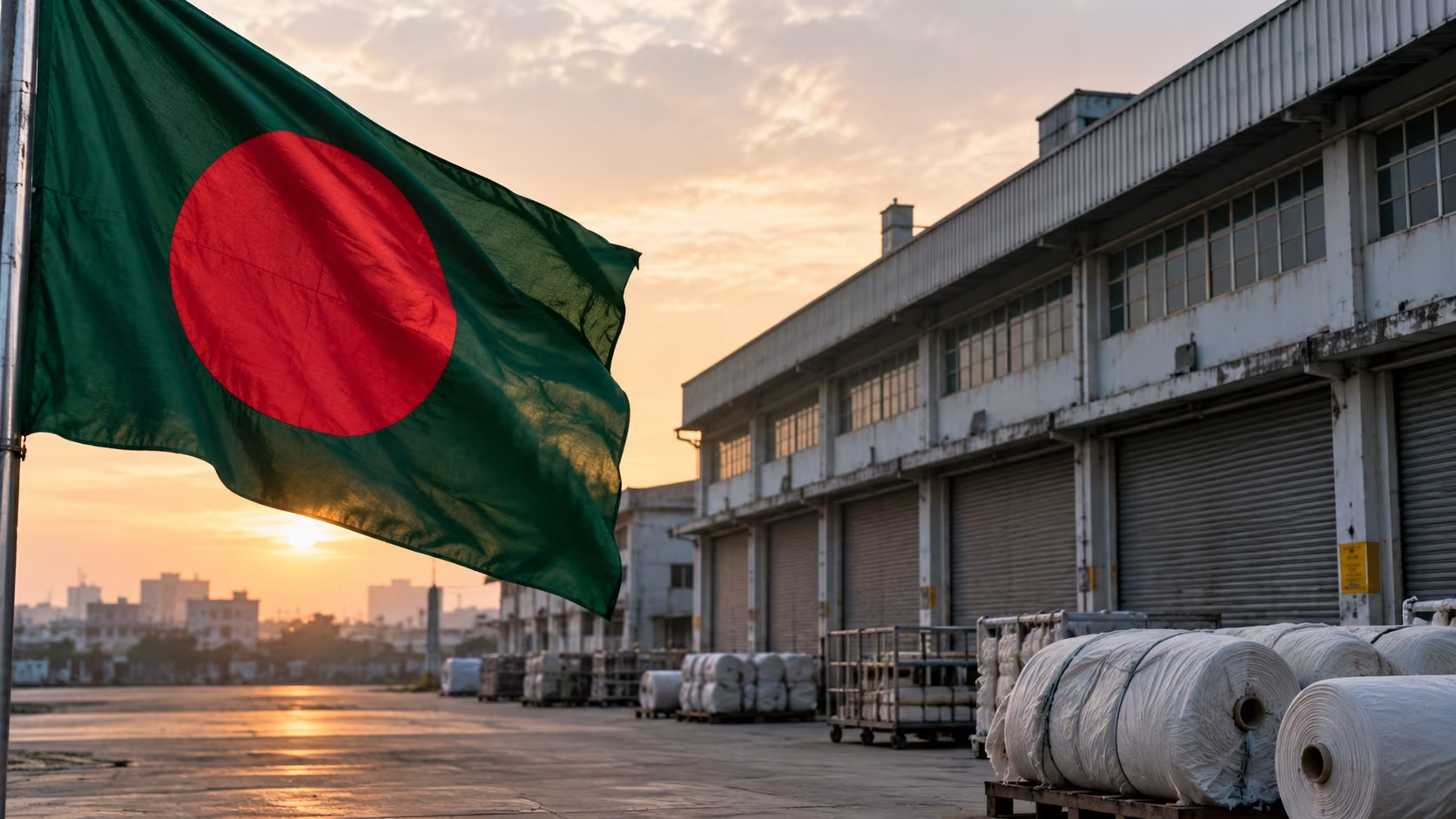
Textile factories across major industrial areas have been struggling with severe shortages of natural gas and electricity. The problem is particularly serious for spinning, weaving, dyeing and finishing operations, where stable energy and gas supplies are essential for continuous production.
In August, the Bangladesh Textile Mills Association (BTMA) said production had stopped at around 600 textile factories during the previous month amid gas and electricity shortages, although the association said it was still collecting detailed information on how many closures were directly attributable to the energy crisis.
Other reports indicated even wider disruption. In Narsingdi alone, more than 100 textile factories reportedly halted or severely reduced production because of extremely low gas pressure.
The crisis has also affected garment manufacturing. In April, the Bangladesh Garment Manufacturers and Exporters Association (BGMEA) said energy shortages had reduced production capacity by around 25–30% in some major garment-producing areas. By August, BGMEA reported production capacity falling by as much as 30–40% during the most severe phase of the gas shortage.
The situation is not uniform, however. In September, BGMEA said it had not recorded garment factories closing specifically because of the recent gas crisis and reported some improvement in gas availability. Nevertheless, textile and apparel associations continue to warn that unreliable energy supply is increasing production costs and weakening competitiveness.
Some factories have turned to diesel generators and alternative fuels to maintain production, adding another layer of cost to an industry already operating under tight international price pressure.
A Second Challenge Is Coming from Europe
While factories deal with immediate energy problems, Bangladesh is also approaching a structural change in its international trade environment.
Bangladesh is currently scheduled to graduate from the United Nations’ Least Developed Country (LDC) category on 24 November 2026.
As an LDC, Bangladesh has benefited from the European Union’s Everything But Arms (EBA) scheme, which provides duty-free and quota-free access to the EU market for almost all products.
This advantage has been particularly important for apparel.
In 2025, textiles represented almost 94% of EU imports from Bangladesh. Bangladesh also exported €19.41 billion worth of apparel to the European Union that year, making it the bloc’s second-largest garment supplier.
Under the EU’s new Generalised Scheme of Preferences, Bangladesh is expected to retain EBA preferences for a three-year transition period, at least until the end of 2029.
What happens after that could have major consequences.
Without an alternative preferential arrangement, many Bangladeshi clothing products could face tariffs of around 10% when entering the European market. Bangladesh has the possibility of applying for GSP+, while longer-term trade arrangements with the EU are also strategically important.
The challenge is that Bangladesh will increasingly compete without one of the advantages that helped build its export-oriented garment industry.
Read More: Ohyoung and TeXco Tech Lead Sustainable Innovation in Bangladesh’s Textile Industry
Bangladesh Faces a Competitiveness Test
The issue is therefore much bigger than temporary factory shutdowns.
Bangladesh is facing pressure from several directions at the same time: unreliable energy supply, higher production costs, intense competition between manufacturing countries, weaker demand in some export markets and uncertainty surrounding its post-LDC trade environment.
The country’s apparel exports already declined slightly to $38.7 billion in FY2025–26 from $39.35 billion a year earlier.
Meanwhile, competitors are strengthening their own positions in major consumer markets, making cost, productivity, delivery speed, energy reliability and preferential market access increasingly important.
Bangladesh still possesses enormous advantages: a deeply established garment manufacturing ecosystem, decades of sourcing experience, large-scale production capacity and strong relationships with international brands.
But the next phase of its development may be considerably more difficult than the previous one.
The question is no longer simply whether Bangladesh can remain one of the world’s largest garment exporters. It is whether the country can improve energy security, strengthen its domestic textile supply chain, raise productivity and secure competitive access to major markets before its traditional advantages begin to weaken.
What is happening today may therefore represent an important turning point for Bangladesh’s textile and apparel industry.











