






Over the past century, the Republic of Türkiye has undergone a profound economic and industrial transformation. From an agrarian economy emerging out of the collapse of the Ottoman Empire to a globally competitive manufacturing powerhouse, the country’s journey has been particularly remarkable in the textile and apparel sector.
Today, Türkiye stands as one of the world’s leading textile and clothing exporters. But this position was not achieved overnight. It is the result of decades of strategic industrial policy, state-led initiatives, private sector dynamism, and continuous adaptation to global market shifts.
This is the story of how Türkiye’s textile industry evolved—from state-driven beginnings to a globally integrated, innovation-led ecosystem
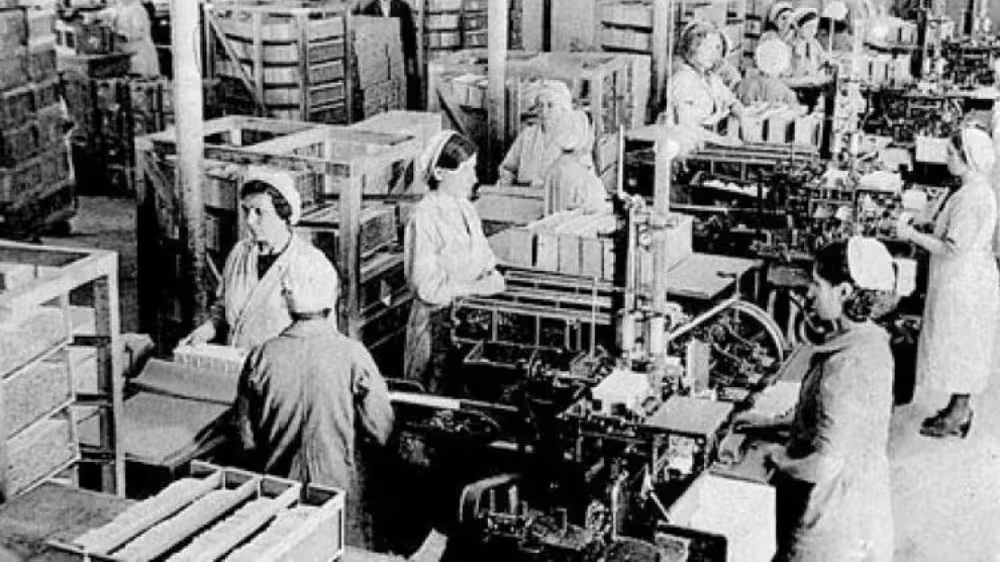
The Role of Sümerbank in Building an Industry
In the early years of the Republic, Türkiye faced the enormous challenge of rebuilding an economy devastated by years of war. Industrialization became a national priority, and textiles were identified as a strategic sector.
Read more: Türkiye’s Textile and Apparel Sector Faces Growing Pressure
The establishment of Sümerbank in the 1930s marked a turning point. As a state-owned enterprise, Sümerbank was not just a manufacturer—it was a catalyst for industrial development.
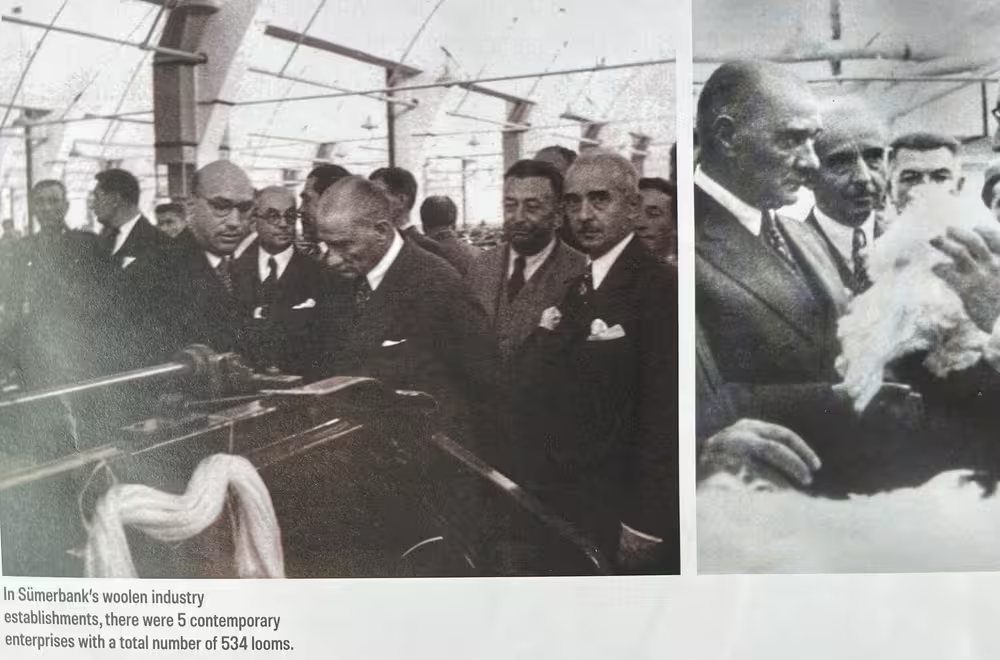
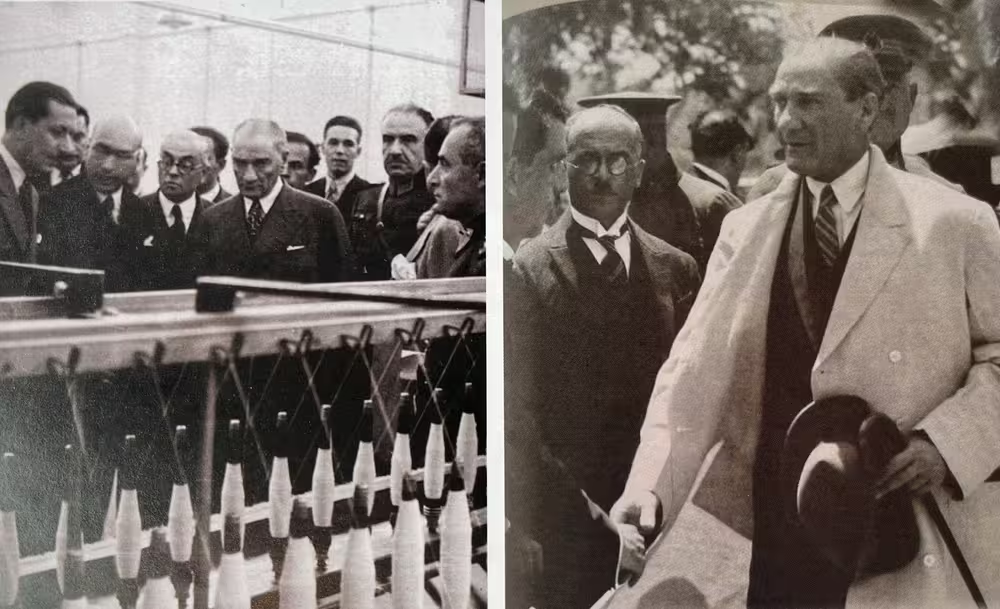
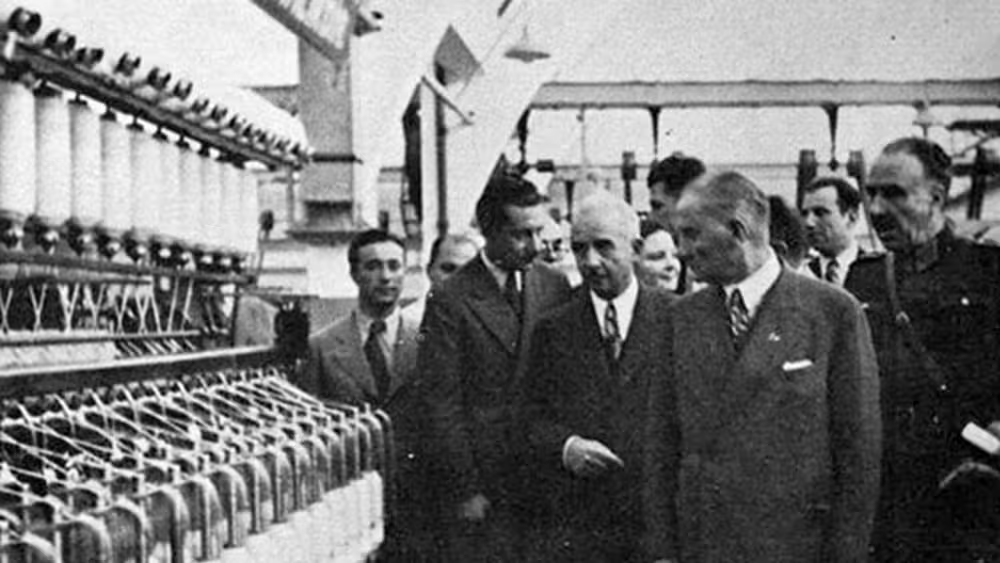
One of its most iconic investments was the Merinos Wool Industry Establishment, inaugurated in 1938 under the leadership of Mustafa Kemal Atatürk. This facility symbolized Türkiye’s ambition to build a self-sufficient textile industry.
At its peak, Sümerbank operated multiple facilities across cities such as Kayseri, Nazilli, Hereke, and Diyarbakır, covering segments from weaving to carpet production. These investments laid the foundation for:
- Domestic production capacity
- Skilled workforce development
- Industrial know-how
Early Industrial Expansion and Capacity Building
By the mid-20th century, Türkiye had already established a solid textile base. State-led initiatives resulted in:
- Dozens of textile factories across Anatolia
- Expansion of cotton and wool processing
- Integration of spinning and weaving capabilities
These developments were critical in transforming textiles into one of the country’s first modern industries.
The Shift Toward Liberalization and Global Integration
Opening the Economy in the 1980s
The real acceleration of Türkiye’s textile industry came with the economic liberalization policies of the 1980s.
As the country transitioned toward a more open economy, several key changes occurred:
- Increased foreign investment
- Expansion of private sector manufacturing
- Integration into global trade networks
Textile and apparel companies began to move beyond domestic markets, targeting Europe and other international regions.
Export-Led Growth Strategy
Textiles quickly became one of Türkiye’s leading export sectors. Supported by:
- Geographic proximity to Europe
- Competitive production costs
- A flexible manufacturing base
The country positioned itself as a reliable sourcing destination.
Over time, Türkiye evolved from a low-cost producer into a value-added manufacturing hub, focusing on:
- Quality fabrics
- Design capabilities
- Fast delivery
The Rise of a Globally Competitive Textile Industry
From Volume to Value
In the last two decades, Türkiye’s textile industry has undergone another critical transformation—shifting from volume-based production to value-driven manufacturing.
Today, the country is recognized for:
- High-quality textile products
- Advanced production technologies
- Strong design and branding capabilities
Rather than competing solely on price, Turkish manufacturers increasingly compete on:
- Innovation
- Speed to market
- Sustainability
Strong Export Performance
The textile and apparel sector continues to be a major pillar of Türkiye’s economy.
Key highlights include:
- Exports exceeding 30 billion USD in recent years
- Strong presence in EU markets
- Diversification into global markets beyond Europe
This export strength reflects not only production capacity but also global trust in Turkish textile quality and reliability.
Infrastructure, Workforce, and Strategic Advantages
Skilled Labor and Industrial Ecosystem
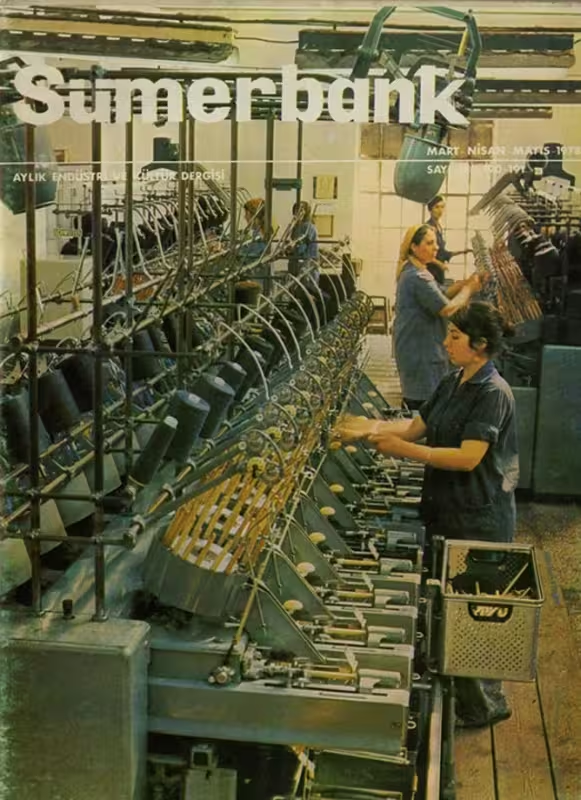
One of Türkiye’s most significant advantages is its skilled workforce, built over decades of industrial experience.
From spinning and weaving to finishing and garment production, the country offers:
- Deep technical expertise
- Strong vocational training systems
- Industry-academia collaboration
Strategic Geographic Position
Türkiye’s location between Europe and Asia provides a unique logistical advantage.
This enables:
- Faster delivery times to European markets
- Reduced transportation costs compared to Asian competitors
- Flexibility in supply chain management
Integrated Supply Chain
Unlike many emerging markets, Türkiye has developed a relatively integrated textile value chain, including:
- Fiber processing
- Yarn production
- Fabric manufacturing
- Apparel production
This integration enhances efficiency and responsiveness to market demands.
Challenges and Adaptation in a Competitive Global Market
Despite its strengths, Türkiye’s textile industry operates in an increasingly competitive environment.
Competition from Low-Cost Producers
Countries with lower production costs continue to challenge Türkiye in mass production segments.
However, Turkish manufacturers have responded by focusing on:
- High-value products
- Technical textiles
- Sustainable production
Sustainability and Innovation Pressure
Global buyers are increasingly demanding:
- Eco-friendly materials
- Transparent supply chains
- Reduced carbon footprint
Türkiye is actively investing in:
- Sustainable fibers
- Energy-efficient production
- Recycling technologies
The Future: Innovation, Sustainability, and Digital Transformation
Moving Toward Advanced Manufacturing
The next phase of Türkiye’s textile industry will be shaped by technology.
Key trends include:
- Automation in production lines
- Digital textile printing
- AI-driven supply chain optimization
Sustainability as a Core Strategy
Sustainability is no longer optional—it is central to competitiveness.
Turkish companies are increasingly adopting:
- Circular production models
- Recycled materials
- Water and energy-saving technologies
Expanding into Technical Textiles
Technical textiles represent a major growth area, including:
- Automotive textiles
- Medical textiles
- Geotextiles
This diversification will further strengthen Türkiye’s position in global markets.
Editorial Insight: A Century of Transformation with Global Impact
Türkiye’s textile industry is not just a success story—it is a case study in industrial transformation.
From state-led factories in the 1930s to globally competitive exporters today, the sector has continuously adapted to changing economic realities.
What defines Türkiye today is not just its production capacity, but its ability to evolve:
- From self-sufficiency to global integration
- From cost competitiveness to value creation
- From traditional manufacturing to innovation-driven production
As global supply chains continue to shift, Türkiye is well-positioned to remain a key player—bridging East and West, tradition and technology.











