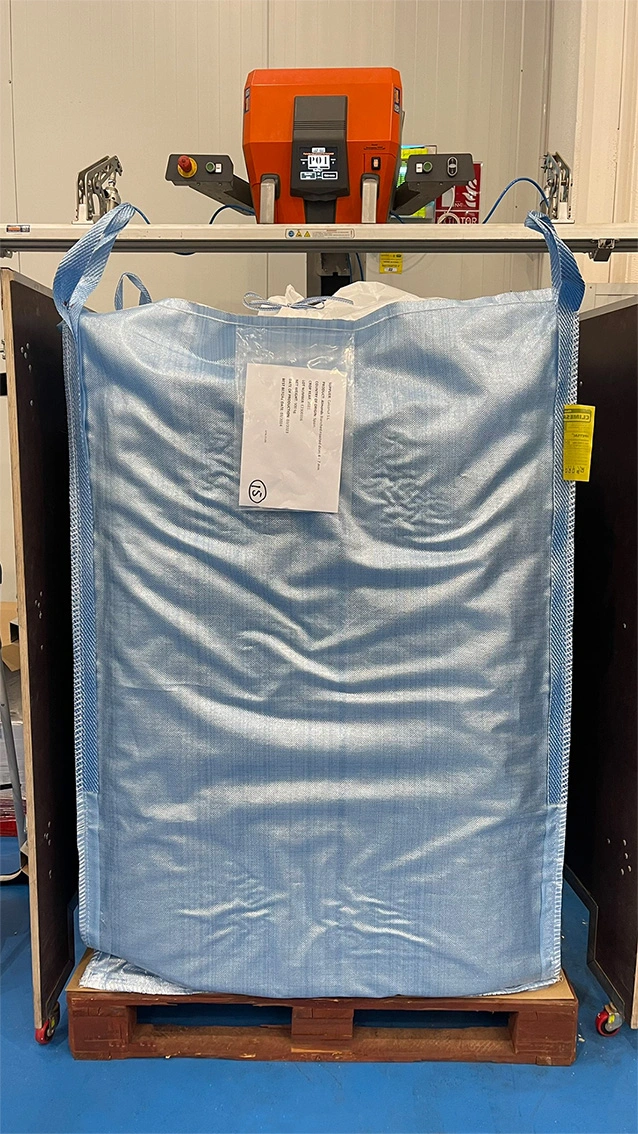
From bottles to big bags? Spanish FIBC manufacturer CLIMESA is one of the pioneers in producing big bags made of rPET. They are not only a sustainable bulk packaging made of 100 % recycled PET bottles, they also feature a range of special characteristics that make them the ideal long-term packaging for many dry bulk goods.
“We asked ourselves how we can reduce our carbon footprint when producing flexible intermediate bulk containers”, said Joan Climent, Managing Director of CLIMESA. “FIBC fabric produced with Starlinger technology from recycled polyester turned out to be the perfect solution. Our rPETSAC is made of rPET fabric from beverage bottle flakes and is available in four colours. Besides being a highly sustainable packaging, rPET big bags are exceptionally strong, withstand solar radiation and have excellent form stability, which makes them ideal for long-term storage. And after being used, the rPET big bag can be recycled and reused to produce new big bags.”
“rPET FIBCs are the perfect closed-loop packaging for dry bulk goods”, added Reinhard Lechner, Product Manager for rPET tape fabric at Starlinger. “PET can be recycled and refined so that its properties are the same like those of virgin material. By means of solid-state polycondensation it is possible to restore the molecular weight of recycled PET to its original level, thereby yielding material that is literally ‘as good as new’, even after having been recycled many times. This means that PET big bags can be produced from 100 % recycled material without compromising the special properties needed for this kind of heavy-duty packaging.”
Usually, big bags are made of polypropylene tapes which have a low creep module and lose their shape when under stress over longer periods time. rPET big bags, in turn, feature high creep resistance and stiffness which prevent bulging, especially with regard to long-term storage and when filling materials with high flow properties.
Their resistance to abrasion and high temperatures make rPET big bags a very durable, high-strength packaging for dry bulk goods. The food-grade quality of rPET produced with the FDA- and EFSA-approved Starlinger PET recycling and decontamination process also opens up multiple possibilities for food-contact packaging, enabling big bag manufacturers to broaden their customer base.
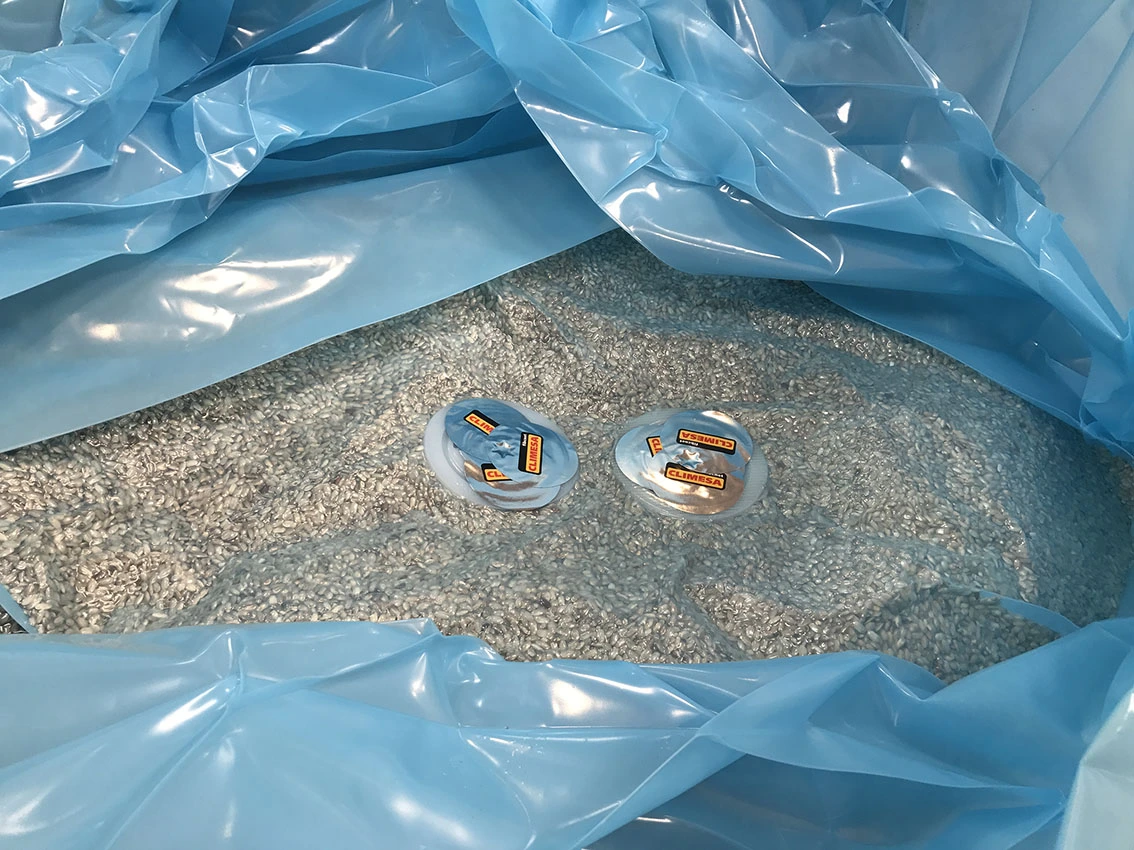
CLIMESA currently sources the rPET fabric for their FIBCs from Indonesian producer P.T. Langgeng Jaya Plastindo. “We are working towards the target of offering our entire range of big bags not only in PP but also in rPET fabric.
Our aim is to make flexible intermediate bulk containers more sustainable – we believe that by changing the big bag material we are helping to increase environmental awareness in the bulk packaging sector”, stated Joan Climent. CLIMESA supplies big bags for the agricultural, food and construction sectors as well as conductive Type C big bags that can be used in flammable atmospheres, or big bags for specialised applications such as vacuum packaging for optimal content preservation.
rPET VACSAC – Lider Pack and WorldStar 2024 Winner
After receiving the national Spanish “Lider Pack” Award in 2023 for its rPET VACSAC, CLIMESA also won the WorldStar Packaging Award in the ‘Packaging Materials and Components’ category in January 2024. The rPET VACSAC is a special big bag with MAP (Modified Atmosphere Protection) for packaging large amounts of sensitive goods such as dry fruits, cereals, powdered foodstuffs or even fresh meat.
It consists of an outer shell made of rPET and an inner liner made of multilayer barrier film with a valve. Once the content is inside, the big bag can be vacuumised and, depending on the application, filled with inert gas. This extends the shelf life of the product and eliminates infestation by pests and insects. At the end of its useful life, the components of the rPET VACSAC can be separated and recycled.