The latest edition of Munich Fabric Start, held on 2–3 September, successfully wrapped up, presenting around 1,200 collections from 600 companies under one roof. Despite a challenging market environment, the trade fair drew a positive balance, offering fresh opportunities for networking, innovation, and sustainability.
New Layout, Mixed Reactions
This edition marked a significant change as the Bluezone and Keyhouse areas were relocated to the MOC Exhibition Center. While some exhibitors and visitors felt the new, aseptic environment lacked the industrial charm of the previous locations, others praised the layout for facilitating business meetings with both existing and new clients.
Florian Klinder, Managing Director of Munich Fabric Start, highlighted the benefits of integration:
“Together, global networking, fresh ideas from innovative collaborations, and creative technologies are driving the industry forward. The closer integration of our trade show formats has achieved the desired effect, promoting networking between different market segments.”
Denim in the Spotlight
Denim once again played a central role, featuring both heritage and innovation. The Homegrown Denim Legends segment honored figures such as Levi’s founder Loeb Strauss, vintage denim collector Ruedi Karrer, and entrepreneur Erwin O. Licher, underlining the German-speaking world’s impact on denim history.
Leading companies introduced new concepts:
- Tejidos Royo launched a 100% pre-consumer recycled cotton fabric dyed with its Dry Indigo technology.
- Calik Denim showcased versatile collections from hyper-stretch to workwear heritage.
- Isko presented Recode Denim, based on advanced circular technology.
- Kipas unveiled black denims with laser effects and multicolor yarn warp.
- Iskur introduced luxury denim blends with cotton, cashmere, hemp, and linen.
Meanwhile, Tunisian manufacturer Denim Authority emphasized eco-friendly garment-making, holding certifications such as GOTS, OCS, and Bluesign, while serving global brands like Nudie Jeans and The Kooples.
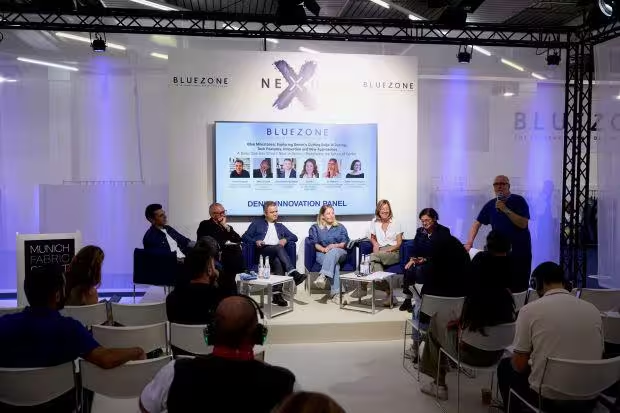
A roundtable discussion, Blue Milestones, gathered key industry leaders to explore challenges and opportunities in denim dyeing, technology, and sustainability.
Made in Europe and Global Collaborations
Innovation and collaboration were central themes. The joint venture The Fashion Grid powered by Eucotton brought together four Greek companies to present fully traceable, Made in Europe cotton products with low emissions and rapid delivery.
At the same time, the German Agency for International Cooperation (GIZ) organized a Textile & Apparel Roadshow under the banner Sourcing in Africa, showcasing producers from Egypt, Ethiopia, Ghana, Morocco, and Senegal. The Centre for the Promotion of Imports from Developing Countries (CBI) also spotlighted three Egyptian companies developing new fabrics under the project Egypt Textiles in Transition.
Biotextiles and Sustainable Innovations
The show gave significant space to biotextiles and new material research. Projects included:
- BioCushion, bioPEtex, and CircWool, offering recyclable and bio-based textile solutions.
- Suntex by Pauline van Dongen, integrating organic photovoltaics into textiles for energy-generating shades.
- Plantfur by Iris Veentjer, transforming cattail seeds into fur-like surfaces.
- Gozen, already adopted by Balenciaga and Beymen, debuting bio-based materials with denim-like and leathery effects.
The Sustainable Innovations forum further emphasized the importance of eco-conscious approaches, highlighting groundbreaking projects such as MYC_couture and Wetlands Matters.
Positive Signal for the Industry
Despite ongoing challenges in the textile and fashion markets, Munich Fabric Start sent a strong message of resilience. With its integrated formats, heritage showcases, and future-driven innovations, the fair reaffirmed its position as a central hub for global networking and sustainable industry progress.