






Bursa’s baby and children’s apparel sector has taken another ambitious step in its global expansion journey, as 61 companies from Türkiye engaged in intensive B2B meetings with Algerian buyers under two ongoing UR-GE (International Competitiveness Development) projects managed by the Bursa Chamber of Commerce and Industry (BTSO).
Strong Interest as 61 Turkish Babywear Firms Engage Algerian Market
The delegation—comprising 105 Turkish representatives—arrived in Algeria with a clear objective: to turn long-standing political goodwill between the two nations into concrete commercial partnerships. Judging by the first day’s turnout, with nearly 500 Algerian businesspeople attending, Algeria’s interest in Turkish textile products—particularly Bursa’s strong babywear segment—is unmistakably growing.
Yet, despite the enthusiasm and high-level support, the event also revealed the market’s structural challenges, proving once again that strong diplomacy does not automatically translate into easy market access.
A Strategic Push into Africa’s Third-Largest Economy
Supported by the Turkish Ministry of Trade, BTSO’s UR-GE initiatives have already led Bursa’s sectoral groups to markets such as the U.S., Uzbekistan, Serbia, and Ghana. Algeria, however, stands out as a particularly strategic gateway to the Mediterranean and West Africa.
Before entering the B2B sessions, the Bursa delegation visited two of Algiers’ busiest commercial hubs—Baraki and El Hamiz—allowing participants to analyze consumer behavior, retail structure, and pricing realities. Companies stated that while Algeria offers “significant long-term potential,” it remains a market where bureaucracy, customs procedures, and slow payment cycles demand cautious planning.
Strong Diplomatic and Institutional Presence
The opening ceremony highlighted the political weight behind the event. Participants included:
- Turkey’s Ambassador to Algeria, Mücahit Küçükyılmaz
- Chairman of Algeria–Türkiye Parliamentary Friendship Group, Messaoud Guesri
- Senior Commercial Representatives of Türkiye in Algeria
- High-level Algerian textile, leather, and investment officials
Their presence reinforced a clear message: Ankara and Algiers want trade volumes to grow—but both sides acknowledge that bridging historical goodwill with modern commercial dynamics requires persistent effort.
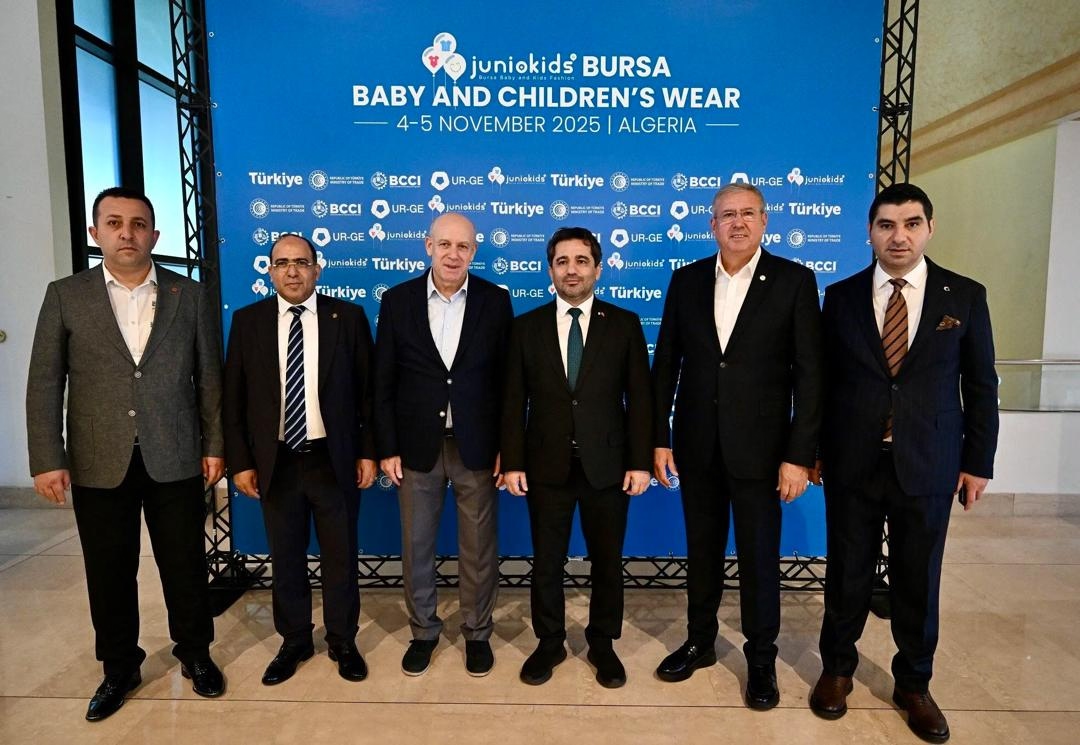
“We Aim to Transform Friendship Into Trade”
BTSO Vice President İsmail Kuş emphasized that Türkiye and Algeria share deep historical ties but noted that emotional narratives alone are insufficient:
“We want to turn trust and friendship into measurable, sustainable trade relations.”
Kuş highlighted Bursa’s dominance in Türkiye’s baby and children’s apparel manufacturing—“more than half of national production”—and reminded that the Vişne Commercial Zone has become a regional hub for the sector.
He also underlined that Algeria is not just “another stop” on the UR-GE roadshow but a priority market due to its population size, purchasing power, and ongoing modernization efforts.
Still, Kuş implicitly acknowledged a challenge faced by many Turkish exporters: they must adapt product standards, supply reliability, and after-sales support to compete effectively in North Africa, where European and Chinese suppliers already hold ground.
Historical Bonds, Modern Expectations
Ambassador Küçükyılmaz referenced the deep-rooted historical ties between the two nations—highlighting Emir Abd al-Qadir’s exile years in Bursa—to emphasize cultural closeness. But he also pointed out that the current annual trade volume of $6.5 billion does not reflect the true potential of this relationship.
Both Turkish and Algerian presidents have publicly stated their goal to increase trade and investment figures to $10 billion each, yet the Ambassador stressed that only sustained private-sector engagement—like this week’s B2B program—can make those targets realistic.
Algerian Officials: “Opportunities Exist, but Competition Is Real”
Amine Boutalbi, President of the Arab-African Investment and Development Center (CAAID), positioned Algeria as an open market ready for new partnerships, adding:
“Turkish companies will not leave empty-handed. This country is their second home.”
But Boutalbi also made a subtle but important point:
Algeria welcomes Turkish investors—but expects commitment, not short-term sales trips.
Similarly, Belhadj Tebbakh, head of Algeria’s Textile and Leather Union, said that while cooperation with Turkish manufacturers is strong, the country needs long-term partnerships, local collaboration, and perhaps future joint ventures.
New Collaborations Emerging — But Market Entry Is Not Effortless
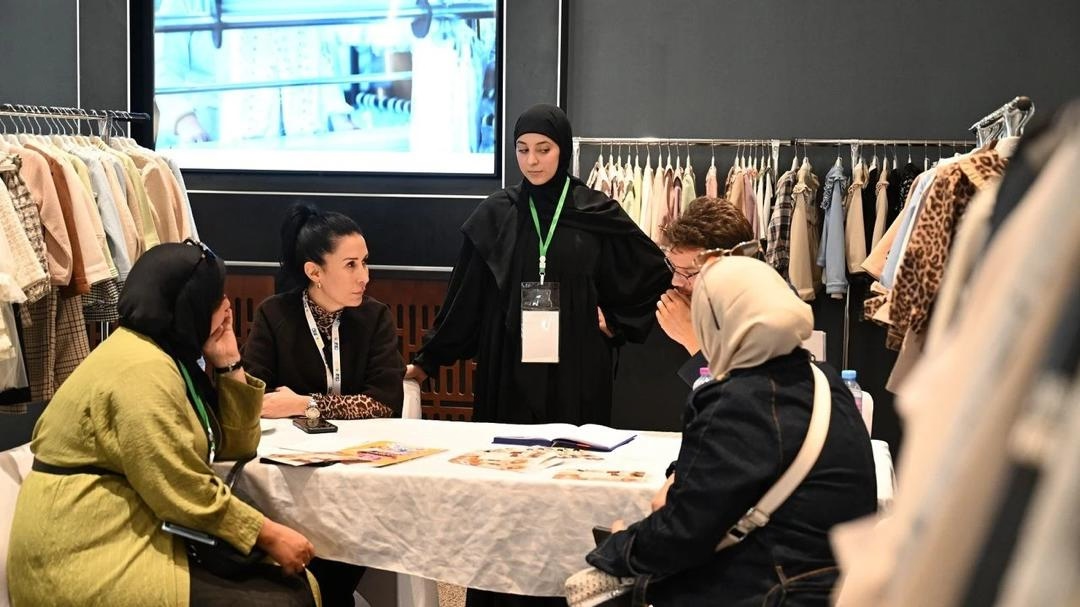
Throughout the B2B meetings, Turkish companies reported strong interest from Algerian buyers. However, many noted that:
- Import procedures remain slow
- Distribution systems are fragmented
- Pricing competition—especially from Asia—is intense
- Long-term contracts require persistent follow-up
In short, Algeria is a promising market, but not a plug-and-play opportunity.
Conclusion: A Promising Start, but Work Ahead
The first day of the UR-GE B2B program demonstrated that Bursa’s babywear industry has both the capacity and ambition to expand into North Africa. But if Turkish companies want to turn initial enthusiasm into stable commercial flows, they will need:
- More localized market intelligence
- Stronger financial and logistics planning
- Long-term commitment rather than short-term visits
What began in Algiers this week may indeed open new doors—but only sustained engagement will determine whether those doors lead to lasting success.
Elevate your brand’s visibility across the global textile and fashion industry with Kohan Textile Journal. From Display Ads and Video Promotion to Press Releases, Event Coverage, PR & Marketing, and comprehensive Content Creation & Promotion, our media solutions help industry leaders reach the right audience with maximum impact. Discover how we can support your next campaign through Kohan Textile Journal Services or connect with key markets via Textile Industry Events.











