Emerging Potential Overshadowed by Political Tensions
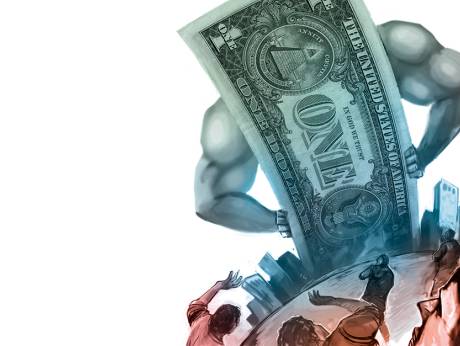
Iran possesses enormous economic potential, yet the U.S. decision under President Donald Trump to withdraw from the P5+1 nuclear agreement has cast significant doubt on the country’s ability to realize that promise. Iranian officials continue to project confidence, but the path forward remains uncertain.
Central Bank Governor Valiollah Seif insists that U.S. pressure will not seriously harm Iran’s emerging economy. However, much hinges on two critical variables:
- Whether the remaining signatories will resist U.S. pressure and uphold the deal, and
- Whether global companies with major U.S. exposure will risk engaging with Iran despite sanctions threats.
Global Companies Reassess Their Commitments
Major international corporations are already adjusting their strategies. France’s Total—one of the largest Western investors in Iran’s energy sector—has announced it will not move forward with its joint venture unless the U.S. grants a waiver.
Joe Kaeser, CEO of Siemens, highlighted the near impossibility of separating political realities from business objectives. Siemens generates 20% of its global revenue from the U.S., making new commitments in Iran highly unlikely.
“So, as far as we can see right now, all ongoing orders can be served, but there are no new orders we can take,” Kaeser explained.
Iran’s Resource Wealth Offers Major Opportunities
Massive Reserves and Industrial Strength
Iran’s potential remains vast. The country holds:
- 9% of global proven oil reserves,
- Nearly twice that volume in natural gas, and
- An estimated $1 trillion in untapped mineral wealth.
Deputy Petroleum Minister Amir Hossein Zamania said the government aims to attract $200 billion in oil and gas investment by 2025.
Beyond energy resources, significant opportunities exist in other sectors:
- Boeing and Airbus anticipated combined aircraft orders worth $40 billion,
- Infrastructure upgrades—including rail networks—were gaining momentum,
- Iran ranks 13th globally in steel production, and
- It remains a major automotive manufacturer.
Investor Hesitations Persist
Despite these strengths, hesitation among global investors has grown. BP’s CEO Bob Dudley said the company preferred to wait out geopolitical tensions, noting that Iran—despite its history with BP—appeared too complex for new capital commitments.
Economic Strain and Domestic Pressures Intensify
Years of sanctions have inflicted deep economic damage. Iran’s GDP has contracted by 10%, while household incomes have reportedly fallen by 15%. Many Iranians believed the nuclear agreement would spark prosperity, but frustrations have surfaced, evident in worker protests and public dissatisfaction.
However, the discontent is not directed solely at external pressures. The International Monetary Fund (IMF) has long urged Iran to undertake meaningful domestic reforms, which many citizens feel have been neglected.
Geopolitical Stakes Remain High for Global Players
While the U.S. maintains its hardline stance, other signatories appear reluctant to abandon Iran.
- China expanded its investments in Iran’s energy sector during sanctions and intends to protect its strategic foothold.
- Russia recently signed a multi-layered oil and gas development agreement, cementing its regional influence.
- European governments publicly vow to remain engaged, though the practical implications remain uncertain.
Long-Term Stability Remains the Core Issue
In an interview, Siemens’ Kaeser expressed concern that U.S. policy may not address the underlying problems destabilizing the Middle East.
“The root causes are not being solved—look at Syria, the destabilization of Libya, the north of Iraq,” he said, noting that the region’s instability poses deeper long-term challenges than trade agreements alone.