




NWFI says everyone is looking at India as an alternative to China and allowing exports will boost the domestic industry
Stating that the Covid-19 pandemic offers an opportunity to India to increase its share in the export market, an industry body has urged the government to lift the restrictions imposed on exports of spun-bond non-woven fabric and masks.
“There is a strong anti-China sentiment in the wake of Covid-19 pandemic and everyone is looking at India as an alternative to China.
Export Ban Diverts Nonwoven Business to Regional Competitors
However, the continuing ban on exports of spun-bond non-woven fabric is not allowing us to take advantage of this situation. Instead, the business is going to countries like Pakistan, Bangladesh, and Indonesia,” Nikesh Shah, general secretary of Non-Woven Federation of India (NWFI), which represents regional associations of spun-bond nonwoven fabric manufacturers and its products, including masks.
NFWI said that the government recently allowed exports of non-woven fabric of other than 25-70 GSM (Gram per Square Metre), while exports of fabric of 25-70 GSM continue to be prohibited.

“The majority of the demand is for spun-bond nonwoven fabric of 25-70 GSM. It is our suggestion that there should not be any restrictions on exports of fabric based on particular GSM. This will allow the industry to increase its share in the export market,” said Suresh Patel, president of NFWI.
The Federation said that the restrictions on exports of spun-bond non-woven fabric and masks were justified when the COVID-19 outbreak had started, and domestic manufacturing capacity was limited.
“However, we have surplus capacity now. The spun-bond production capacity is 41,350 metric tonne per month. We also have the capacity to daily produce 2 crores 3 Ply masks and 70 lakh N95 masks now. There is more than adequate capacity to meet the domestic requirement. Since exports are not being allowed, the capacity is grossly underutilized, causing huge losses to manufacturers. Hence, we have requested the government to remove the export restrictions,” said Anshumali Jain, vice president of the Federation.
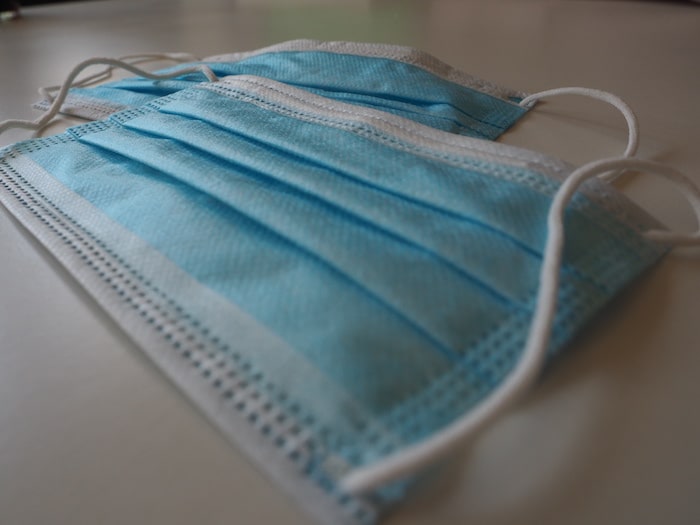
The Federation suggested that if the government has any concerns regarding the availability of spun-bond non-woven fabric for PPE kits and masks, it can reserve 50% of the production for domestic use, and allow exports of the remaining 50%.
The Federation also demanded that the government should stop duty-free imports of masks.
“More than 6.30 crore N95 masks have been imported duty-free between March and May. When local companies are in a position to meet the demand, the government should stop the duty-free imports. This will in line with the government’s goals to promote Make In India and Atmanirbhar Bharat,” added Patel.











