Can we have a profitable Hosiery industry just by having a Hosiery machine?
In the first place, Sock manufacturing may seem like a hassle-free job with lots of customers and a good profit. Hosiery is also classified as a home-based business. But do not get wrong. Any product that is easy to produce, profitable to sell, and in high demand in the market, will surely have many manufacturers and partners.
In such markets, either the very cheap price or the distinction from other competitors comes first. In other words, to succeed in such a situation, you either have to have a large Hosiery workshop that can deliver cheap products to customers or you have to produce distinctive products that are not easily found in the market. Therefore, it must be said that entering the Hosiery industry is not so simple. Although Hosiery industry may seem like an attractive job in terms of the amount of capital required, it requires skills that not everyone can afford.
Equipment needed in Hosiery industry
Sock weaving is actually one of the branches of weft knitting. The Hosiery machines available in the market can be divided into two types: mechanical or computer machines. Mechanical devices are very old models that require expertise to work with and not everyone can work with them easily. Moreover, they do not have the flexibility to design and produce a variety of designs. So if you are new to the Hosiery industry, we do not recommend buying mechanical machines at all.
On the other hand, working with computer machines is not easy and requires time, experience and study. Of course, it is possible to get advice from the seller of the device to set up the device or fix possible problems. You can also get support while you work.
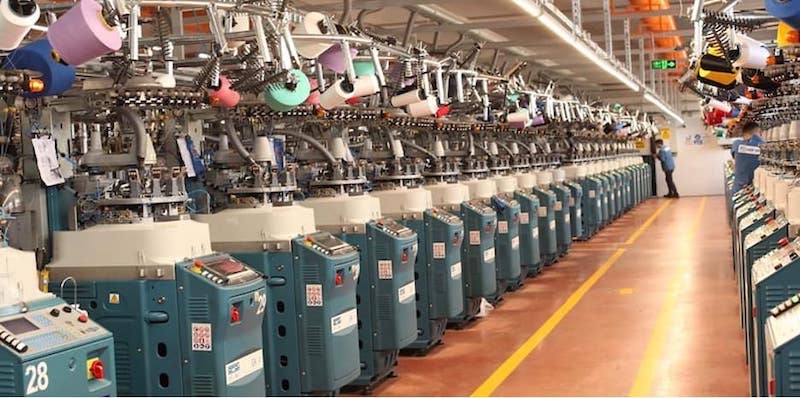
Some people think that they can make Socks just by buying a machine, while Hosiery requires a workshop. In this workshop, in addition to Hosiery machines, there should be other equipment, such as electrical panels, sewing machines, sometimes compressors, etc.
In this article, we are not going to go into the technical details of Sock production, and we will suffice to mention that, contrary to some people’s beliefs, Hosiery is not a home-based business and you should not enter this profession and invest in it thinking that it is a simple and lucrative job.
Tips for starting Hosiery industry
Market of Hosiery products
Note that there is no shortage of Socks in the country. But does that mean you should not enter this market? No, you can enter this market, but you will succeed if you have an advantage over other competitors in this field. This means that you either offer your products at a cheaper price or your products are more attractive than the existing goods.
But the important thing is that cheap production requires a lot of investment. On the other hand, creating differentiation in the product also requires experience or creativity. In other words, if you want to succeed in the Hosiery market, and you have relatively little capital, you have to have a brilliant idea in this area.
Those who have already worked in the field of Hosiery can have ideas in this field, for example, those who already have experience working in a Hosiery workshop or have experience in areas such as machine manufacturing, raw material supply, or Sock marketing.

The three main areas in which you can brainstorm can be divided as follows:
• Changing the raw materials used: For example, the production of Socks from cotton, polyester, lycra or nylon has been common so far. But there are different types of polyester fibers, some of which have not yet fully entered the Sock weaving industry, such as antimicrobial polyester yarn or other natural fibers other than cotton and wool, such as bamboo and so on .
Note that diversifying raw materials not only requires sufficient experience in the production of Socks, but also requires extensive information in the field of fibers. Our advice to you is that if you are among the people active in the field of Hosiery industry, it is better to pay serious attention to this idea and be sure to consult with experts in its field.
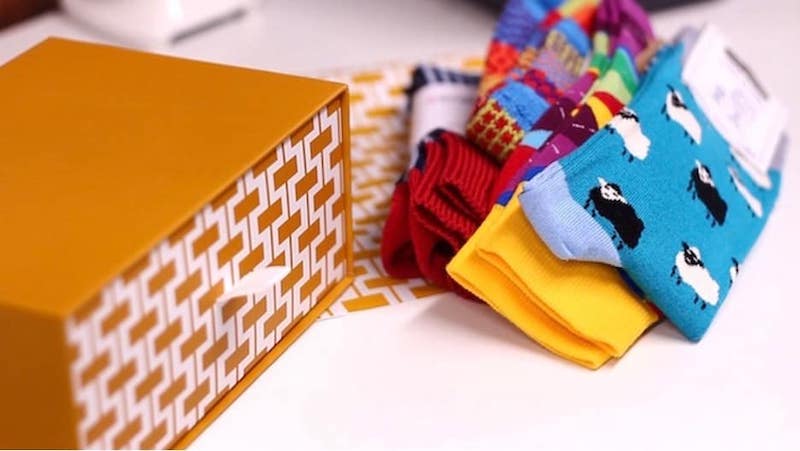
• Different design: One of the great ways to differentiate your products is to make a difference in the design of the product in terms of texture and weave design and printing design or even the type of packaging. For example, today, especially with the use of print design, extraordinary creative, distinctive and unique products can be produced.
• Different marketing strategies: One of the most important part of doing this is knowing how you want to sell your products. If you are going to use the same old methods, you have many competitors who are more successful than you. So you must be able to have new ideas to sell your products. These ideas can include using cyberspace, or producing products on a seasonal basis, or working with non-specialist vendors.
You can even think about exporting. It may seem difficult at first, but if you find a reliable trader who has access to the local markets of neighboring countries, it will not be so difficult. Of course, note that the main condition is to produce a product that is special and has something to say. If you have an idea in this field and are not afraid of facing the difficulties of production and continuous learning, this field can be a good field of activity because with a small amount of investment (but high technical knowledge) there is a possibility of business growth and success.