

With a new local representative, 170 years of industrial experience and the technological strength of the Camozzi Group, Marzoli is entering a new chapter in the Chinese and Asian textile machinery markets.
By Behnam Ghasemi, Editor-in-Chief, Kohan Textile Journal
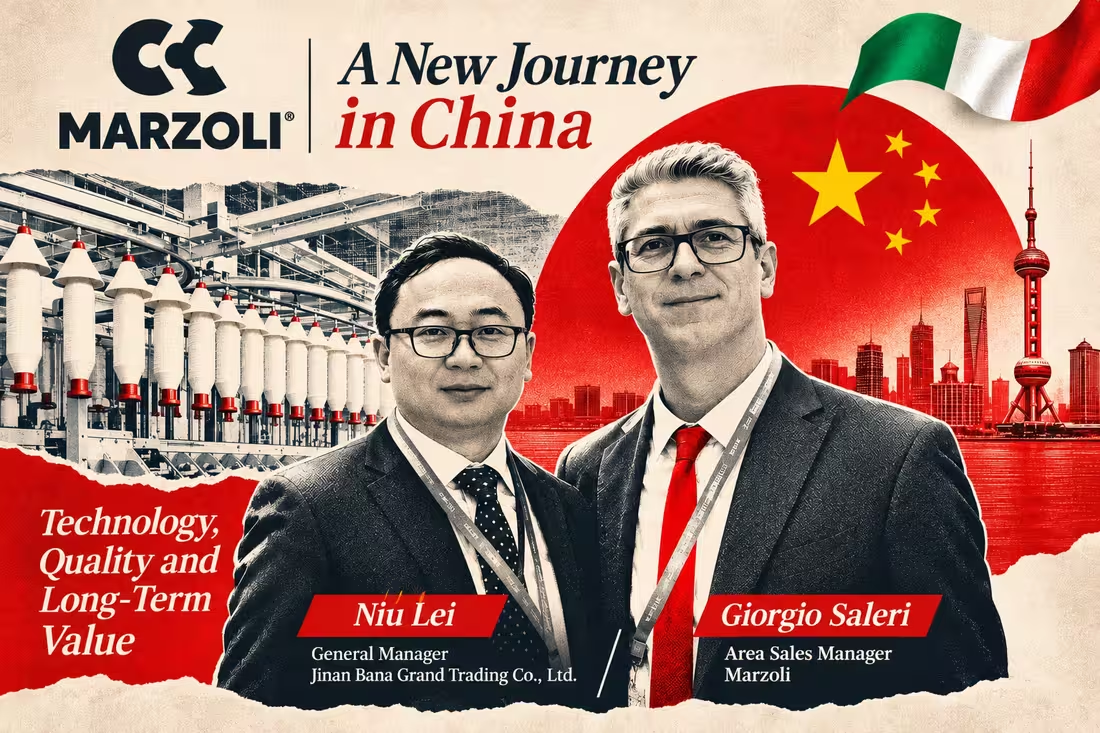
During ITMA ASIA + CITME 2026 in Shanghai, I visited the booth of Jinan Bana Grand Trading Co., Ltd., Marzoli’s new representative in China, where I spoke with Giorgio Saleri, Area Sales Manager at Marzoli, and Niu Lei, General Manager of Jinan Bana Grand Trading Co., Ltd.
Our discussion explored Marzoli’s renewed Asian market strategy, the rapid development of Chinese textile machinery manufacturers and the competitive advantages of European spinning technology.
One message became particularly clear: Marzoli is not returning to China to participate in a price war. Its strategy is built around engineering excellence, customer proximity, consistent yarn quality and long-term industrial value.
A New Chapter for Marzoli in China and Asia
After years of limited market presence, Marzoli is looking to strengthen its position in China and the wider Asian textile industry through new partnerships and advanced spinning solutions.
According to Saleri, the company’s priority is to establish closer relationships with customers and offer its latest technologies and industrial experience to improve yarn quality and spinning mill productivity.
Roving technology represents an important starting point for this strategy, with particular emphasis on production stability and yarn quality. Marzoli is also targeting opportunities in the wool spinning segment through collaboration with its new representatives and industrial partners.
The appointment of Jinan Bana Grand Trading Co., Ltd. reflects Marzoli’s commitment to strengthening its local presence, improving customer engagement and connecting its Italian engineering capabilities with the specific requirements of Chinese spinning mills.
 Why Does China Remain Such an Important Market?
Despite geopolitical tensions and economic uncertainty across several regions, China remains one of the most dynamic markets for textile machinery.
When I asked Saleri about the reasons behind this resilience, he highlighted China’s continuing need to increase industrial productivity, strengthen domestic production and maintain its export competitiveness.
He also identified energy costs and government support for manufacturing as contributing factors.
However, China’s attractiveness for Marzoli extends beyond the sheer size of its textile industry. The growing diversity of raw materials, specialised yarns and demanding production requirements creates opportunities for machinery manufacturers offering advanced technological solutions.
For Marzoli, China is not simply a large-volume market. It is a sophisticated industrial environment where technology, productivity and quality can become decisive competitive advantages.
Even a Niche Market in China Can Be a Huge Market
One of the most interesting moments of our conversation was Niu Lei’s explanation of Marzoli’s market positioning.
Although China is often perceived as a highly price-sensitive market, its textile industry includes manufacturers with very different investment priorities and quality requirements.
“Price is important, but not everybody focuses on cheaper. You know, Ferrari, also somebody likes it,” Niu Lei remarked.
He also used Shanghai’s hotel industry as an example: while budget hotels attract large numbers of customers, five-star hotels continue to have their own market.
The same principle applies to textile machinery.
Marzoli’s objective is not to compete for every spinning machinery investment in China, but to identify manufacturers that recognise the value of advanced engineering, consistent yarn quality and reliable long-term production.
In an industrial market as vast as China, even a specialised premium segment can represent a substantial commercial opportunity.
The challenge is to communicate the technological and economic advantages of Marzoli’s machinery to the right customers, supported by effective local technical consultation and customer service.
Beyond Price: The Economics of a 20-Year Investment
Chinese textile machinery manufacturers have made remarkable progress over the past decade, benefiting from rapid development cycles, manufacturing efficiency and competitive pricing.
However, our discussion highlighted a fundamental question: should spinning machinery be evaluated primarily by its purchase price or by the value it delivers throughout its operational lifetime?
Saleri emphasised the importance of considering machinery investments over a period of 15 to 20 years.
From this perspective, maintenance requirements, production downtime, spare parts costs, operational efficiency and yarn quality consistency become essential components of the investment decision.
This approach reflects the principle of Total Cost of Ownership (TCO), where the economic value of machinery is measured throughout its productive lifetime rather than solely at the point of purchase.
For spinning mills supplying demanding international customers, production stability is particularly important.
As Saleri explained during our conversation, customers do not want to receive one quality of yarn today and a different quality tomorrow. They expect consistent standards over the long term.
This is especially relevant for manufacturers supplying global fashion brands, where variations in yarn quality can affect subsequent weaving, knitting, dyeing and finishing processes.
Marzoli’s competitive philosophy is therefore based not only on producing high-quality yarn, but also on maintaining that quality consistently over many years.
170 Years of Industrial Know-How: Can It Be Copied?
During the interview, I raised another important question for European textile machinery manufacturers operating in China: the risk of technological imitation.
Saleri acknowledged that individual technological features can potentially be copied. However, reproducing generations of accumulated industrial knowledge is a considerably different challenge.
“170 years’ experience is very complicated to copy,” he said.
Marzoli’s competitive strength extends beyond mechanical engineering. It encompasses decades of expertise in fibre behaviour, spinning processes, machine development and the relationship between production technology and final yarn quality.
Nevertheless, industrial heritage alone is not sufficient to remain competitive.
Saleri emphasised that Marzoli continues to invest in research and development, combining its historical expertise with new technological capabilities.
Its integration within the Camozzi Group represents another strategic advantage, enabling the exchange of engineering knowledge and technological experience across different industrial disciplines.
This combination of accumulated textile expertise, continuous innovation and group-wide technological resources provides Marzoli with a strong foundation for addressing the evolving requirements of modern spinning mills.
Why Italian Textile Machinery Remains Relevant in China
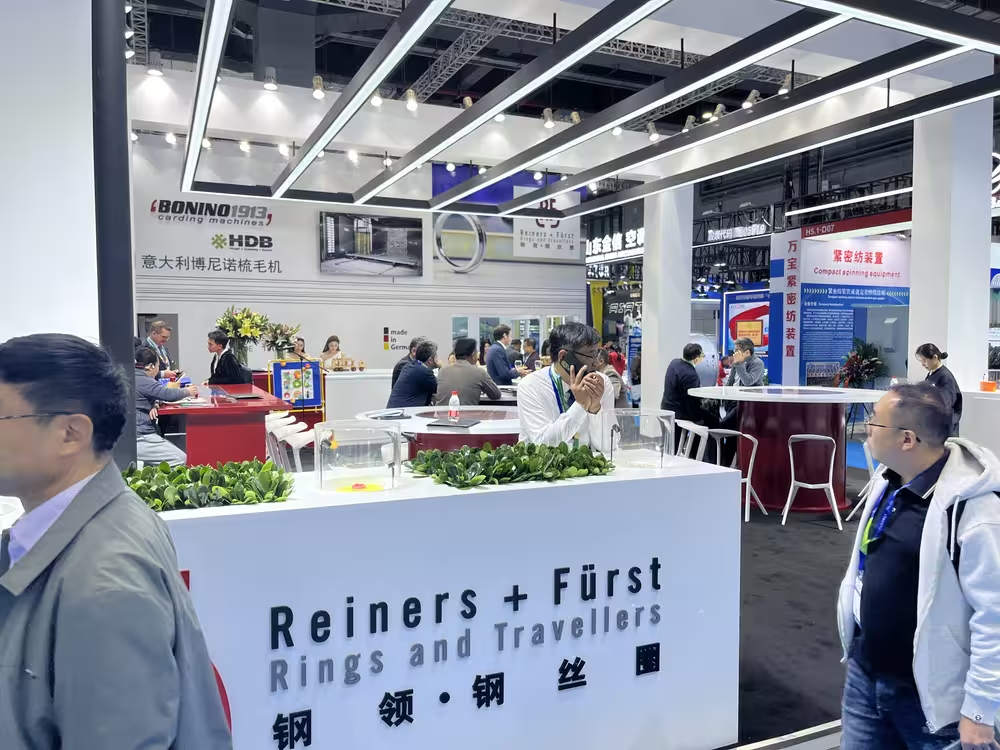
With more than 60 participating companies, Italy represented the largest foreign exhibitor delegation by number of companies at ITMA ASIA + CITME 2026.
I asked Saleri why Italian manufacturers remain so active in China despite increasingly strong domestic competition.
He pointed to Italy’s extensive industrial experience across the entire textile value chain, from yarn production to finished textile products.
Read more: Marzoli Highlights FTM 320 and Repowering Solutions in Egypt
While price-oriented customers represent an important market segment, there are also manufacturers seeking specialised technologies, advanced engineering and dependable long-term performance.
This is where Italian textile machinery manufacturers continue to see opportunities.
Furthermore, China’s strategic importance extends beyond its domestic industry. Shanghai serves as a meeting point for textile professionals from across Asia, making the exhibition an important platform for Marzoli’s wider regional development.
Looking Ahead to ITMA Hannover 2027
When asked about Marzoli’s upcoming innovations, Saleri preferred not to reveal details ahead of ITMA Hannover 2027.
His invitation was simple: “We wait you in Hannover.”
The exhibition will provide an important opportunity for Marzoli to demonstrate how its industrial heritage, ongoing R&D investments and international market strategy are shaping the future of its spinning technologies.
Marzoli’s New Journey: A Strategy Beyond Price
My conversation with Giorgio Saleri and Niu Lei highlighted an important reality about the Chinese textile machinery market: European manufacturers do not necessarily need to compete with domestic suppliers on every level to succeed.
For Marzoli, the opportunity lies in combining 170 years of industrial experience, Italian engineering, the technological capabilities of the Camozzi Group and a renewed local partnership to serve customers seeking long-term production value.
China is a vast and increasingly sophisticated textile market. Its premium segment offers opportunities for technology providers capable of delivering consistent quality, productivity and industrial reliability.
Marzoli’s new journey in China is not about becoming the cheapest option. It is about demonstrating why advanced spinning technology, industrial know-how and long-term performance remain worth investing in.