
Despite challenging market conditions, VDMA’s latest economic survey reveals growing optimism among German textile machinery manufacturers.
By Behnam Ghasemi | Editor-in-Chief, Kohan Textile Journal
During my visit to ITMA ASIA + CITME 2026 in Shanghai, I attended the VDMA press conference, where Dr. Harald Weber presented some particularly interesting findings from the association’s latest economic survey of German textile machinery manufacturers.
At a time when the textile industry is facing considerable uncertainty, one of the most important questions is what industry professionals themselves expect from the future. Are manufacturers preparing for another difficult year, or are we finally approaching a turning point?
The figures presented by VDMA offer an interesting perspective. While current business conditions remain challenging, expectations for the coming months and 2027 appear considerably more encouraging.

A Challenging Reality for Textile Machinery Manufacturers
According to VDMA’s third-quarter 2026 economic survey, German textile machinery manufacturers continue to operate under significant market pressure.
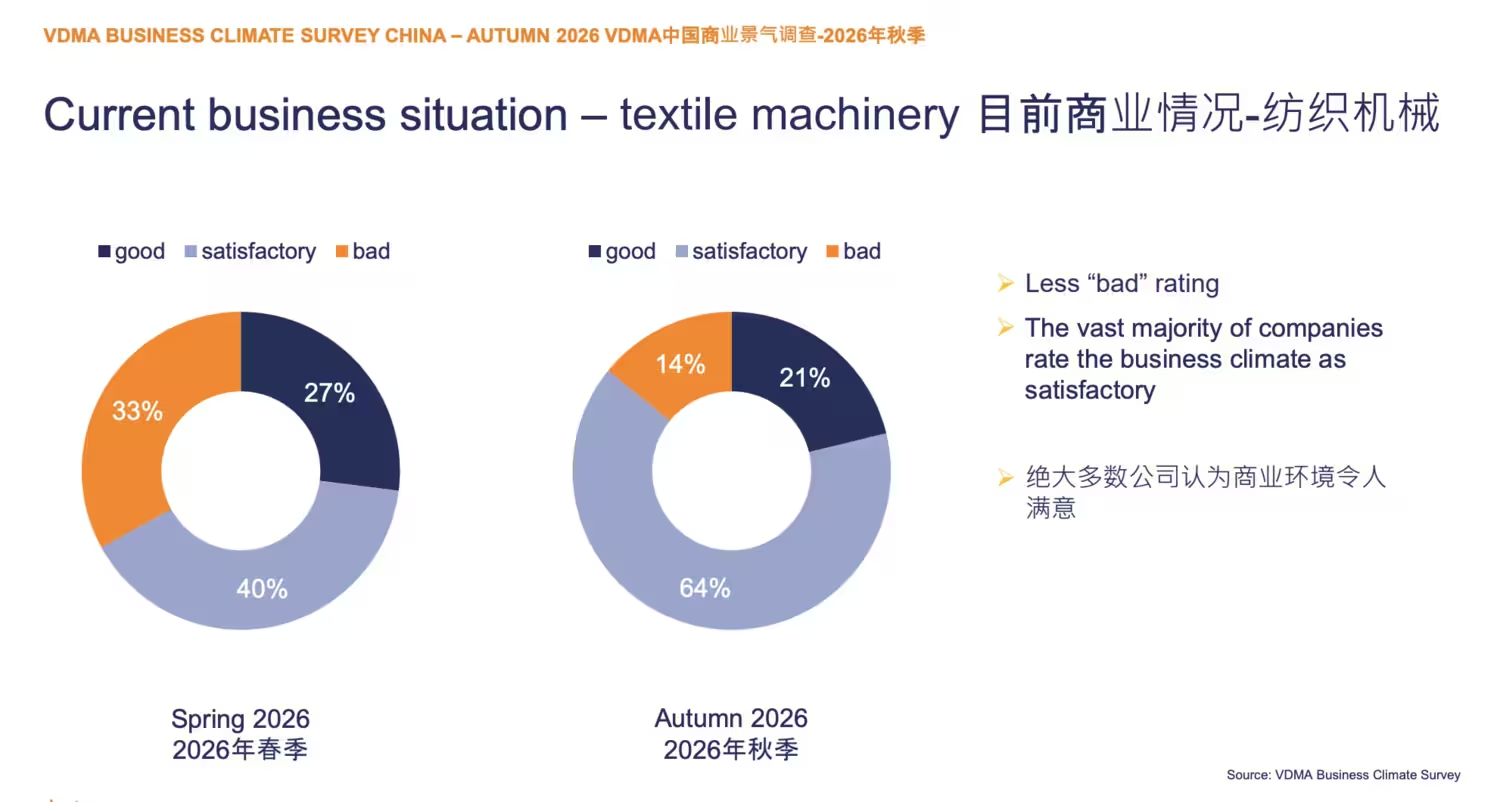
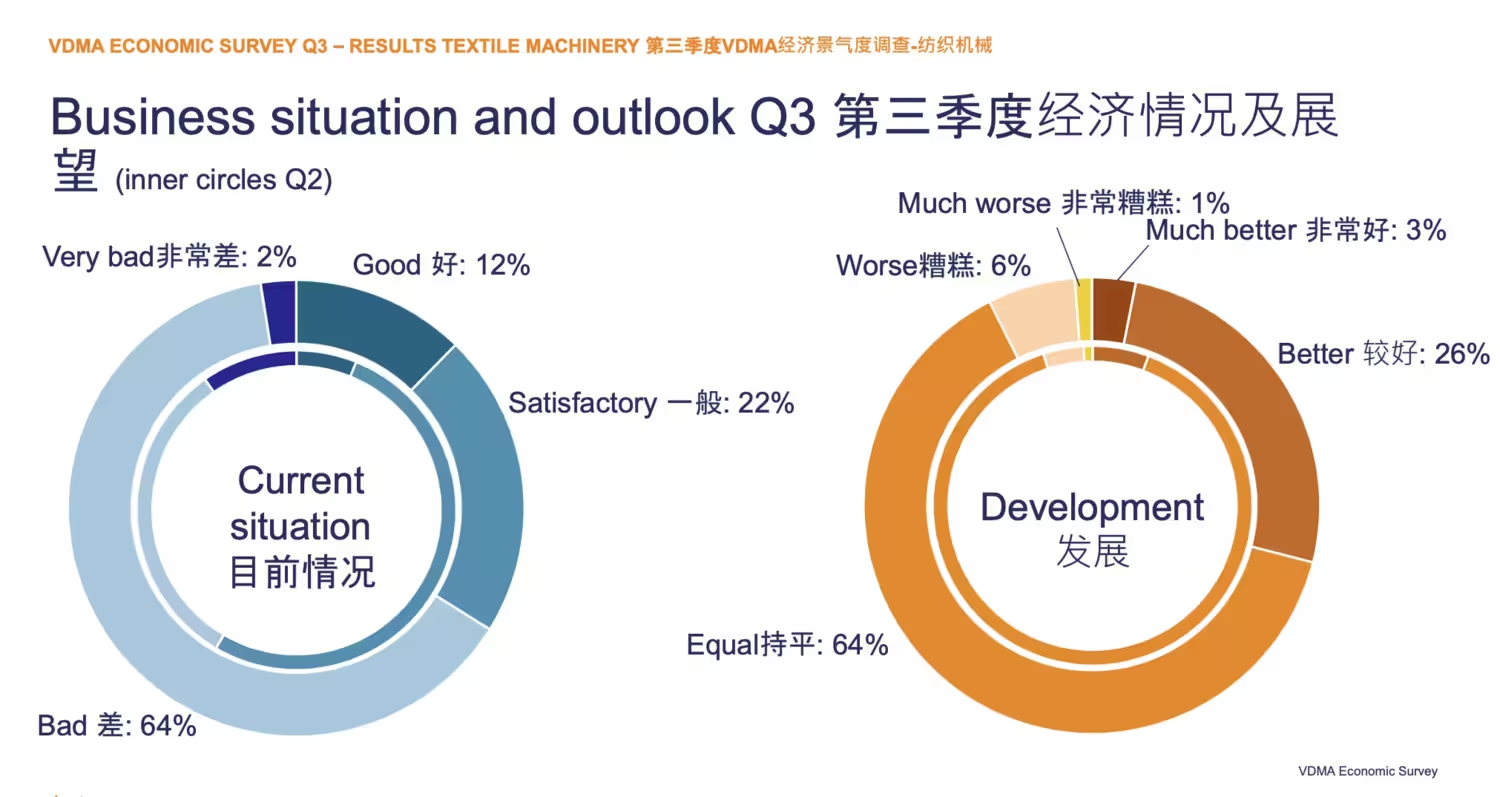
The assessment of current business conditions reveals a rather difficult picture:
- 64% describe the current situation as bad.
- 2% consider it very bad.
- 22% rate business conditions as satisfactory.
- Only 12% describe the situation as good.
In other words, 66% of surveyed companies are dissatisfied with current business conditions.
As Dr. Weber explained during the press conference, machinery sales have declined over recent years, while incoming orders remain relatively low.
These figures reflect the difficulties facing machinery manufacturers in an environment where investment decisions remain cautious and customers are under increasing pressure to improve production efficiency and control costs.
Read More: Results Of The 40th ITMF Global Textile Industry Survey
Is There Finally Light at the End of the Tunnel?
Perhaps the most interesting part of VDMA’s presentation was not the assessment of current conditions, but the expectations for the next six months. Despite widespread dissatisfaction with the present situation, relatively few companies expect further deterioration.
According to the survey:
- 26% expect business conditions to improve.
- 3% anticipate a significant improvement.
- 64% expect conditions to remain unchanged.
- 6% anticipate deterioration.
- Only 1% expect a significant deterioration.
This means that 29% of respondents expect an improvement, while only 7% anticipate worsening conditions.
Furthermore, 93% of surveyed companies expect business conditions either to stabilize or improve over the next six months.
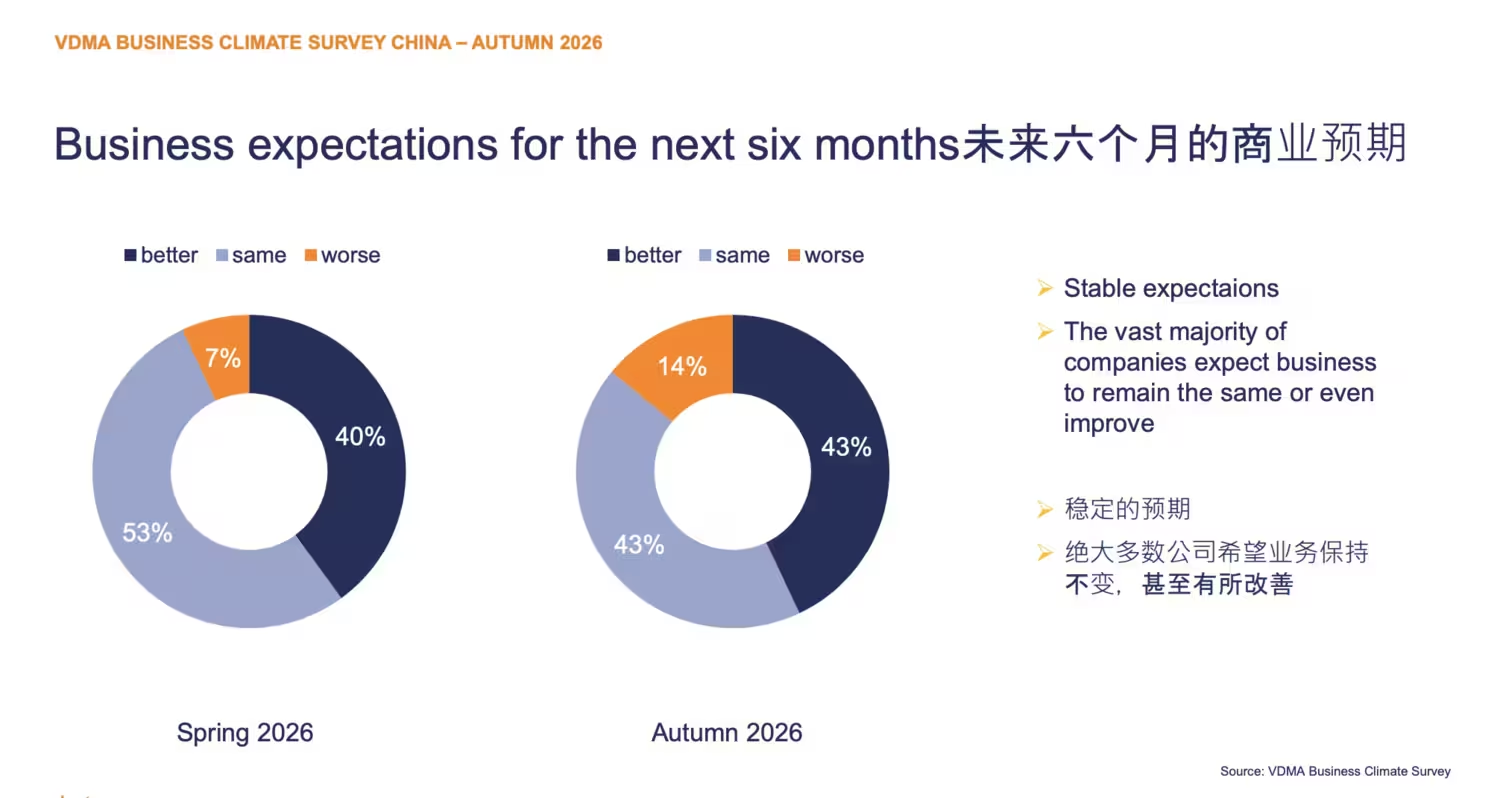
For me, this is one of the most significant findings of the survey. Although the industry remains under considerable pressure, expectations of improvement clearly outweigh fears of further deterioration.
However, stability should not be confused with recovery. With two-thirds of respondents currently reporting poor business conditions, maintaining existing levels of activity may still represent a challenging operating environment.
What Do Textile Machinery Manufacturers Expect from 2027?
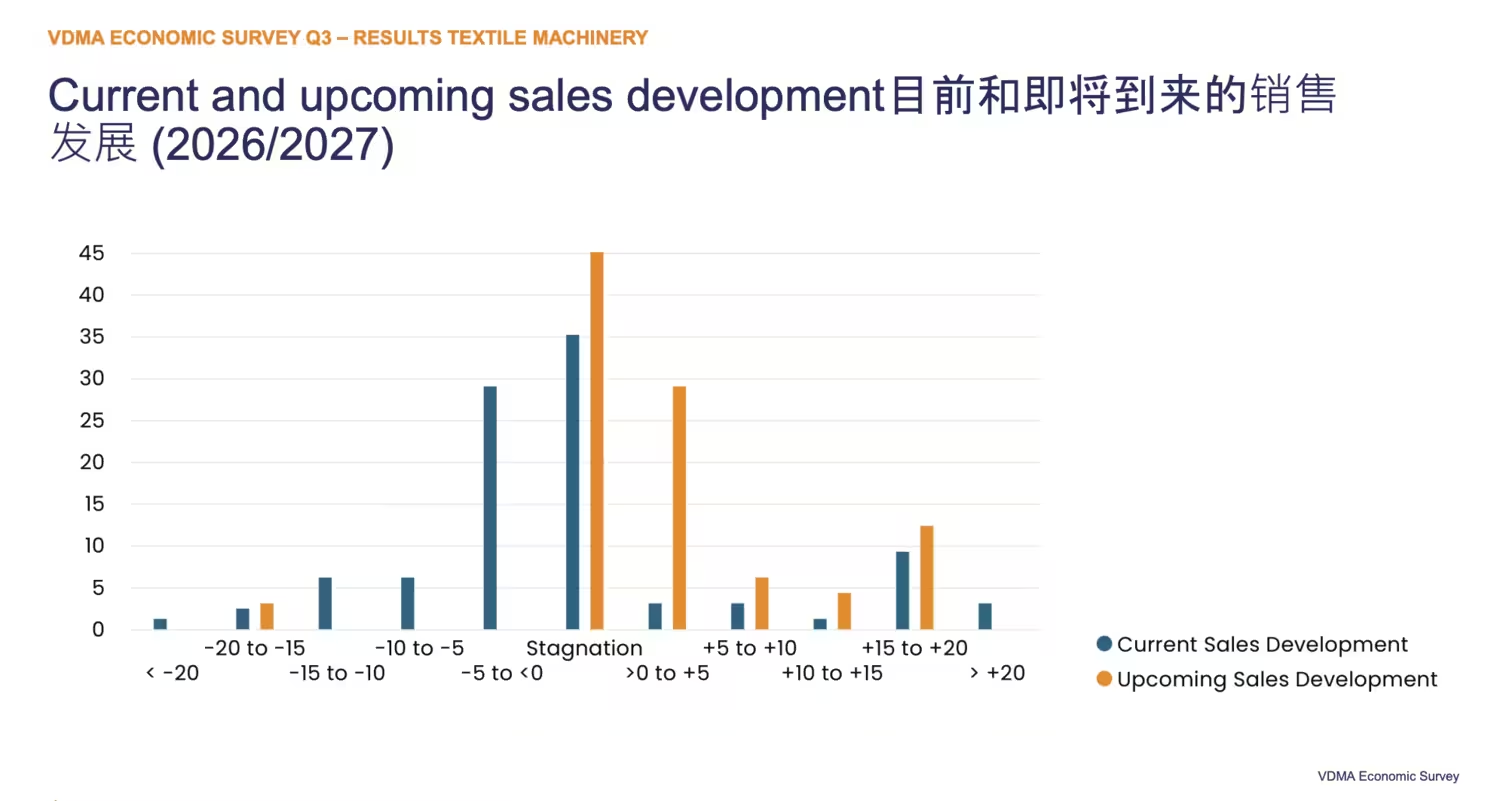
VDMA’s second set of figures, comparing current sales development in 2026 with expectations for 2027, provides further grounds for cautious optimism.
Approximately 45% of surveyed companies expect their sales to remain stable in 2027, while around 51% anticipate positive sales growth.
The largest group expecting growth forecasts an increase of up to 5%. Other manufacturers anticipate stronger growth, including a notable group expecting sales increases of between 15% and 20%.
Only a small proportion of respondents forecast declining sales.
The contrast with 2026 is particularly striking. While a substantial proportion of companies reported declining sales during the current year, expectations for 2027 are concentrated around stability and positive growth.
This suggests that many German textile machinery manufacturers believe the market may be approaching the end of its prolonged downturn.
2027: A Year of Recovery or Stabilization?
The question, however, is whether 2027 will mark the beginning of a meaningful recovery or simply a period of stabilization after several difficult years.
Based on the figures presented in Shanghai, I believe cautious optimism is the most appropriate description of the industry’s current expectations.
Manufacturers are not necessarily anticipating a dramatic investment boom. Instead, the survey indicates that many companies are preparing for a more predictable business environment, with opportunities for moderate growth.
The distinction is important. A stable market can provide the foundation for renewed investment, but a sustainable recovery will ultimately depend on actual orders, customer confidence and the financial capacity of textile producers to invest in new technologies.
All Eyes on ITMA 2027 in Hannover
The timing of these expectations is particularly interesting, as the global textile machinery industry prepares for ITMA 2027 in Hannover, Germany.
The exhibition could become an important indicator of whether improving business sentiment translates into actual machinery investments and purchasing decisions.
For machinery manufacturers, textile producers and technology suppliers, Hannover will provide an opportunity to assess whether the industry is genuinely entering a new growth cycle.
Having attended the VDMA press conference in Shanghai and reviewed the survey findings, my main takeaway is that the industry has not yet emerged from its difficult economic cycle, but confidence in the future appears to be returning.
The textile machinery industry may not be celebrating a recovery just yet. Nevertheless, the fact that approximately half of the surveyed German manufacturers expect sales growth in 2027 is an encouraging signal.
The coming year will reveal whether this cautious optimism can translate into a genuine recovery for the textile machinery sector.