






Jute and jute goods brought home the bacon this fiscal year when most other export-earning sectors flatlined, thanks to a recovery in demand for natural fibre-based yarn and biodegradable products abroad.
Earnings from the sector rose 21 per cent year-on-year to $602 million in July-January this fiscal year, according to Export Promotion Bureau data.
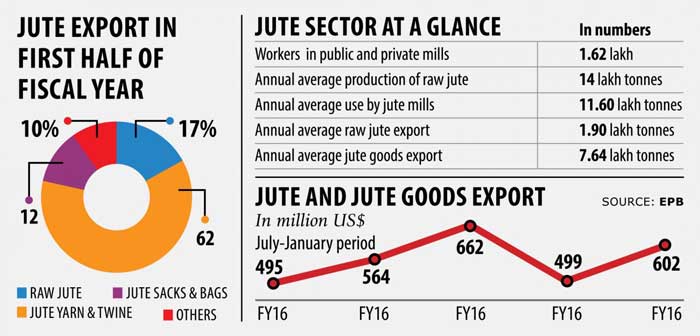
“This is definitely a positive development. If the trend continues, we will come out of the woods,” said Md Zahid Miah, chairman of Bangladesh Jute Spinners Association (BJSA), whose members fetch more than 60 per cent of the total export receipts in the jute and jute goods sector.
Buoyed by domestic cultivation of jute, the industry saw shipment soar at a time when distressing apparel exports cast a pall on the overall earnings. Jute and jute goods account for 2 per cent of the total annual export receipts of more than $40 billion.
The jute industry, representing more than 160,000 workers and tens of thousands of farmers, depends largely on exports as the domestic market for jute goods is not big.
For the last several years, jute and jute goods have been witnessing fluctuations in shipments due to a prolonged crisis in the Middle East and the anti-dumping duty slapped by another major destination India in January 2017.
The sector recorded the highest exports at $1.03 billion in fiscal 2012-2013, but took a hit in the following year. Shipment started to rebound slowly since fiscal 2014-15.
Recovery was dented again last year, as earnings fell 20 per cent year-on-year, EPB data showed.
The demand for jute goods rose marginally this year after the global carpet industry, especially that in Turkey, made a turnaround, Miah said.
Turkey is the largest consumer of Bangladesh’s yarn followed by China, India, Egypt and Iran, according to the BJSA.
The demand for jute yarn had plummeted because of an economic downturn in Turkey and the devaluation of its currency, said Miah, also the managing director of Karim Jute Spinners Ltd.
“Many of our factories had to stop production as markets were dull,” he said, adding that normalcy has returned in the markets now.
Insiders also attributed the recovery in export to a consensus among businesses that they would not sell products below their cost prices or undercut prices to win orders from buyers.
Yet the rebound in export is not enough to enable the industry to recover from losses, said MA Raihan, a director of Nowapara Jute Mills Ltd.
The domestic market for jute goods has not expanded much, he said, adding that jute mills could not fully benefit from the law on the mandatory packaging of certain commodities by jute bags.











