




Iran’s National Carpet Center (INCC) has called for closer cooperation with China to ensure a stable supply of silk for the country’s hand-woven carpet sector, one of Iran’s most historic and culturally significant industries.
Speaking at a meeting in Tehran reviewing Iran–China economic relations, Fereshteh Dastpak, Head of the Iran National Carpet Center, emphasized the importance of strengthening trade links between the two countries in the carpet sector.
According to Dastpak, Iranian hand-woven carpets have long been among the country’s oldest exports to China, reflecting deep cultural and artistic connections between the two nations.
Silk Supply Critical for Iranian Carpet Weavers
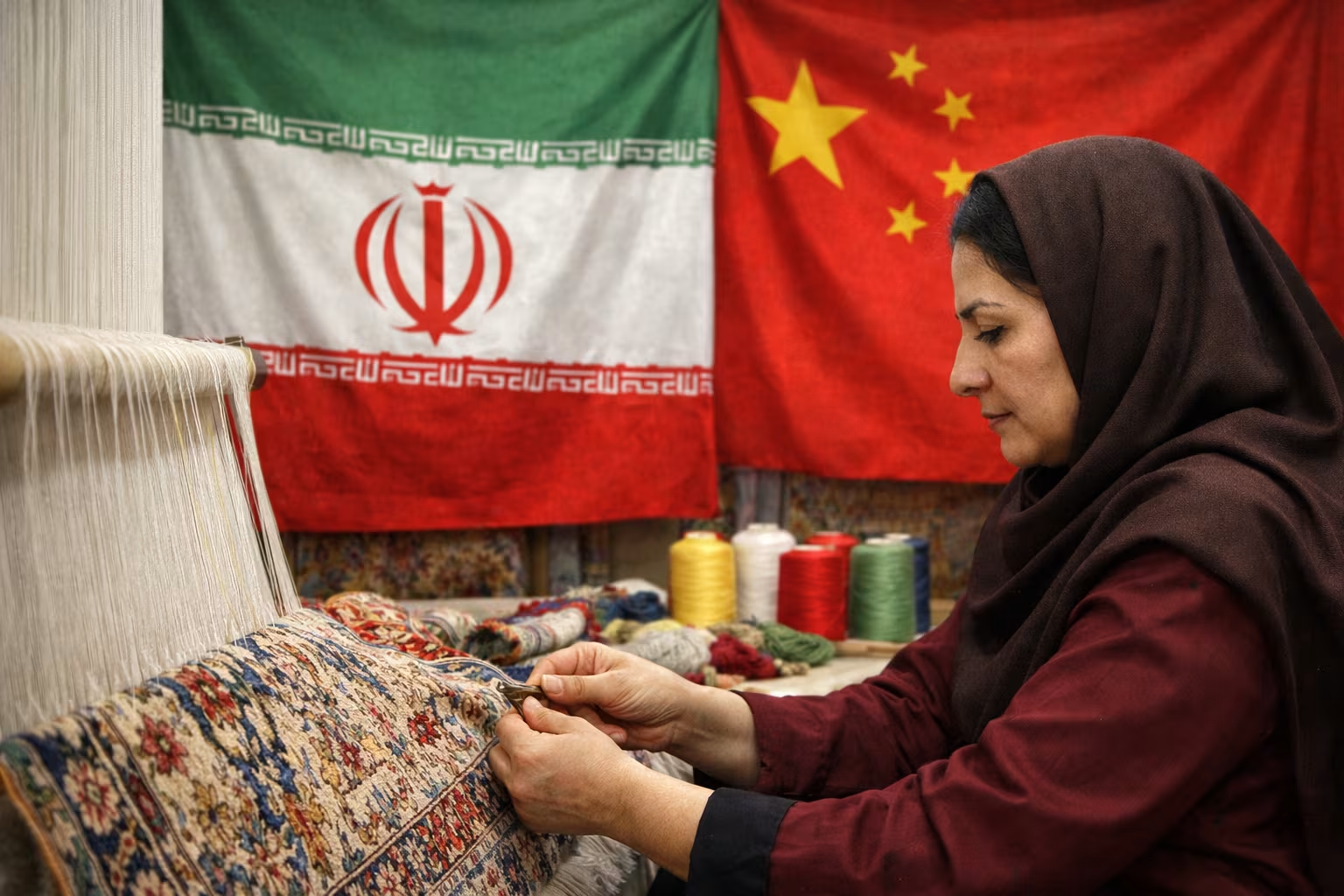
Dastpak highlighted the strong dependency of Iran’s silk carpet production on imported raw materials. She noted that around 90 percent of the silk used by Iranian carpet weavers is imported from China, making the country a key supplier for Iran’s high-value carpet segment.
Silk hand-woven carpets account for approximately 20 percent of Iran’s total carpet exports, representing one of the most prestigious and artistically valuable categories within the industry.
Given this reliance, Dastpak expressed hope that Chinese authorities would facilitate smoother silk exports to Iran, ensuring that Iranian artisans have consistent access to the raw materials needed for production.
A Symbol of Cultural Cooperation
During the meeting, Dastpak also referred to a recent cultural collaboration between the two countries. Last month, a large artistic silk carpet, woven by 180 weavers in Isfahan Province, was presented to a Chinese museum.
The carpet was produced based on a design created by a Chinese artist, symbolizing the long-standing artistic exchange between Iran and China.
According to Dastpak, carpets have always represented Iranian culture and tradition, and in some cases, they can even be considered a joint cultural product between Iran and China, combining Chinese silk with Iranian craftsmanship.
Sanctions Continue to Challenge Carpet Exports
Dastpak also pointed to the impact of international sanctions on Iran’s carpet sector. She noted that carpets were among the industries targeted by U.S. sanctions, which significantly affected export opportunities for Iranian producers.
The sector remains extremely important to Iran’s economy and society. More than eight million people depend on the carpet industry for their livelihoods, while approximately 90 percent of Iran’s carpet production is exported to international markets.
Given these challenges, Dastpak encouraged Chinese officials to explore ways to strengthen bilateral cooperation so that Iranian carpets could reach global markets more effectively.
Growing Interest in Iranian Carpets in China
Despite trade barriers, Dastpak noted that Chinese consumers have shown strong interest in Iranian carpets, which are widely recognized for their craftsmanship, design, and cultural heritage.
She expressed optimism that stronger economic collaboration between Iran and China could expand trade in the carpet sector and support the continued growth of exports.
For Iran’s carpet industry, improved access to silk supplies and broader market opportunities could play a crucial role in sustaining one of the country’s most iconic and globally recognized traditional industries.
Also Read: Sanctions fail to block Iran’s carpet exports: Official











 Fereshteh Dastpak expressed hope that China would ease the ground for imports of silk for Iranian carpet weavers.)